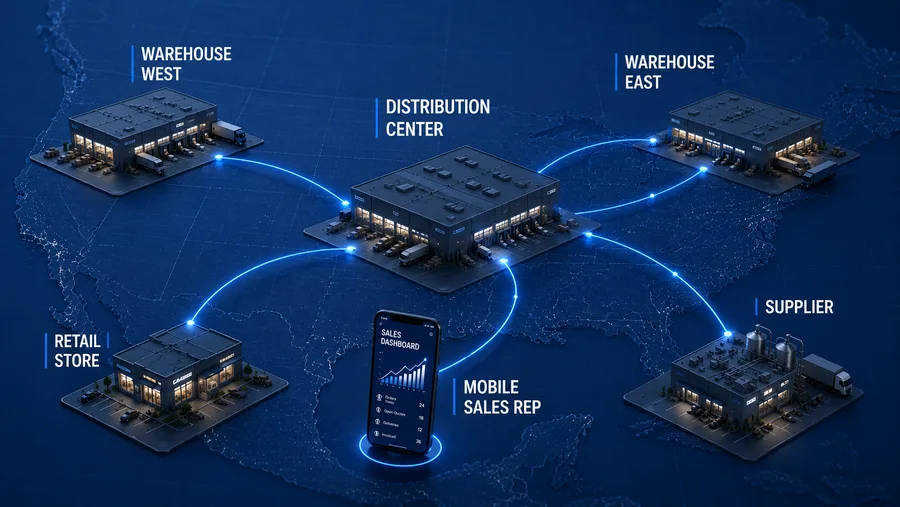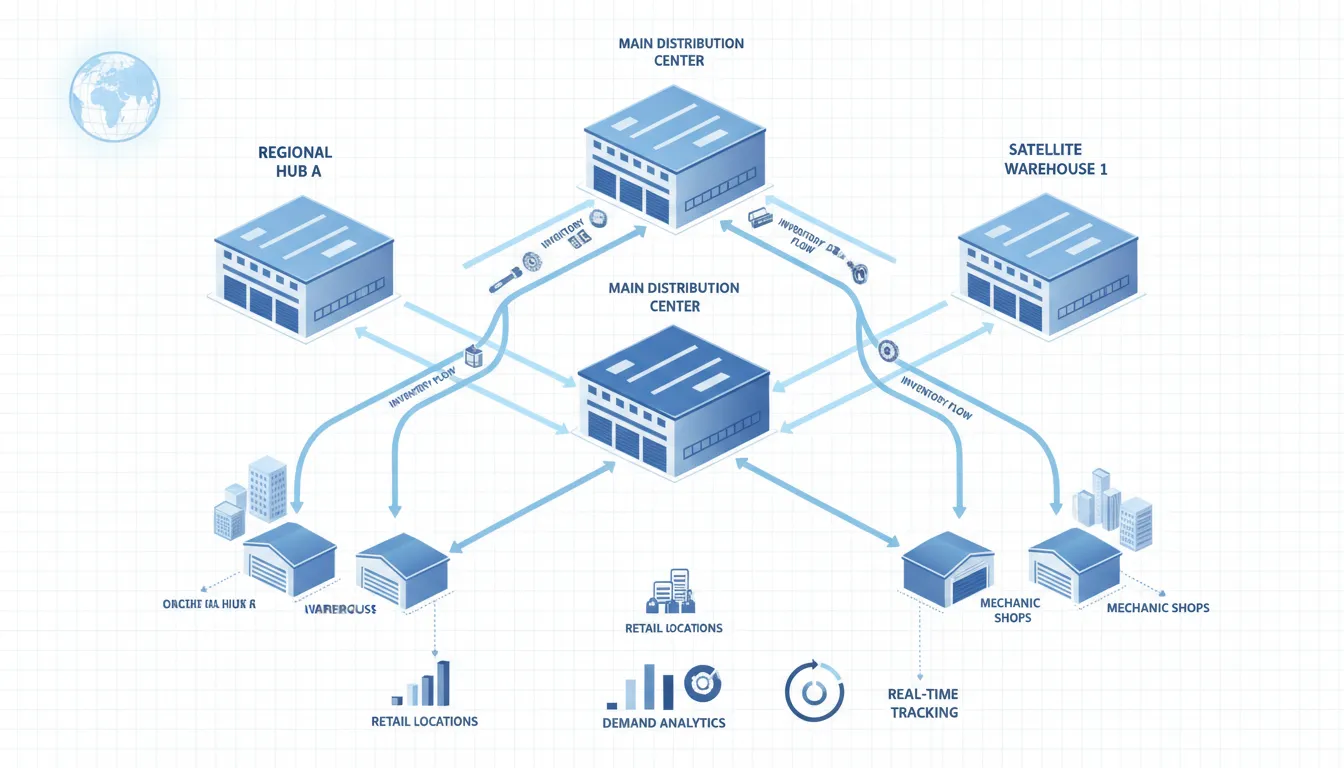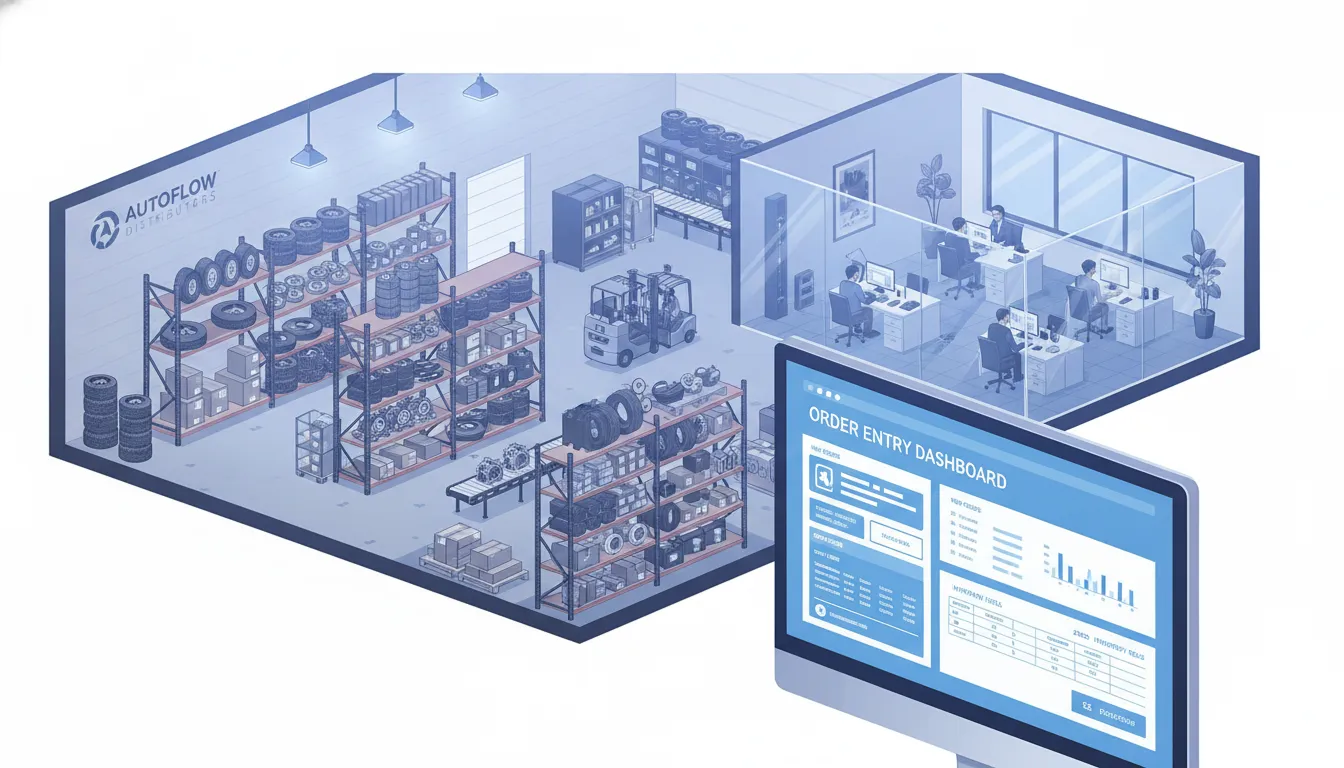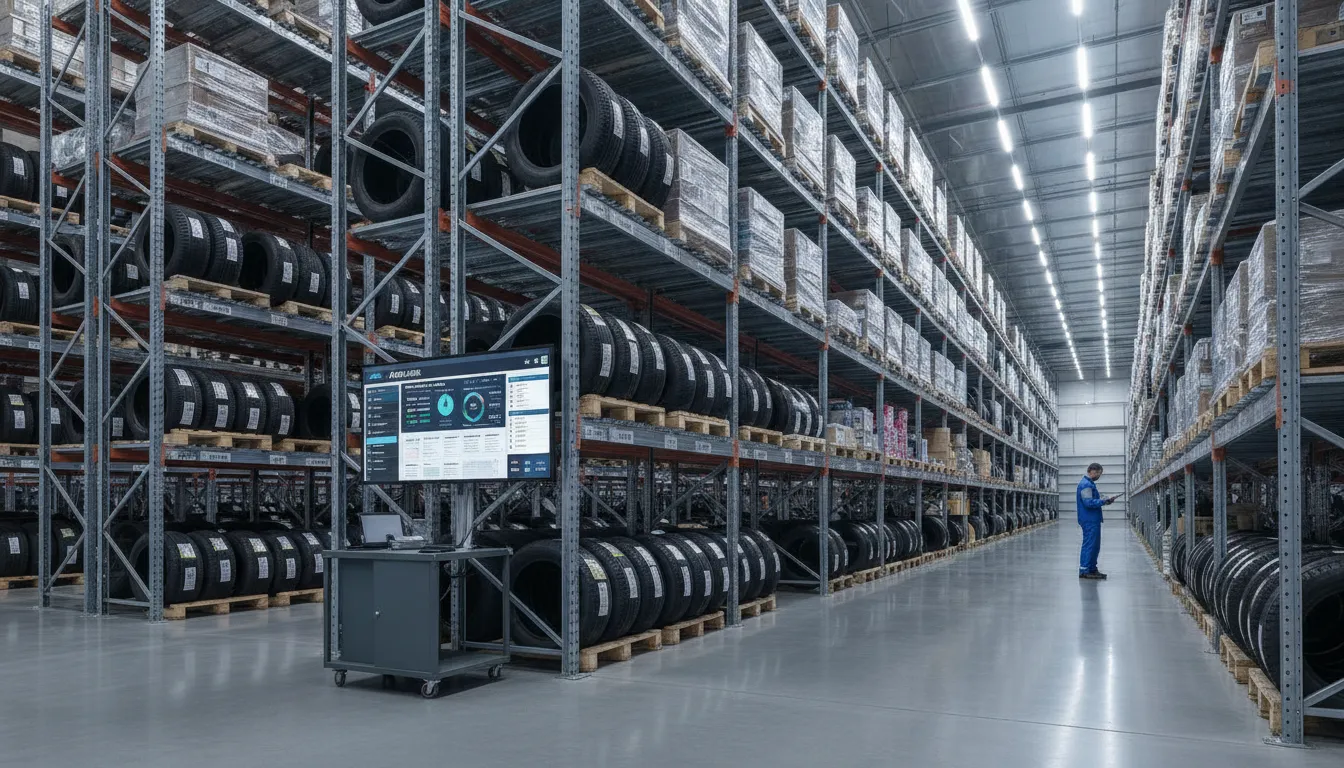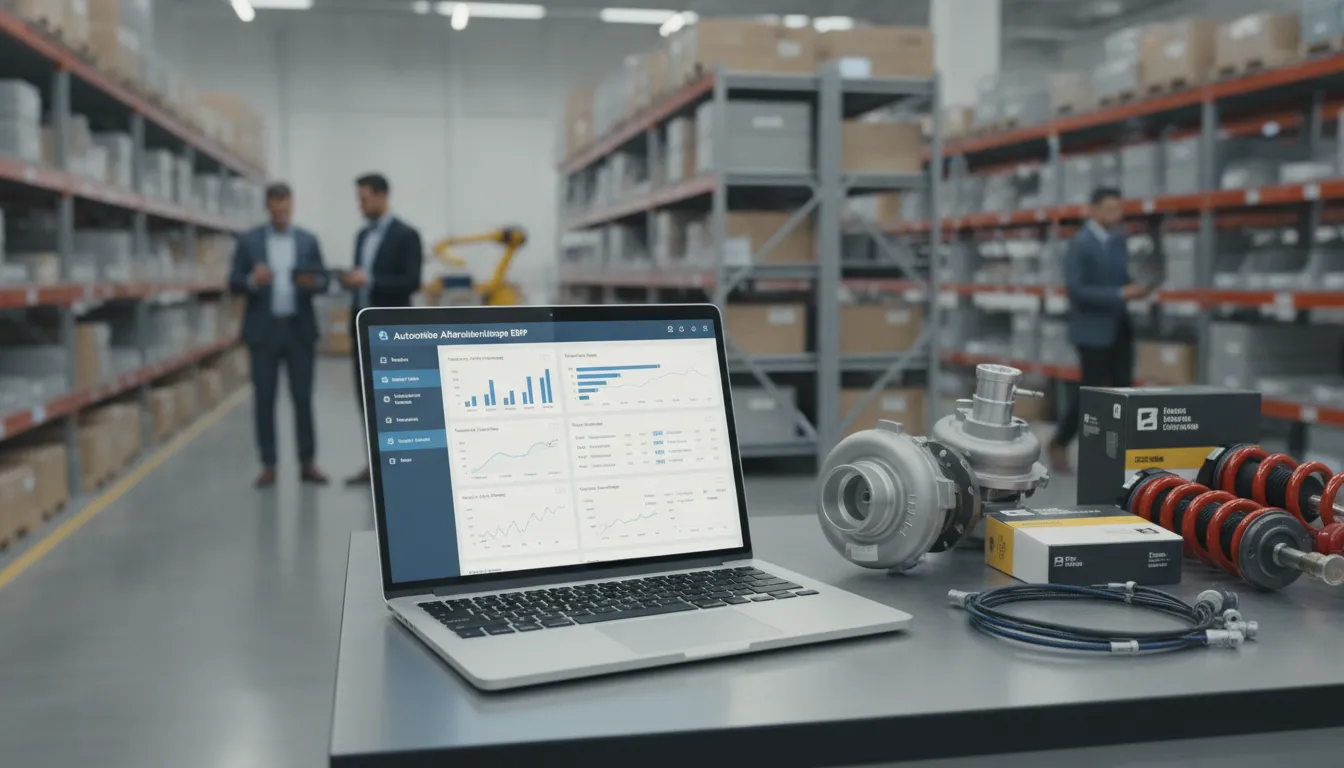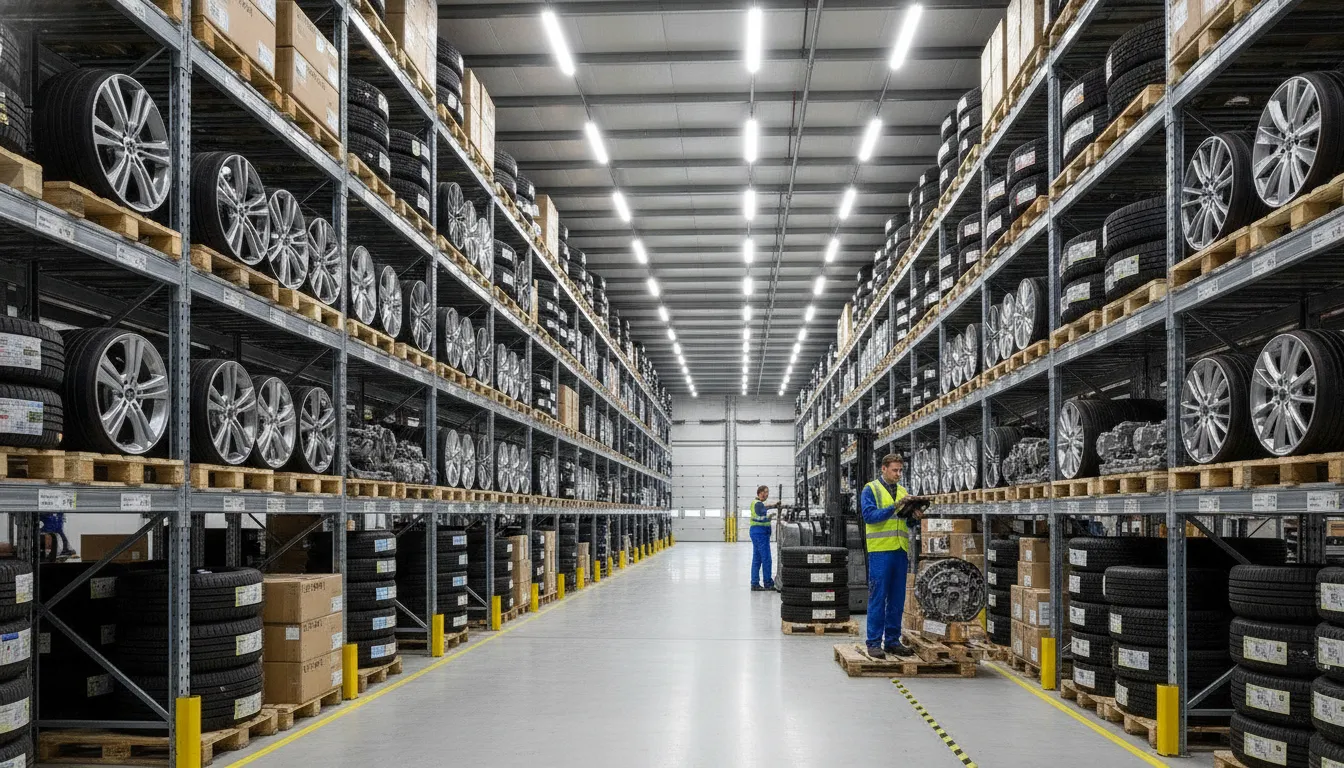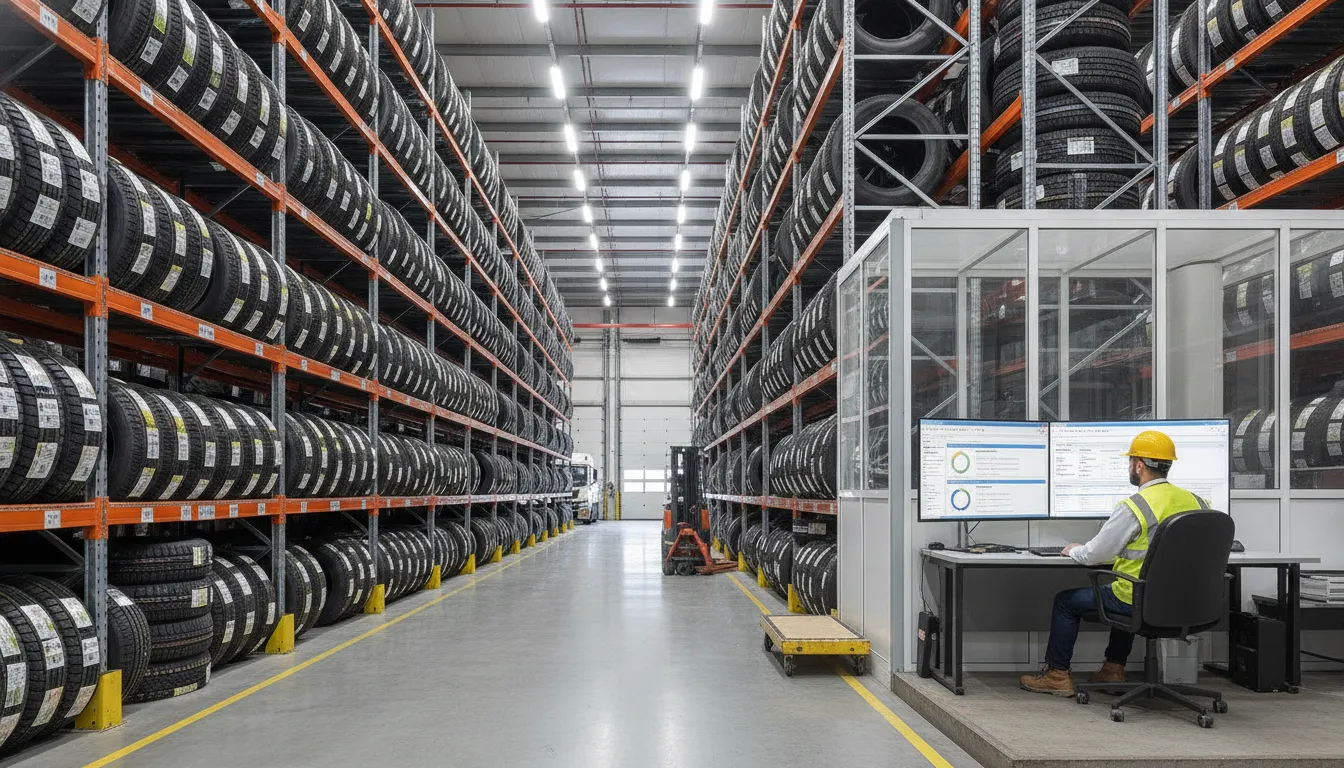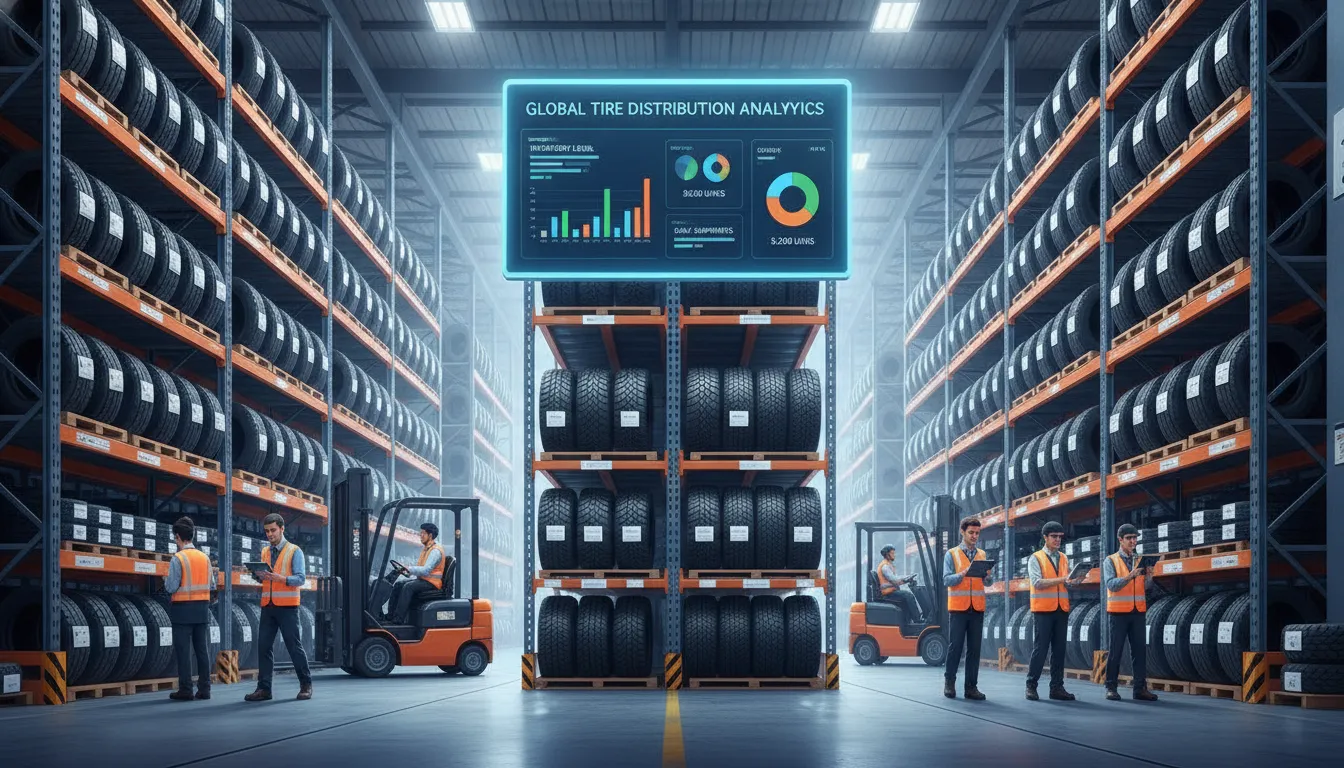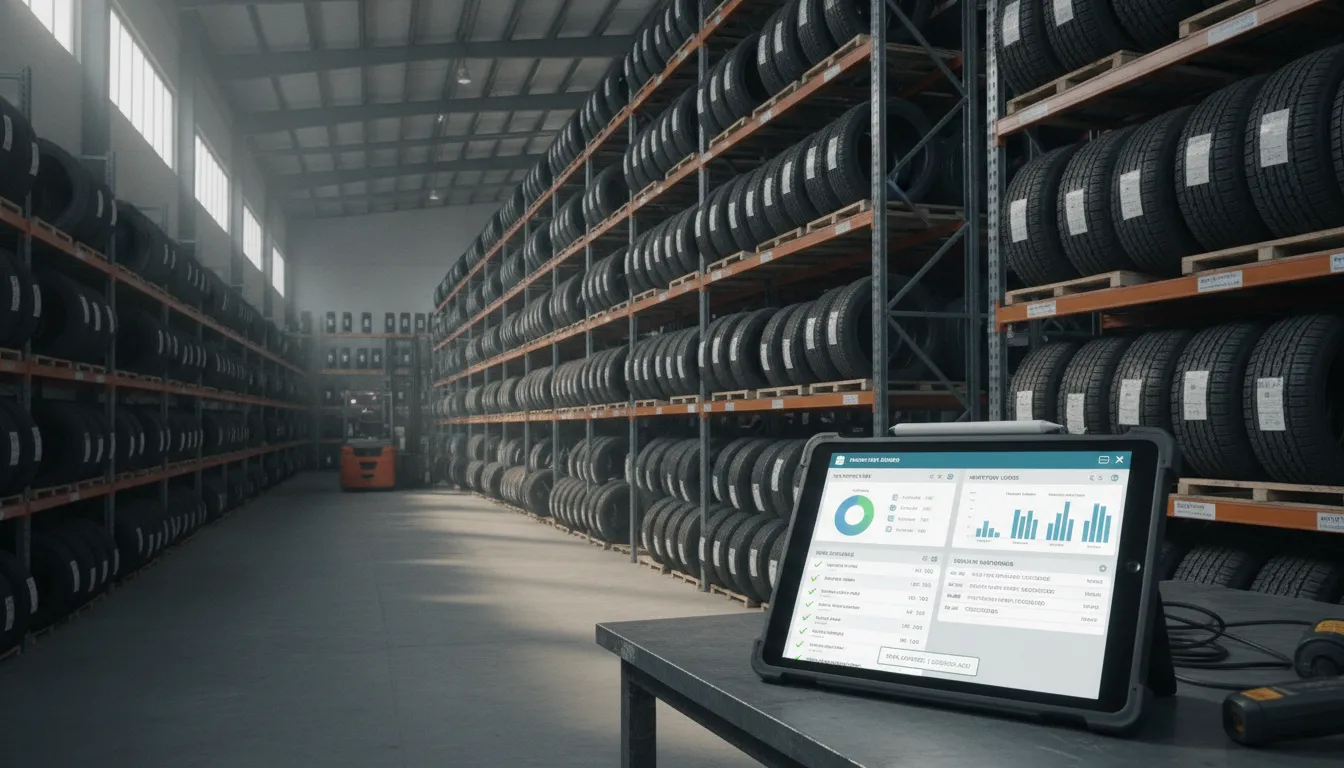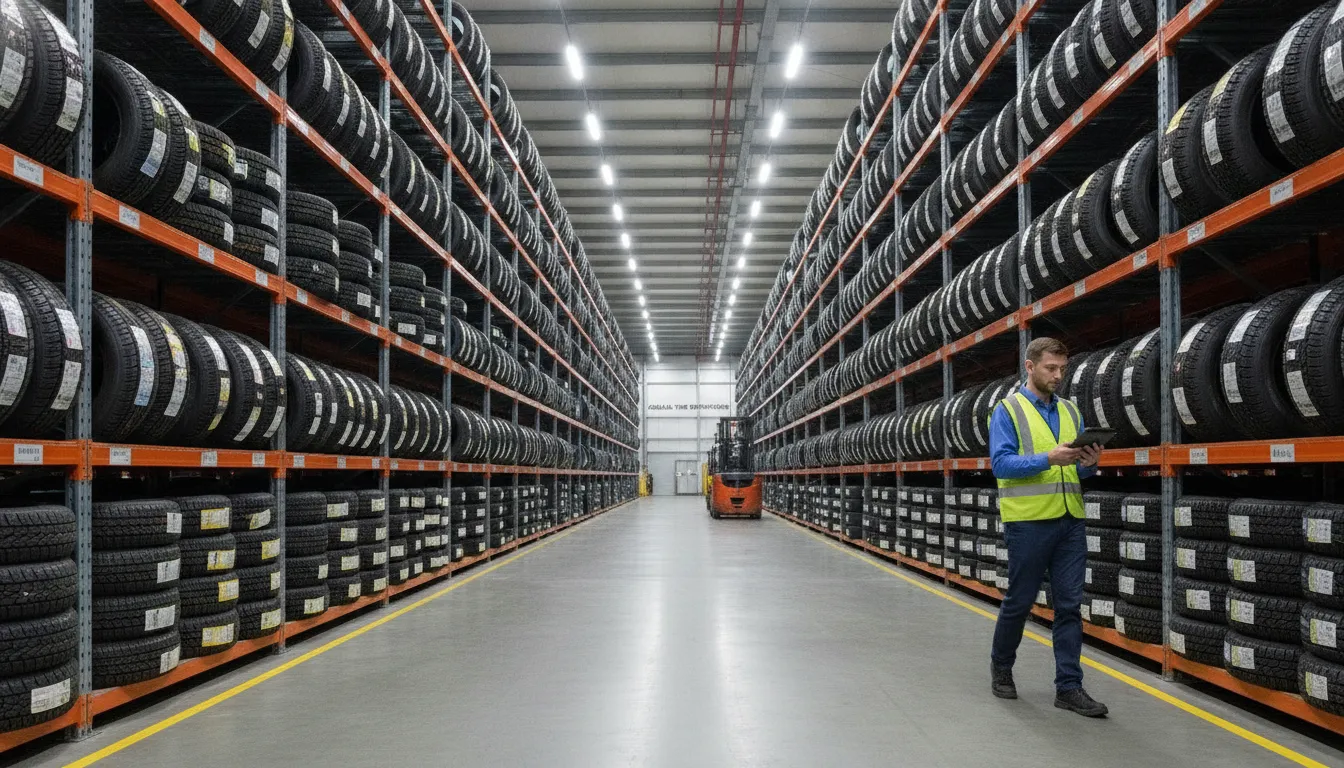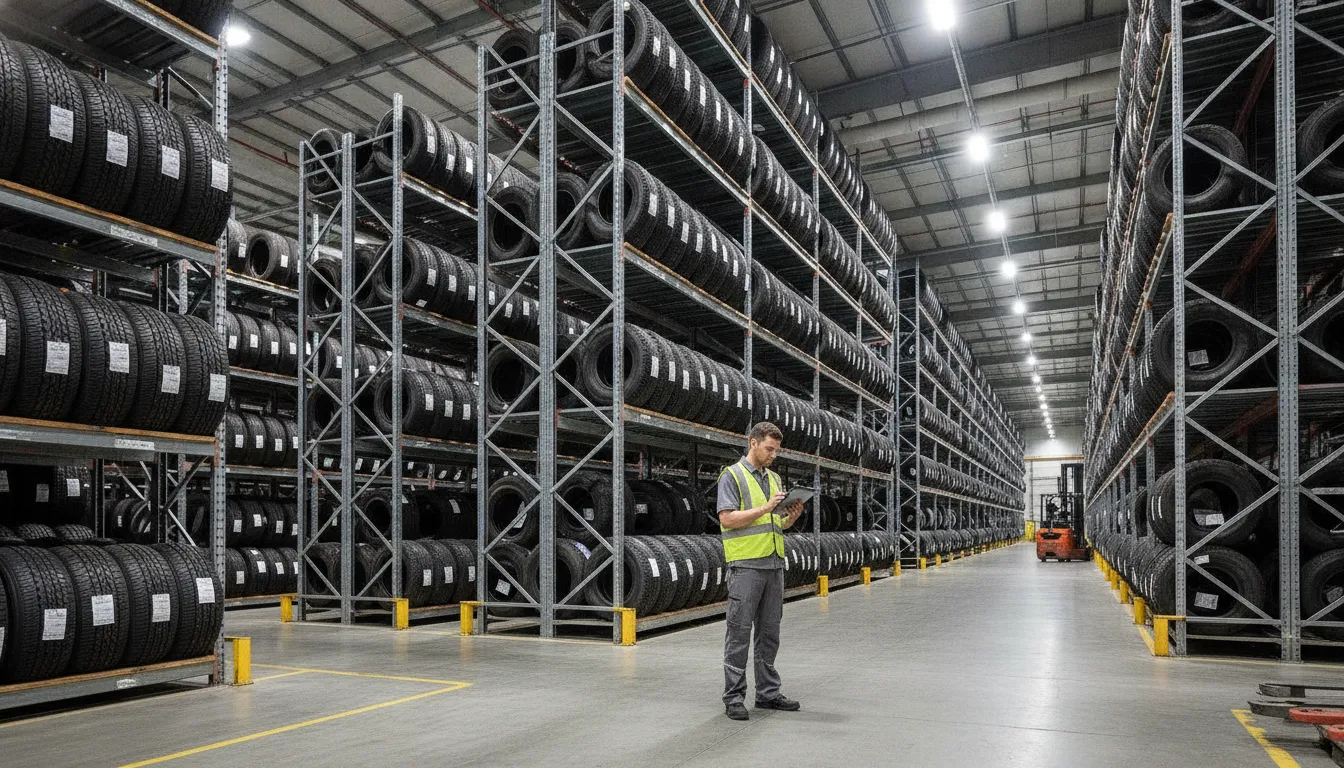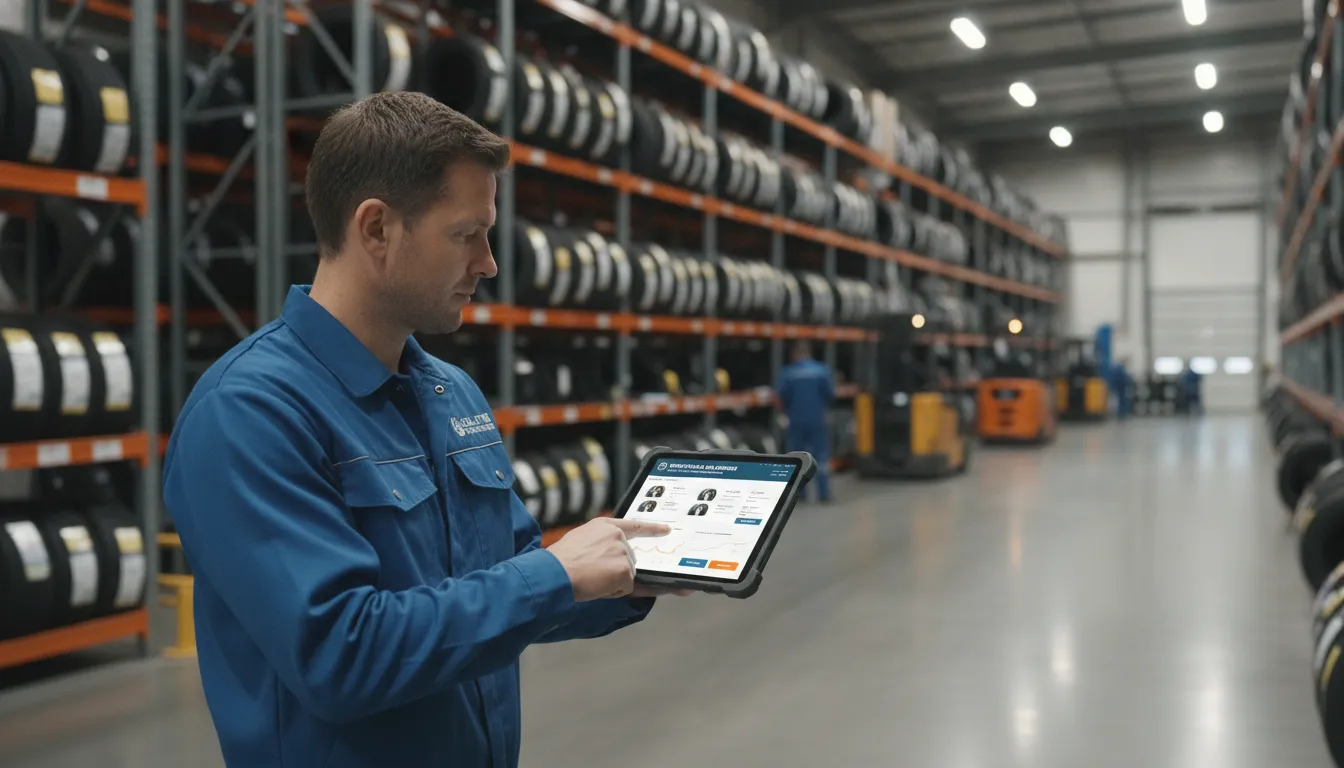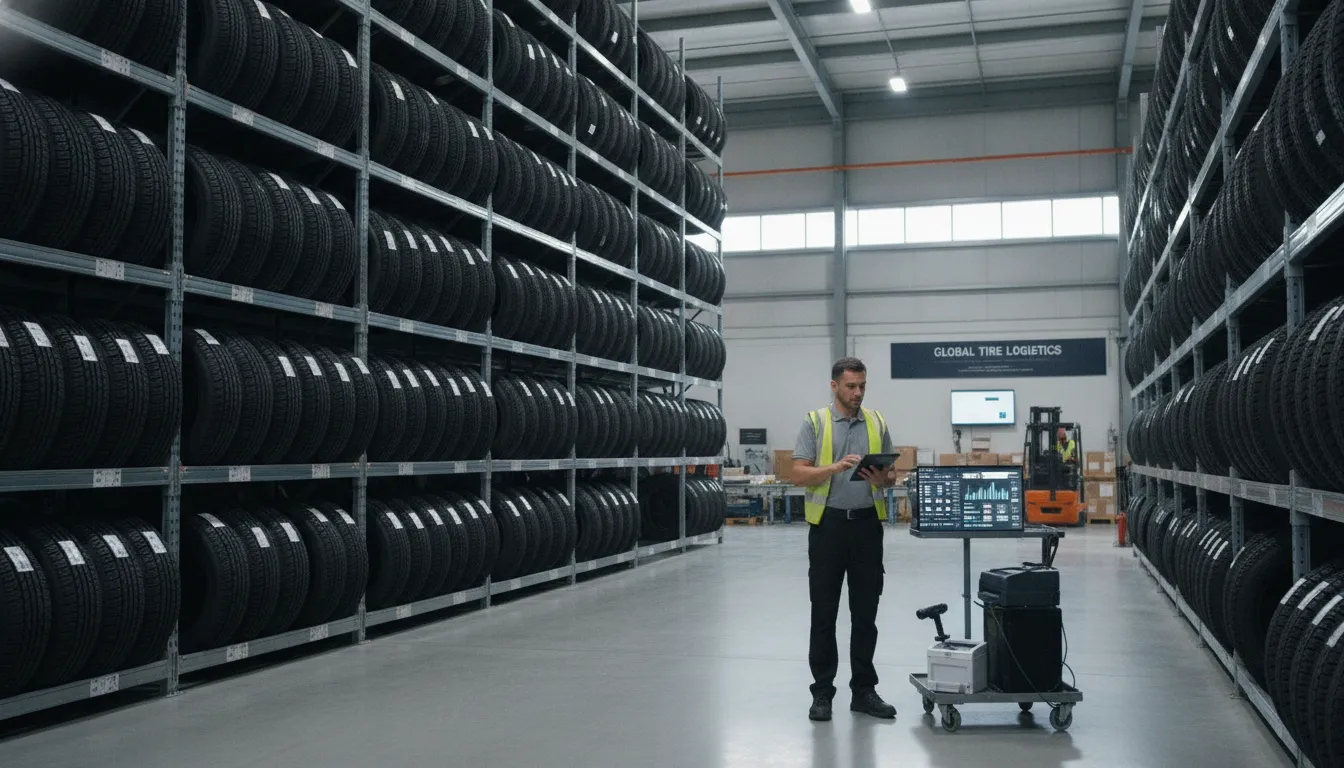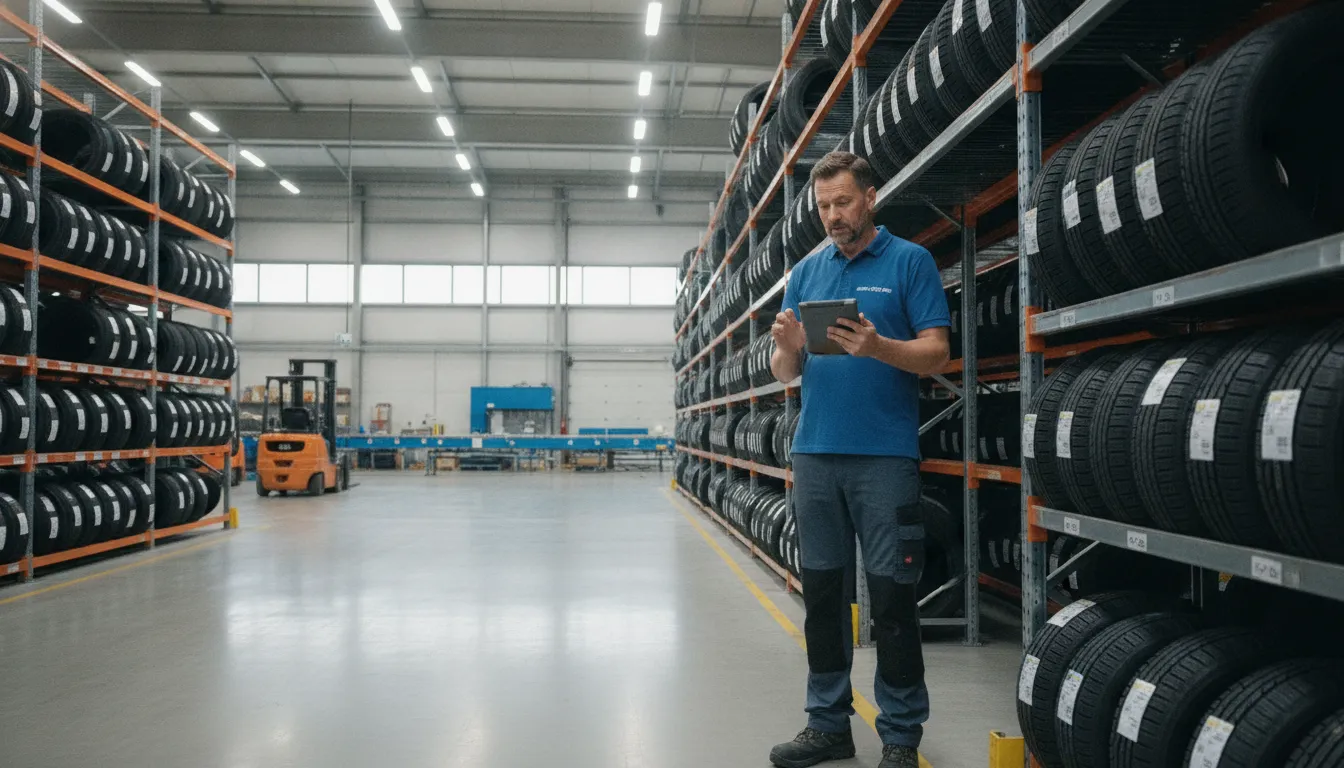

Tire wholesale and distribution ERP solutions are specialized software platforms designed to manage the end-to-end operations of tire distributors and wholesalers. Unlike general-purpose business software, these systems handle the unique product attributes of tires — speed ratings, load indexes. Aspect ratios, and rim diameters — alongside inventory management across multiple warehouse locations, bulk order processing, and logistics coordination. A tire-specific ERP connects manufacturer warehouse data with real-time sales channels to provide a single view of the entire business. According to ASA Automotive, these solutions are essential for managing the logistics and order complexity that define the tire trade. By consolidating every link in the supply chain into one platform, distributors can maintain optimal stock levels and offer dealers modern e-commerce ordering portals.

Tire Wholesale And Distribution Erp Solutions: What Is a Tire Wholesale and Distribution ERP Solution?
A tire wholesale and distribution ERP solution is a specialized business platform that integrates every facet of a tire distributor’s operations — inventory. Purchasing, sales, warehouse management, and financial accounting — into a single system. Unlike generic ERP software, tire-specific platforms understand product attributes like speed ratings, load indexes, section width, and aspect ratio. They support bin-level and lot-level inventory tracking, direct EDI connections to tire manufacturers, and multi-branch consolidation that gives distributors a real-time view of stock across all locations.
Management of Complex SKU Data

Integrated Distribution Operations
Warehouse velocity separates profitable tire distributors from struggling ones. A specialized ERP tracks inventory down to the precise bin location and shelf. This granularity matters because tires are bulky, heavy, and space-intensive. The system optimizes pick paths to minimize travel time, accelerating order fulfillment and ensuring the correct products reach customers on schedule. The operational rhythm of a tire distributor differs sharply from other verticals. A food distributor prioritizes expiration dates and cold chain integrity. A tire distributor must orchestrate rapid-fire deliveries to service bays that have no storage of their own. When an auto shop puts a car on a lift and needs four specific tires, the distributor must check inventory. Create the sales order, pick the stock, and dispatch the truck in a single uninterrupted workflow. Only a purpose-built distribution ERP can sustain this cadence at scale.Full Supply Chain Visibility
Sustainable success in tire wholesale requires a panoramic view of the business. An ERP consolidates data from warehouse operations, sales, purchasing, and accounting into a unified dashboard. Managers can identify which brands and SKUs are turning and which are gathering dust. This visibility drives smarter buying decisions for the coming season and reduces the capital tied up in slow-moving inventory. This transparency extends to customers. Modern ERP platforms include dealer-facing portals that let tire shops check stock availability and place orders directly. This self-service capability reduces the burden on the distributor’s inside sales team while making it easier for dealers to do business. By connecting every link in the chain, a tire wholesaler delivers a superior partner experience while building a more resilient operation. Is your current system keeping up with your growth? Book a TireServ ERP demonstration to see how QBC Systems can modernize your tire distribution operations.Why Tire Distributors Need Specialized ERP Software

Tire distribution presents operational challenges that generic business software cannot address: thousands of SKUs with complex attribute hierarchies, multi-site inventory coordination, manufacturer EDI integration, and service-bay-level delivery precision. Specialized tire wholesale and distribution ERP solutions solve these problems with features like bin/lot tracking, attribute-based product search, direct factory connections, and over 100 industry-specific reports. Distributors who use general-purpose software spend more time on manual data entry and reconciliation, while those with a purpose-built ERP gain efficiency, accuracy, and competitive advantage.

Handling Unique Tire Data
Tires are defined by more than a part number and price. A single product line may encompass dozens of variants differentiated by width, aspect ratio, rim diameter, load index, and speed rating. Distributors must track load ratings and speed symbols for every SKU — data that is meaningless in general inventory software but critical for safety and compliance in the tire trade. Specialized platforms enable teams to locate the correct product instantly. When a customer requests a specific tire specification, staff can filter and sort by all relevant attributes simultaneously. This precision reduces picking errors and shipping mistakes while ensuring that customers receive tires that meet the safety requirements of their vehicles.Better Supply Chain Outcomes
Leading distributors understand that effective supply chain management extends beyond purchasing from vendors. It encompasses every step from manufacturer to end customer. Research from MIT Sloan Management Review confirms that end-to-end visibility is the only reliable approach to supply chain management. A specialized ERP provides the tools to monitor each link in that chain. When every node in the supply chain is visible, distributors reduce costs and improve customer satisfaction. A comprehensive approach enables wholesalers to lower operational expenses while raising service levels. Managers can identify bottlenecks before they cause delays and optimize transportation routes for lower freight costs. These capabilities are essential for sustained growth in the tire industry.Clear Visibility and Digital Tools

Modern distribution requires more than an order entry system. Distributors need real-time visibility across all locations and the ability to integrate data with major channel partners such as American Tire Distributors (ATD). These integrations surface live stock levels and enable automated replenishment without manual data entry. Digital tools now encompass dealer portals, business analytics, and customer-facing e-commerce sites. Operating from a single platform across every link in the chain eliminates data silos. Following distribution business best practices helps wholesalers stay ahead of competitors still relying on disconnected legacy systems. This visibility empowers leaders to make decisions based on current data rather than historical guesses.Key Features to Look for in Tire Wholesale ERP Solutions
Essential features in a tire wholesale ERP include bin/lot/serial inventory tracking, EDI integration with tire manufacturers. Configurable reorder points, multi-branch consolidation, over 100 industry-specific reports, and attribute-based product search. A comparison table below shows how specialized tire ERP platforms differ from general ERP systems across stock tracking, order entry, manufacturer links, reporting depth, and multi-site management.
Inventory Control and Order Management
Tire inventory management is uniquely demanding due to the volume of SKUs and the physical footprint of the products. A capable system uses bin, lot, and serial number tracking to maintain precise control. Lot and serial tracking support warranty administration and recall management — essential capabilities in the tire industry where safety regulations apply. Quality platforms integrate directly with tire manufacturer systems such as Royal 4 WMS. This connection provides real-time visibility into factory stock, enabling distributors to promise accurate lead times to their customers. Speed in order processing is equally critical. Look for systems that support EDI (Electronic Data Interchange) to exchange purchase orders, invoices, and advance ship notices with trading partners automatically. Automated reorder point calculations keep shelves stocked during peak demand periods while minimizing excess inventory carrying costs.| Key Feature | General ERP | Specialized Tire ERP |
|---|---|---|
| Stock tracking | Basic quantity counts. | Bin, lot, and serial tracking. |
| Order entry | Manual data entry. | Fast entry with EDI and API integrations. |
| Manufacturer links | No direct factory connections. | Direct links to manufacturer WMS systems. |
| Business reports | Basic sales summaries. | Over 100 industry-specific reports. |
| Multi-site management | Single site focus. | Built-in multi-branch consolidation. |

Business Intelligence and Multi-Site Support
Data-driven decision making requires robust reporting. A strong platform provides access to more than 100 specialized reports covering sales performance, inventory turnover, gross margin analysis, and cash flow. Good reports reveal which products drive profitability and where cost reductions are possible. For distributors operating multiple locations, the system must consolidate data from all sites into a unified view. Growing tire wholesalers frequently operate several branches simultaneously. The ERP must handle multi-site data aggregation without latency, linking sales data to general ledger entries so that profit and loss can be assessed by location. When financial and operational systems communicate seamlessly, leadership gains a complete picture of business health.Implementation Expertise and Systems Integration

Deploying a new ERP is a significant undertaking that extends beyond software installation. Research from the University of Tennessee underscores that successful integration requires thorough process mapping and sustained leadership commitment. Companies that invest in this groundwork gain a durable competitive advantage over peers who treat implementation as a purely technical exercise.How Cloud ERP Supports Multi-Site Tire Distribution
Cloud-based tire wholesale and distribution ERP solutions offer centralized data access across all branch locations. Lower IT infrastructure costs, automatic software updates, and simplified scalability for adding new sites. Distributors gain real-time inventory visibility, standardized reporting across branches, and business continuity protection through off-site data storage.
Centralized Data for Every Branch
A cloud platform maintains all branch information in a secure, centralized environment. This architecture supports real-time tire inventory management without batch processing delays. When one location sells a tire, every other site sees the updated count immediately. This demand-to-supply linkage creates a genuine operational edge. Standardized tools also improve reporting accuracy. Leading platforms offer over 100 report configurations tailored to the automotive aftermarket. You can learn more about these industry-specific reporting capabilities to evaluate their fit for your business. A single source of truth reduces reconciliation errors and keeps your team focused on customer needs rather than data cleanup.Lower Technology Costs and Automatic Updates
On-premise software requires significant capital investment in servers, networking equipment, and IT personnel. Cloud solutions eliminate these costs by hosting the infrastructure off-site. This model allows distributors to deploy a right-sized cloud ERP with predictable monthly costs that scale with the business. Software updates occur automatically in the cloud. There is no need to schedule maintenance windows or pay for upgrade services. The provider manages security patches and feature releases, ensuring the platform remains current without disrupting operations. This approach keeps multi-site businesses secure and up to date with minimal administrative overhead.Scaling Your Tire Business
Cloud platforms make it practical to open new locations rapidly. A new branch can be operational in days rather than weeks because the software requires nothing more than a web browser and internet connection. This low-friction onboarding accelerates geographic expansion. Cloud architecture also provides disaster recovery protection. If a physical location experiences a fire, flood, or other disruption, business data remains safe in the cloud. Operations can resume from any other location with internet access. Combining digital tools such as wholesale dealer portals with cloud-based analytics creates a resilient supply chain that can withstand local disruptions.Integrating ERP with Tire Supply Chain and Inventory Management
Integrating a tire wholesale ERP with existing supply chain systems requires assessing current data flows. Choosing integration methods (APIs, EDI, or file-based transfers), configuring inventory rules, connecting to manufacturer systems, and training staff. The process is iterative — data flows must be monitored and refined over time to maintain accuracy and efficiency.
Mapping Your Data Flows
The first step is auditing current systems to understand where data originates and how it moves. Tire wholesale involves multiple touch points — manufacturer purchase orders, warehouse receiving, inventory transfers, sales orders, and shipping. A clear process map reveals gaps in the current supply chain management workflow before technical work begins. Benchmarking current processes against industry leaders helps identify what is working and what requires improvement. Thorough process mapping is the foundation for a successful ERP implementation.Setting Up the Integration
Modern tire wholesale and distribution ERP solutions use APIs for real-time data exchange between systems, keeping demand signals and supply data synchronized as orders flow in. EDI handles structured transactions with larger trading partners, while file-based transfers can bridge older legacy systems. The objective is to eliminate manual data entry and the errors that accompany it.- Assess current systems. Inventory your existing software stack and identify where data becomes stagnant. Document how information flows from a sales order to a warehouse pick ticket.
- Choose integration methods. Select the appropriate approach for each connection — APIs for real-time synchronization, EDI for structured partner transactions, or flat files for legacy system bridges.
- Configure inventory parameters. Set reorder points, min-max levels, and preferred bin locations. Clear location mapping helps warehouse staff locate stock quickly and reduces misplaced inventory.
- Connect with suppliers. Link the ERP to manufacturer warehouse systems to access factory-level stock visibility. This enables accurate lead time commitments to customers.
- Train your team. Invest in comprehensive staff training. Well-trained users keep data accurate and maximize the return on the ERP investment over time.
Ensuring Long-Term Success
System integration is not a one-time project. It requires ongoing monitoring and refinement. Regularly reviewing data flows ensures they remain efficient and accurate. Continuous improvement efforts uncover new opportunities for cost reduction and service enhancement, keeping the business agile as market conditions evolve.Choosing the Right ERP Partner for Your Tire Distribution Business
Selecting an ERP partner requires evaluating industry expertise, breadth of services (software, implementation, training, hardware, and support), and long-term stability. QBC Systems has specialized in tire and automotive supply distribution since 1978, offering the TireServ ERP platform alongside full implementation, training, hardware, networking, and managed IT services.
Look for Industry Expertise
Your operation has specific requirements that generalist providers cannot fully address. Tire distributors manage complex product hierarchies, manufacturer relationships, and time-sensitive delivery commitments. An ERP partner should demonstrate deep knowledge of the tire and automotive aftermarket. QBC Systems has served this sector since 1978, developing purpose-built solutions for exactly these challenges. Choosing a provider that understands your industry reduces implementation time and ensures the platform includes the features your business needs. The TireServ ERP platform exemplifies this specialization, with capabilities designed specifically for tire distribution operations.Evaluate Full-Service Support
A capable partner delivers more than a software license. Comprehensive services include system implementation, staff training, technical support, hardware configuration, networking, and ongoing managed IT services. Working with a provider that understands tire distribution workflows can save weeks of implementation effort. Some software vendors sell only the application. Wholesale distributors frequently need assistance with the underlying infrastructure — servers, networks, data centers — that keeps the system running reliably. You want a partner that can address both the software and the physical technology stack. Industry analysts emphasize that right-sized ERP solutions are essential for maintaining competitiveness. The ideal partner can manage your data center and IT operations as your business scales, ensuring your technology infrastructure grows in step with your revenue. Responsive support matters intensely. When a critical system issue arises during operating hours, every minute of downtime carries real cost. A partner that answers the phone and resolves problems quickly keeps your warehouse running without expensive interruptions.Plan for a Long-Term Commitment
ERP implementation is a multi-year investment that requires sustained leadership commitment. Research from the University of Tennessee confirms that successful integration demands thorough planning and executive sponsorship. Organizations that approach implementation with a long-term perspective achieve measurably better outcomes. Seek a partner with a proven track record of longevity. A company that has operated for decades is more likely to provide stable support over the life of your system. Look for technology built on reliable foundations such as MySQL with cloud deployment options. This combination of modern architecture and proven stability offers the most dependable path forward. Ready to evaluate a purpose-built ERP for your tire distribution business? Schedule a TireServ ERP demonstration with QBC Systems and learn how our team can support your operations.Frequently Asked Questions
How does ERP technology support wholesale tire pricing?
An ERP system provides full visibility into sales data, cost structures, and margin performance across your tire business. Most platforms include over 100 reports covering pricing analysis, sales trends, and inventory carrying costs. This data enables distributors to set competitive prices while protecting margins. According to NBS, a right-sized cloud ERP helps wholesalers stay competitive in a dynamic market. Real-time pricing tools make it easier to adjust prices based on demand and supply conditions.
Does tire distribution ERP include hardware and IT support?
Software-only vendors provide the application but leave infrastructure to the customer. A full-service partner like QBC Systems also supplies hardware, networking, data center setup, and ongoing managed IT support. Having one team responsible for both software and infrastructure simplifies problem resolution and ensures the entire technology stack works together seamlessly.
What kind of reports can a tire wholesaler expect from an ERP system?
Modern tire ERP systems offer over 100 report types covering sales performance, inventory turnover, gross margin by SKU or product line, customer purchasing patterns, and cash flow analysis. According to Klipboard, these reports can be both standard templates and fully customized to match your reporting requirements. Access to this data enables better strategic decisions about purchasing, pricing, and resource allocation.
How much training is needed for a new tire ERP system?
Training duration depends on team size, the complexity of your operations, and the number of modules being deployed. A full-service ERP partner typically provides hands-on training for all user roles. Since successful integration is complex, sustained leadership commitment is essential for a successful deployment. Well-trained teams achieve higher adoption rates and maintain better data quality over time.
Can a tire ERP system improve customer service?
Yes. An ERP tracks orders from placement through delivery, enabling distributors to provide real-time status updates to customers. Self-service dealer portals let customers check inventory availability and place orders without contacting your sales team. Research from MIT Sloan confirms that supply chain improvements directly increase customer satisfaction. Better service helps retain existing accounts and strengthens your brand in the market.
Ready to Book a Tire Distribution ERP Demonstration?
Running your tire wholesale business on disconnected systems leads to lost sales, excess inventory, and operational costs that erode margins month after month. Without a unified platform for inventory, order management, and supply chain visibility, your team spends more time on data reconciliation than on serving customers. Closing these gaps means your existing staff can handle higher order volumes without adding headcount.
QBC Systems has helped tire distributors improve their operations since 1978. Our team understands the unique demands of tire wholesale and can guide your transition to TireServ ERP with minimal disruption to your daily operations.
Ready to get started? Call (716) 691-5201 to speak with an ERP specialist or schedule a free consultation online.