
Accounting software can keep your books organized. It does not necessarily show whether the right part is available at the right warehouse. Whether a customer received the correct price, or whether purchasing needs to replenish stock before an order is delayed.
For distributors managing multiple locations, large product catalogs, and high-volume orders, an auto parts wholesale ERP is usually the better operational fit than a generic accounting system. Accounting remains an essential part of the platform, but ERP connects financial records with inventory, purchasing, quotations, order processing, customer pricing, and fulfillment. That means sales, warehouse, purchasing, and accounting teams work from connected information instead of reconciling separate spreadsheets and systems.
The difference becomes more important as your operation grows. QBC Systems has served distributors since 1978, with TireServ designed for tire and automotive supply distributors. See QBC's TireServ ERP for Wholesale Tire and Auto Parts Distributors for the product context behind this comparison. The first question is not whether accounting software is useful, but where it stops supporting the work that happens before and after a transaction.
Why Auto Parts Distributors Outgrow Accounting Software
Accounting software can remain valuable after a distributor has outgrown it operationally. It may handle the general ledger, receivables, payables, banking, and other financial records well enough. The problem begins when employees must use spreadsheets, paper notes, separate inventory tools, or manual workarounds to answer basic distribution questions: What is available at each warehouse? Which vendor should be replenished? What price applies to this customer? Has an order been picked, transferred, or shipped?
Auto parts distribution is more demanding than recording completed transactions. A distributor may manage many SKUs, several inventory locations, frequent orders, customer-specific pricing, purchasing decisions, and time-sensitive fulfillment. When those activities live outside the accounting system, information gets re-entered or reconciled later. That creates more opportunities for delays, duplicate work, and decisions based on incomplete inventory or order data. Research on auto parts distribution similarly identifies manual tools and disconnected systems as poor fits for complex operations when workflows grow more interconnected.
The usual switching signals
The trigger is rarely one dramatic failure. More often, several small limitations become part of the daily routine:
- Inventory counts are maintained manually or updated after the fact.
- Employees cannot quickly see stock across warehouses or branches.
- Purchasing and replenishment depend on individual knowledge rather than shared information.
- Sales staff recheck prices, availability, quotes, or order details in multiple places.
- Managers assemble reports by exporting data and combining spreadsheets.
- Mobile or remote access does not support the way warehouse and sales teams work.
These signs do not mean every accounting product is inadequate or that a distributor must replace a system immediately. They indicate that the business should evaluate whether its core platform supports operational work as well as financial control. An ERP software for distributors connects accounting with purchasing, inventory, orders, customer accounts, and fulfillment so teams can work from a more consistent view of the business.
For an auto parts distributor, the goal is not to abandon sound accounting practices. It is to reduce the gap between what happens in the warehouse, sales office, and purchasing department and what finance ultimately records.
What Accounting Software Misses in Inventory and Multi-Location Operations
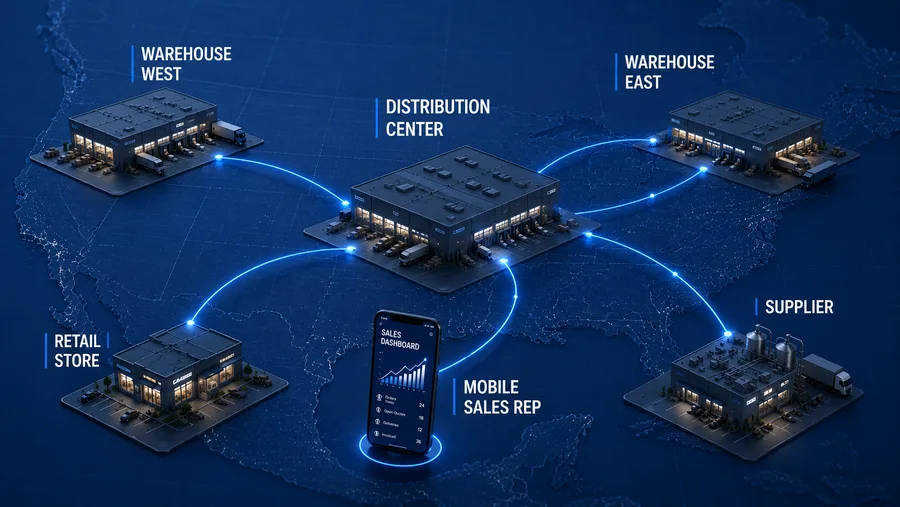
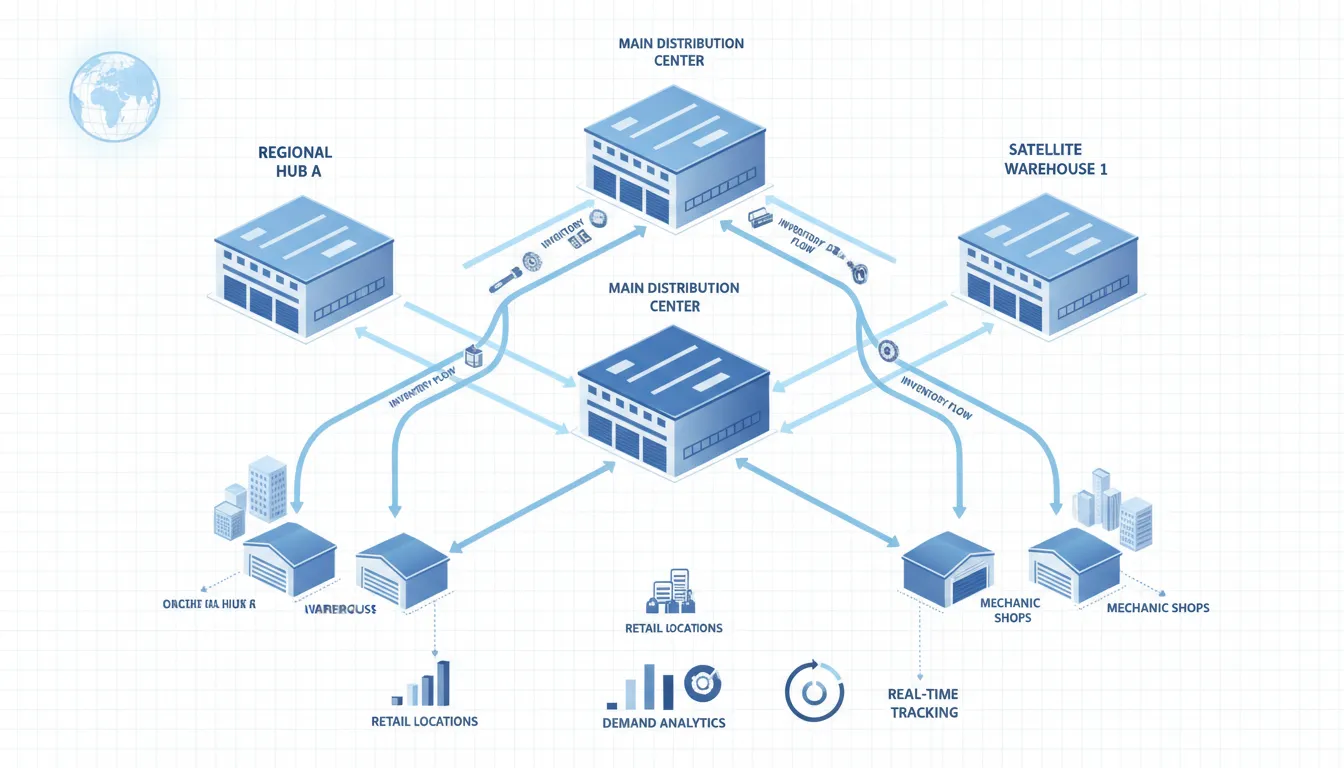
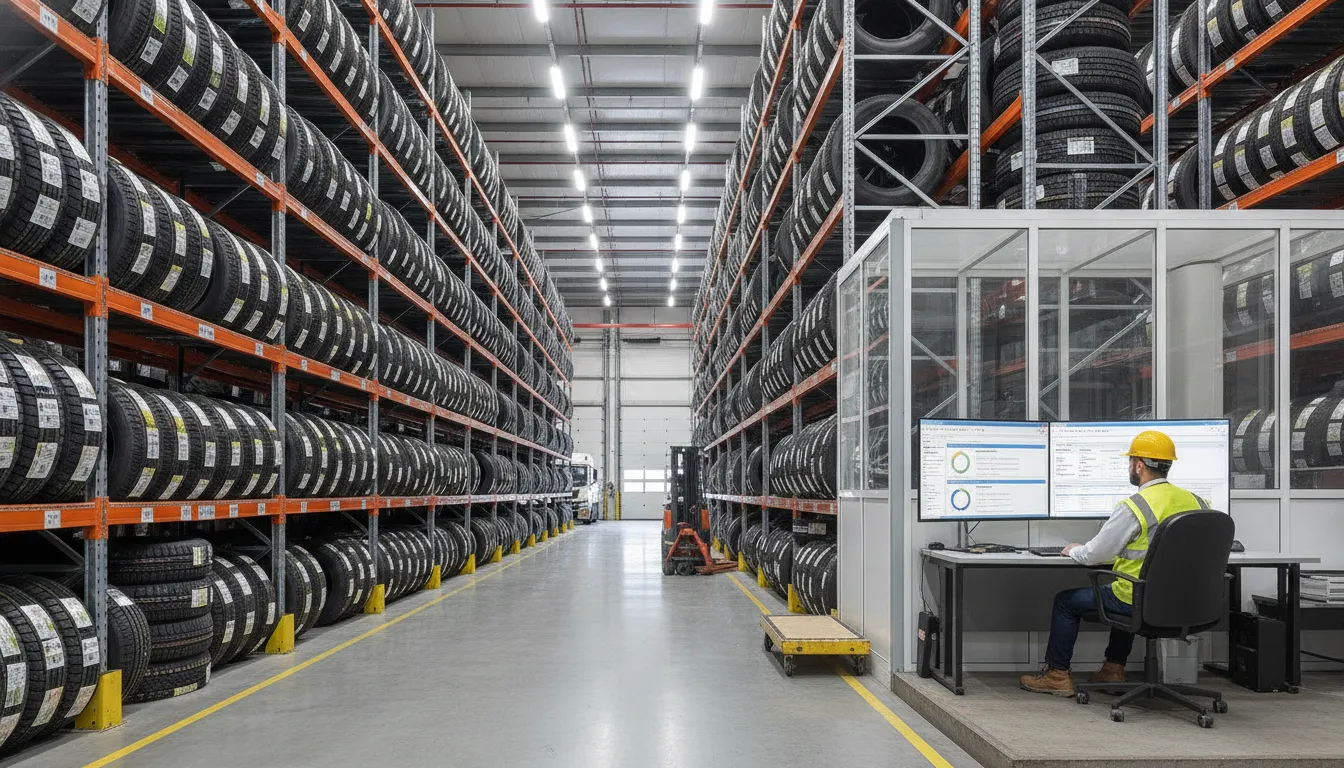
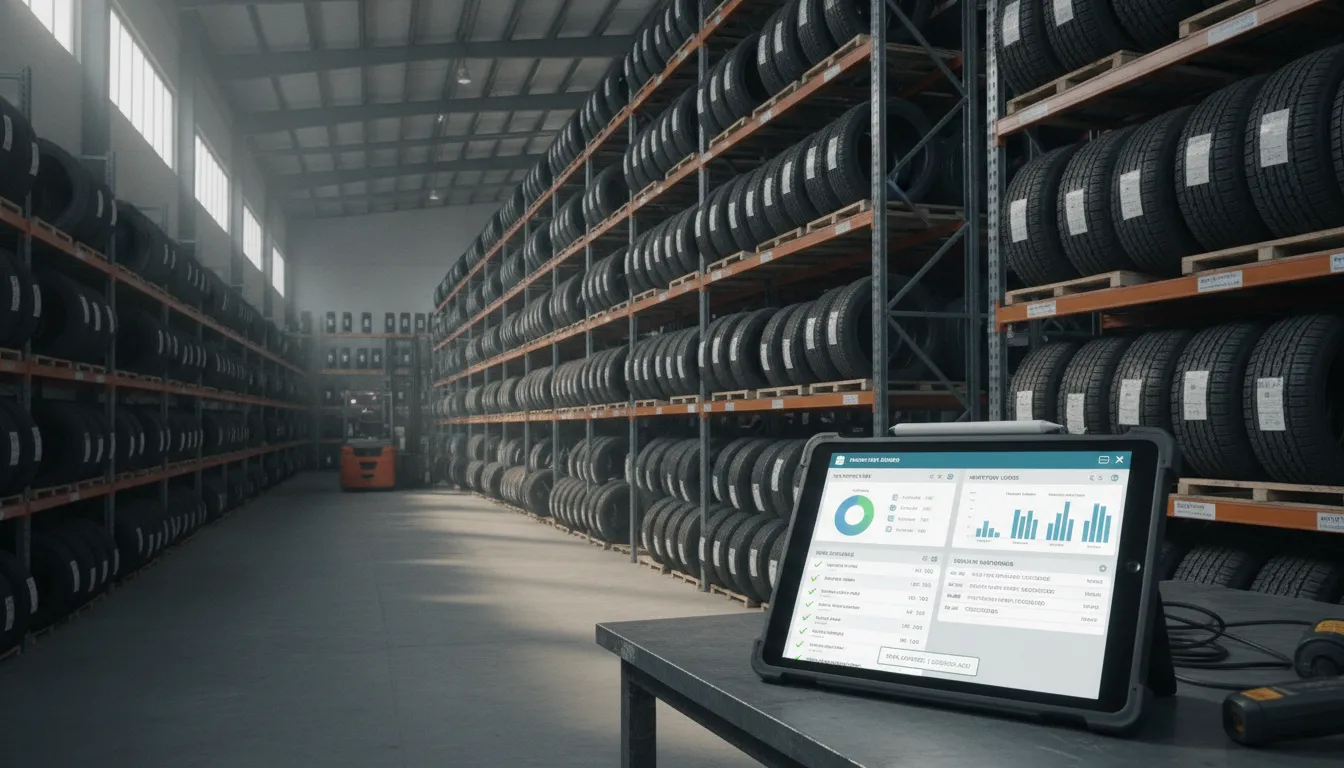
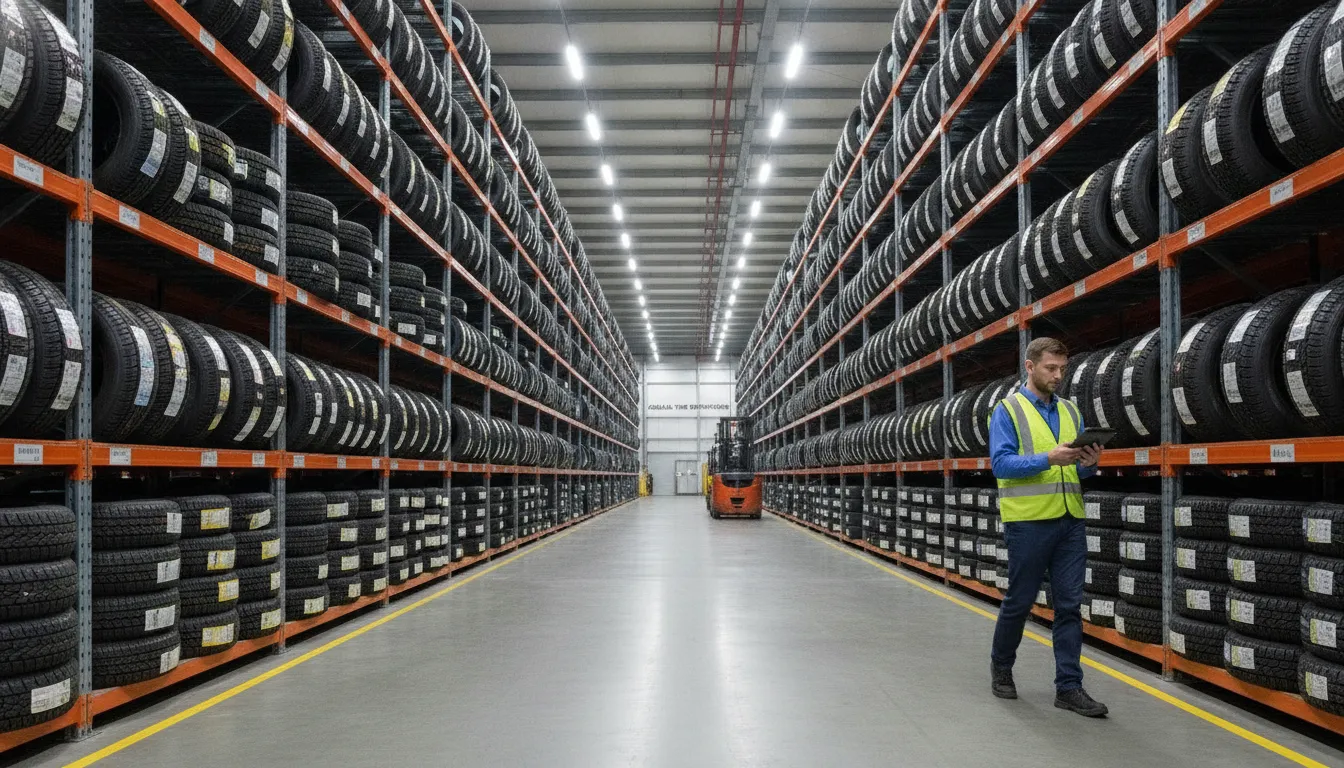
Accounting software is essential for recording financial transactions, but inventory decisions happen before a transaction reaches the general ledger. For an auto parts distributor, the practical question is not whether accounting matters. It is whether the system also gives purchasing, sales, and warehouse teams a shared view of what is available. Where it is located, and how an order should be fulfilled.
| Operational area | Typical accounting-software focus | Distribution ERP need |
|---|---|---|
| Item-level inventory | Value stock for financial reporting and record transactions. | Track item quantities, availability, purchasing activity, and movement as part of daily operations. |
| Multiple warehouses | May support locations, depending on configuration and add-ons. | Show stock by warehouse or branch so teams can make decisions using location-specific information. |
| Transfers and requisitions | Record the financial result after staff coordinate movement separately. | Support branch requisitions and transfers with a connected operational record. |
| Replenishment | Report on purchases and costs after activity is entered. | Use inventory and purchasing information to identify replenishment needs and support timely buying decisions. |
| Order allocation | Capture the sale and its accounting impact. | Connect orders with available stock and the location best positioned to fulfill them. |
| Location visibility | Provide financial summaries that may require manual reconciliation across sites. | Synchronize location information and provide consolidated reporting for management. |
The distinction becomes more important as a distributor adds warehouses, carries a broad catalog, or handles orders through several channels. A system that records the final sale may still leave employees checking spreadsheets, calling another branch, or manually reconciling quantities before promising availability. Those workarounds create delay and make it harder to distinguish on-hand stock from stock already committed, in transit, or assigned to another location.
QBC documents multi-warehouse functionality, branch purchase requisitions and transfers, consolidated reporting, and synchronization between locations. TireServ is designed for tire and automotive supply distributors and includes inventory management with multi-warehouse support. Its documented capabilities also include purchasing and vendor management, sales order processing, and quoting. These are distribution workflows, not claims that every accounting product lacks equivalent features. They are criteria buyers should verify when comparing an accounting-led setup with an wholesale distribution ERP. Review the TireServ ERP overview for wholesale tire and auto parts distributors alongside those criteria.
For a deeper review, compare how each candidate handles a real transfer, a low-stock item, and an order that could ship from more than one warehouse. The best system should make those decisions visible to the people doing the work while keeping the resulting financial data connected.
How Auto Parts Wholesale ERP Handles Pricing, Orders, and Fulfillment
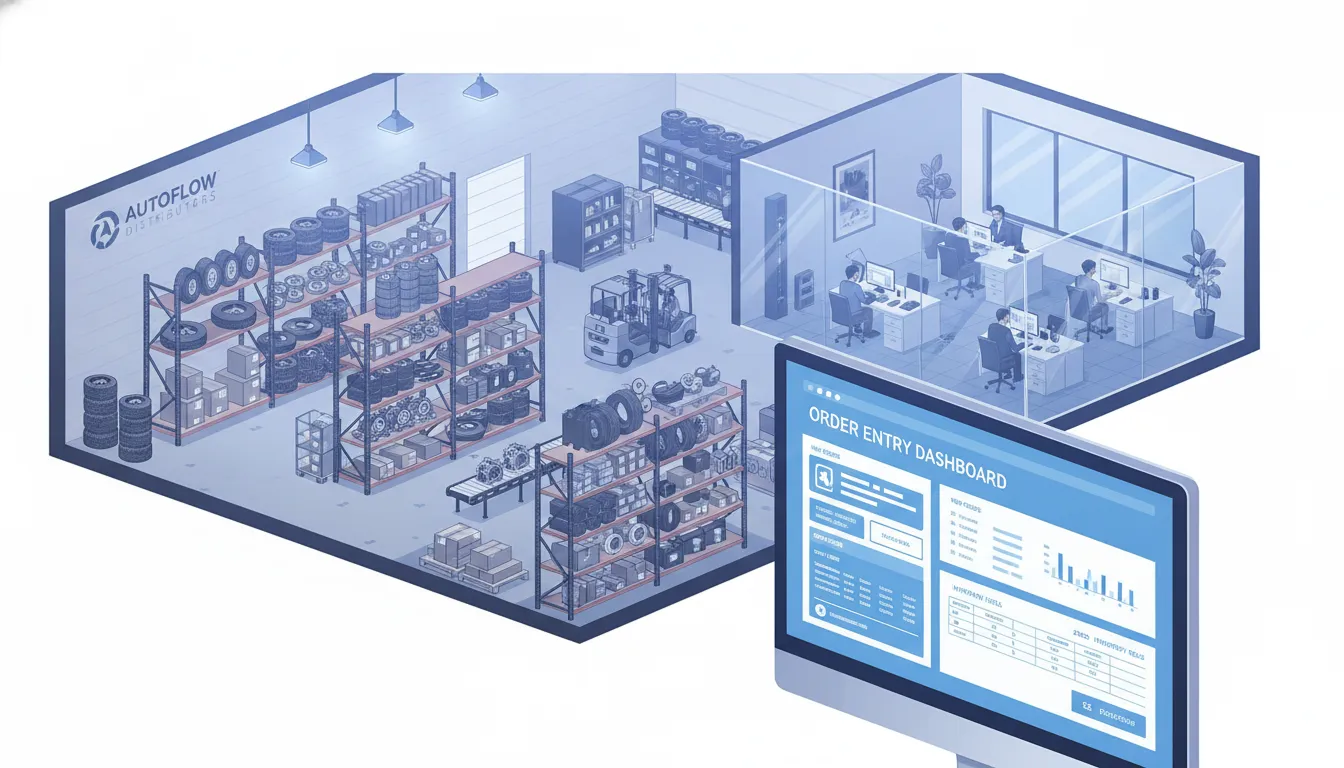
Pricing and order handling are where distribution work becomes more complex than a basic accounting workflow. A customer may need a price and availability answer, a formal quotation, a promotion or rebate applied, and an order entered against the right inventory location. The system should then help staff coordinate replenishment, picking, and fulfillment without forcing each team to reconcile separate records.
For example, TireServ documents support for price and availability inquiries, formal quotations, order processing. Web and online order entry, promotions, rebate tracking, replenishment logic, and cost and pricing updates. These capabilities are part of a broader distribution workflow, not isolated add-ons. See the documented TireServ capabilities for tire and automotive supply distributors for the specific feature scope.

Customer pricing should follow the order context
Wholesale pricing often depends on the customer account, product, quantity, promotion, rebate arrangement, and current cost. An auto parts wholesale ERP should give sales and counter staff a reliable way to answer pricing questions and create quotations using current information. It should also preserve the connection between the quotation, the resulting order. And the customer account, so accounting and operations are not working from different versions of the transaction.
Replenishment matters at the same time. When an order changes available stock, purchasing staff need usable signals about what should be reordered and where. That does not eliminate judgment, but it reduces the need to track inventory movement in disconnected spreadsheets.
Order entry should support how distributors actually sell
Phone orders, counter sales, customer portals, and online orders can all create pressure on order-entry accuracy. Buyers evaluating a system should ask how it handles substitutions, backorders, availability by location, customer-specific pricing, and the handoff from sales to the warehouse. QBC's auto distributor order entry guidance provides a useful framework for evaluating accuracy and speed without assuming that every platform supports the same workflow.
Fitment, catalog relationships, and part interchanges deserve direct questions during evaluation. A single part can have different applications depending on vehicle year, make, model, or engine configuration. So buyers should confirm whether the proposed system supports the catalog and fitment data their business actually uses. Do not treat those questions as proof of a specific TireServ capability unless the vendor documents that capability.
Finally, fulfillment coordination should connect the accepted order to inventory, purchasing, and warehouse execution. TireServ is designed for tire and automotive supply distributors, with documented inventory, purchasing, sales order, quoting, and multi-warehouse functionality. That gives a distributor a concrete feature set to examine when comparing systems while keeping the evaluation focused on the workflows that determine whether an order can be priced. Promised, picked, and completed accurately.
What Changes in Reporting and Daily Decision-Making?
The practical difference appears when a manager needs an answer before the end of the day. Instead of waiting for separate updates from purchasing, the warehouse, sales, and accounting, an integrated system connects the transaction to the operational and financial information around it. Academic guidance on ERP inventory systems describes this as linking purchasing, storage, turnover, sales. And logistics data so information can move across functions rather than remain in separate records. Learn more about integrated ERP inventory management.
Stock and purchasing decisions use the same information.
For an auto parts or tire distributor, a stock question is rarely just "How many units are on hand?" The useful questions are which location has the inventory. What has already been committed to orders, what is moving quickly, and whether a purchase or transfer is justified. With connected inventory and order data, staff can review availability, replenishment needs, and purchasing activity from a shared operational record. QBC documents TireServ support for inventory management, purchasing and vendor management, price and availability inquiries, replenishment logic, and cost and pricing updates.
That does not eliminate the need for judgment. Buyers still need to account for supplier lead times, seasonal demand, customer commitments, and product priorities. It does reduce the risk that a purchasing decision is based on an outdated spreadsheet or a phone call from another location.
Order status and inventory cost become management questions
When order processing, warehouse activity, and accounting data are connected, a manager can investigate more than whether an order was entered. They can ask what is available, what needs attention, and how inventory activity affects the business financially. The academic source above notes that integrated systems can update stock after a sale. Signal purchasing needs, provide picking direction, and give finance visibility into inventory valuations and costs. These are general ERP principles, not a promise that every system handles each workflow in the same way, so buyers should verify the details during evaluation.
Reporting supports action instead of reconciliation
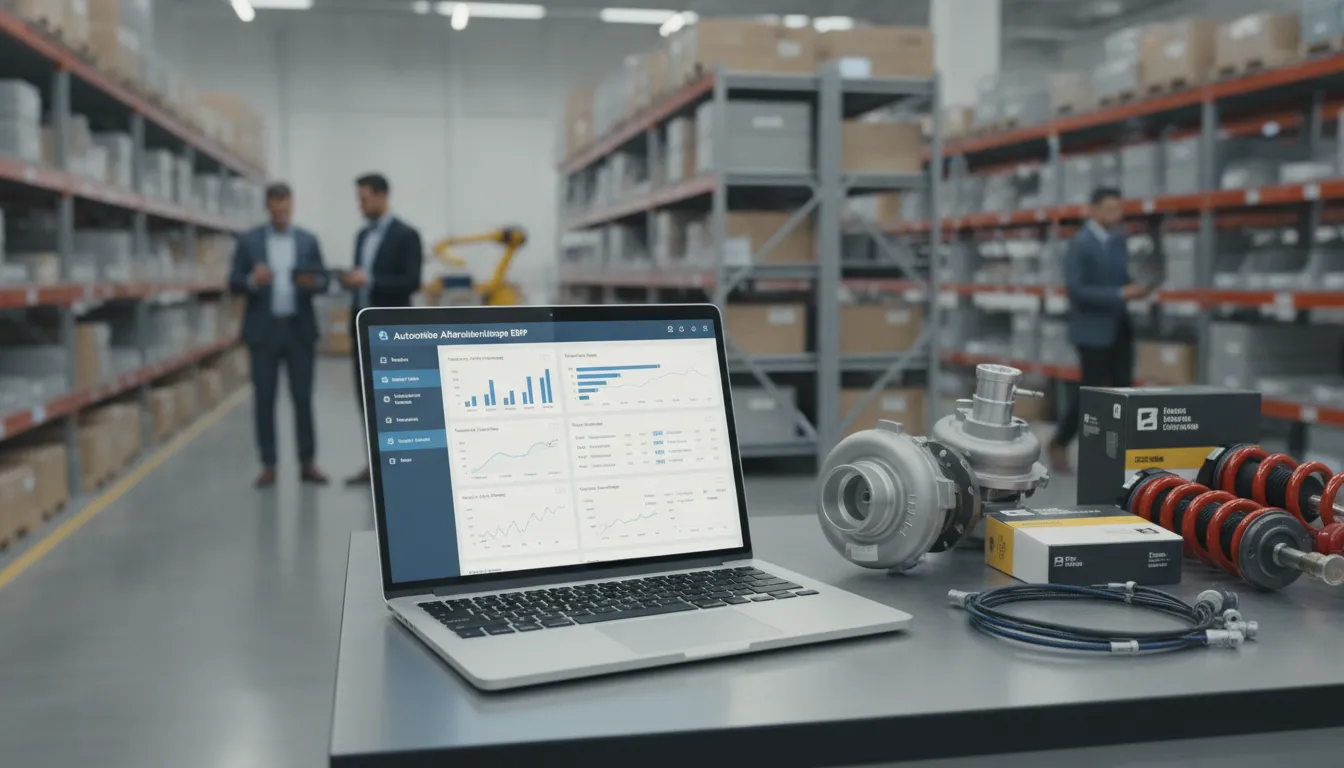
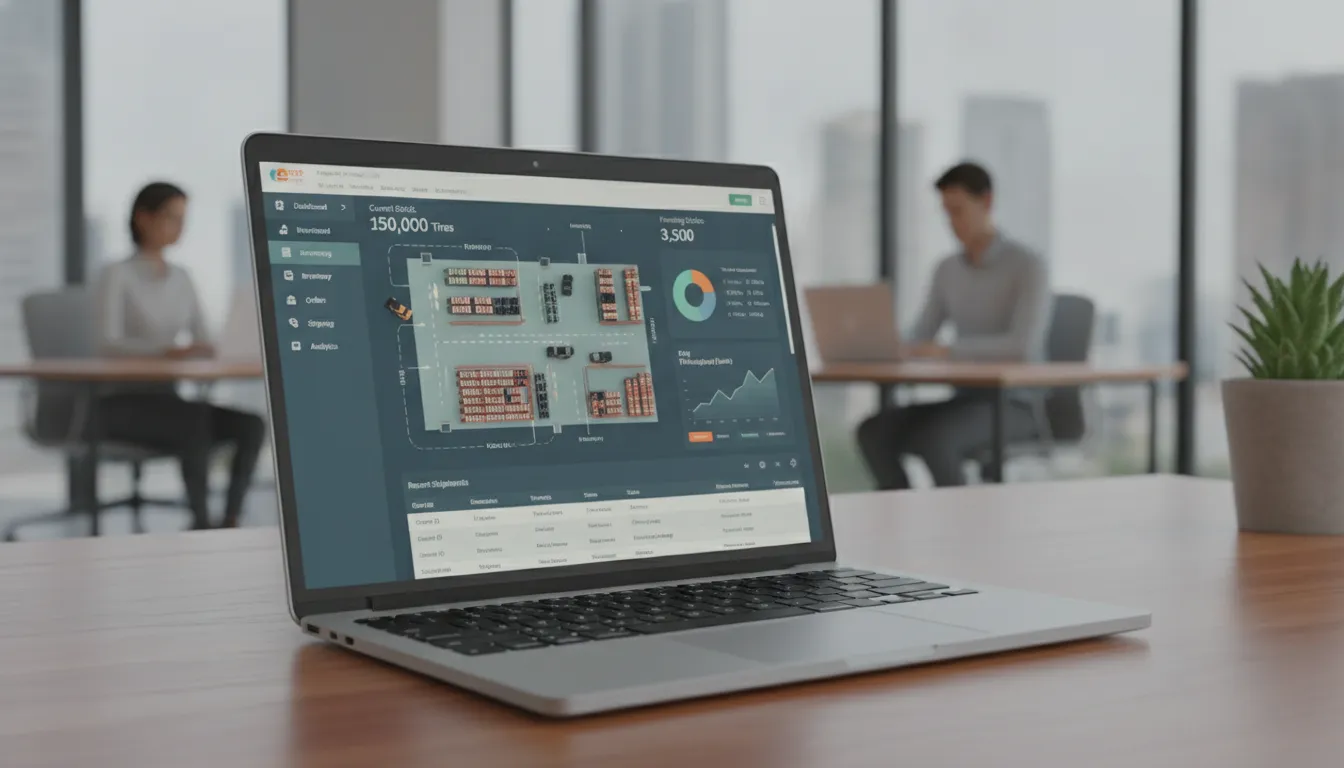
QBC documents more than 150 standard reports and inquiries for operational and management visibility. That gives teams a starting point for reviewing activity without building every answer from exported files. QBC also documents branch requisitions and transfers, consolidated reporting, and synchronization between locations. For distributors comparing systems, the key test is whether reports can answer daily questions about stock, purchasing, orders, margins, and location performance using consistent data.
Explore QBC's auto parts ERP features to see how those reporting and distribution workflows fit together.
When Is It Time to Move from QuickBooks to ERP?
QuickBooks or another accounting tool may continue to handle core financial tasks while the distribution operation around it becomes harder to manage. Use the checklist below as a practical readiness test. The signals matter more than any single sales volume or SKU count.
- People repeatedly re-enter the same information. If staff copy orders, customer pricing, purchase details, or inventory changes between accounting software, spreadsheets, email, and warehouse records, the process is vulnerable to delays and transcription errors. Track how often employees reconcile or rekey information in a typical week. Repeated manual work is a stronger signal than frustration alone.
- Inventory counts are difficult to trust. Frequent adjustments, spreadsheet lookups, stockouts, over-ordering, or uncertainty about available quantities indicate that financial records and physical inventory are not working from one operational view. For a distributor, the question is not only whether inventory has a value on the balance sheet. But whether sales and warehouse staff can find the right product at the right location.
- Multiple locations create blind spots. When branches or warehouses maintain separate workarounds, it becomes difficult to see transfers, replenishment needs, or consolidated performance. A wholesale distribution ERP should be evaluated for location-level visibility, branch requisitions, transfers, and reporting that connect the operation without erasing local accountability.
- Pricing and order processing depend on exceptions. If employees must check several sources to answer a price or availability question, manually apply customer pricing. Or re-enter phone and online orders, the workflow is consuming time that should support customers and sales. Ask whether the next system can support quotations, order entry, promotions, rebates, replenishment, and controlled cost or pricing updates.
- Reports arrive after the decision is needed. If managers wait for spreadsheet consolidation to understand sales, inventory movement, purchasing, margins, or warehouse performance, reporting has become a bottleneck. QBC documents more than 150 standard reports and inquiries, but every buyer should verify that proposed reports match its own decisions and definitions.
- Growth is exposing process limits. Audience research for tire and automotive distributors sometimes describes operations ranging from one to five locations, 5,000 to 50,000 SKUs, and 50 to 500 daily orders. These are illustrative ranges, not universal thresholds. The practical test is whether current tools can support the next stage without adding another layer of manual work. If not, start discovery early, including data migration, implementation, training, and support requirements.
How to Evaluate the Switch Without Disrupting Distribution
A software change should begin with a clear picture of how work moves through your business today. Map the path from purchasing and receiving through inventory allocation, order entry, picking, shipping, invoicing, and payment. Include branch transfers, customer-specific pricing, returns, will-call orders, and the exceptions that experienced employees handle outside the system. This discovery work shows which processes must be preserved, which need improvement, and where disconnected tools create avoidable risk.
Next, review the data that would move into the new system. Product records, units of measure, suppliers, customer accounts, pricing rules, open orders, inventory balances, and historical information may not be equally clean or equally valuable. Establish ownership for reviewing duplicates, inactive items, missing fields, and inconsistent naming before migration. QBC identifies data migration as part of its implementation approach. But a distributor still needs to confirm which records are required for day-to-day operations and which should be archived.
Ask who owns each part of implementation
Do not evaluate only a feature list. Ask the vendor to explain who leads configuration, data preparation, workflow decisions, testing, user training, and go-live support. Ask how warehouse staff, purchasing, sales, accounting, and management will validate the system using realistic orders and inventory scenarios. Test receiving, transfers, replenishment, customer pricing, quotations, order entry, picking, invoicing, and reporting before the change reaches production. A useful evaluation also identifies the person responsible for approving migrated data and the person who can make final process decisions.
Technology requirements deserve the same attention. Confirm browser and device access, warehouse connectivity, workstation needs, printing, scanners, point-of-sale connections, and any hardware or network changes. QBC combines ERP software with implementation, training, technical support, hardware, networking, and managed IT services. That broader model can matter when the goal is to improve distribution operations rather than add another isolated application.
Finally, ask how support works after launch, how issues are prioritized, and what training materials remain available for new employees. QBC has served distributors since 1978 and provides implementation, migration, training, and ongoing technical support. Review the documented automotive distributor ERP capabilities, then compare the proposed workflows with your own requirements. For a broader view of the systems and responsibilities involved, see this guide to wholesale distribution ERP.
Frequently Asked Questions
Can accounting software manage inventory across multiple warehouses?
It may track accounting records and basic item information, but distributors should verify how it handles location-level availability, transfers, replenishment, and branch purchasing. A distribution ERP is designed to connect those operational workflows so teams can see and act on inventory by location.
What should an auto parts wholesale ERP handle beyond the general ledger?
Look for connected purchasing, inventory, quotations, sales orders, customer pricing, rebates, fulfillment, and reporting. TireServ, for example, documents inventory management with multi-warehouse support, purchasing and vendor management, sales order processing, quoting, and accounting functions: TireServ features and capabilities.
How can a distributor tell whether pricing and order workflows are ready for ERP?
Start by mapping how your team handles price and availability inquiries, quotations, online or phone orders, promotions, rebates, cost updates, and replenishment. If staff re-enter information or reconcile pricing manually, those steps deserve close attention during an ERP evaluation.
Which reports should we ask to see during an ERP demonstration?
Ask to see reports that combine operational and financial information, including inventory by location, purchasing activity, order status, customer accounts, pricing, and management performance. QBC documents more than 150 standard reports and inquiries, but your demonstration should focus on the decisions your team makes each day.
How do we know if our business is ready to switch from accounting software?
Common signals include manual inventory tracking, weak visibility across locations, limited reporting, inadequate mobile access, and outgrowing basic accounting or spreadsheet workflows. Prepare a list of current pain points, data sources, locations, order processes, and required reports. A qualified implementation partner should also explain data migration, training, and ongoing support before you commit.
Schedule a Demonstration for Your Distribution Needs
If accounting software no longer gives your team clear visibility across inventory, orders, pricing, or warehouse operations. A closer review can help you compare your current process with a specialized ERP approach. QBC Systems can discuss your workflows, priorities, and questions without reducing the decision to a generic feature list. Schedule a demonstration to explore whether a better operational fit makes sense for your auto parts or tire distribution business.