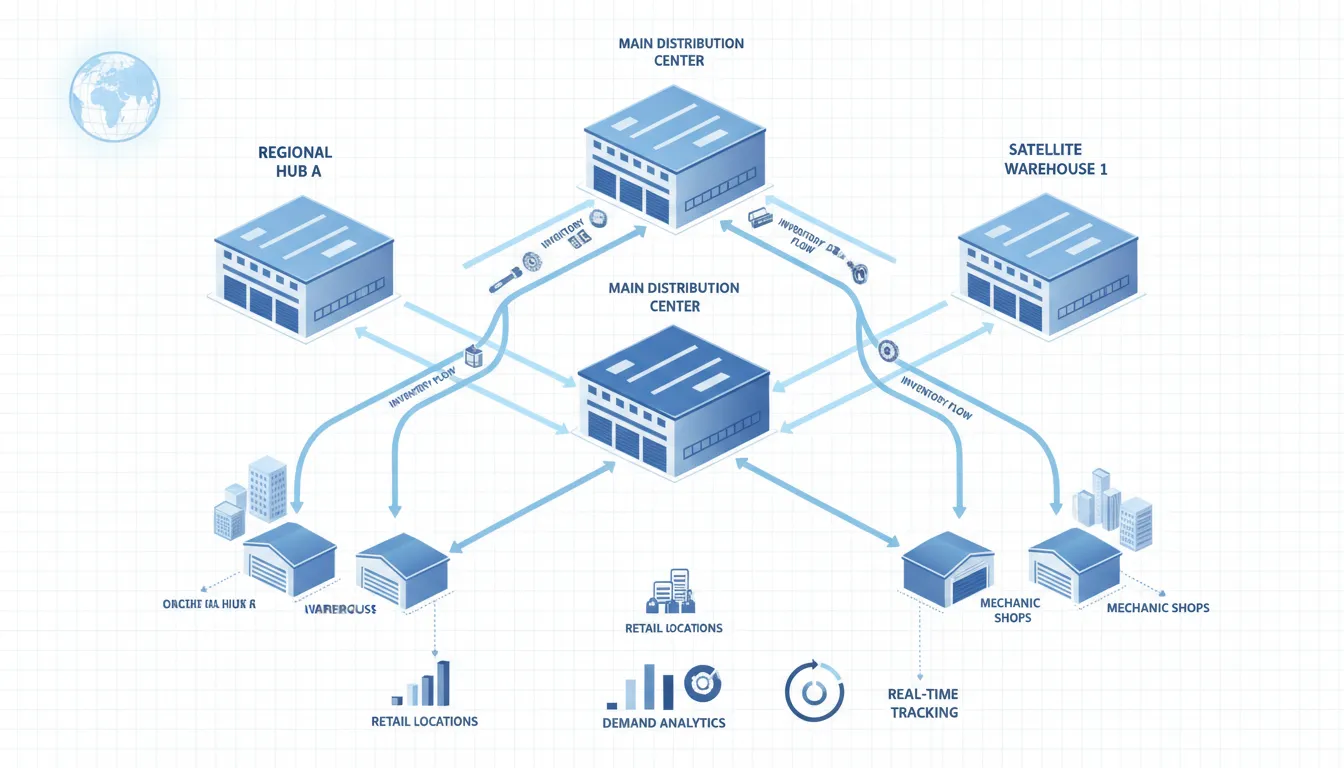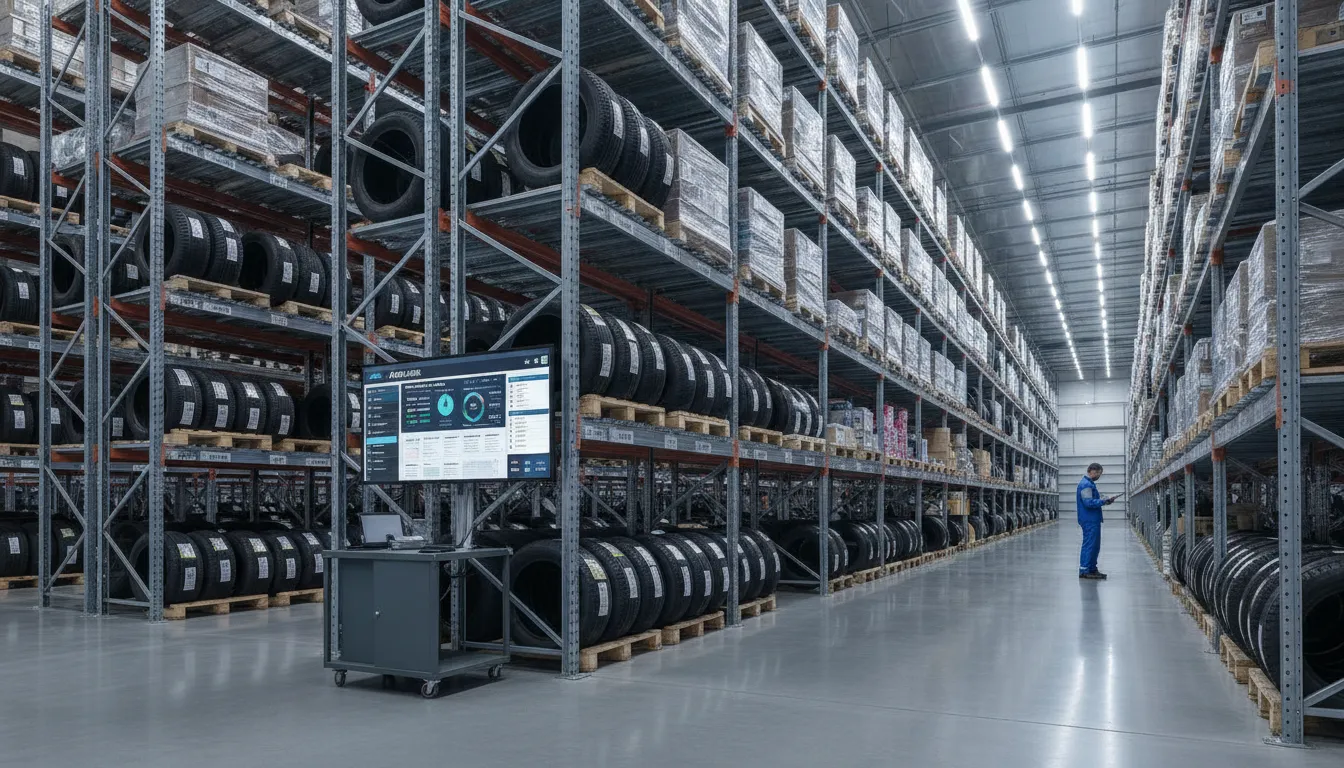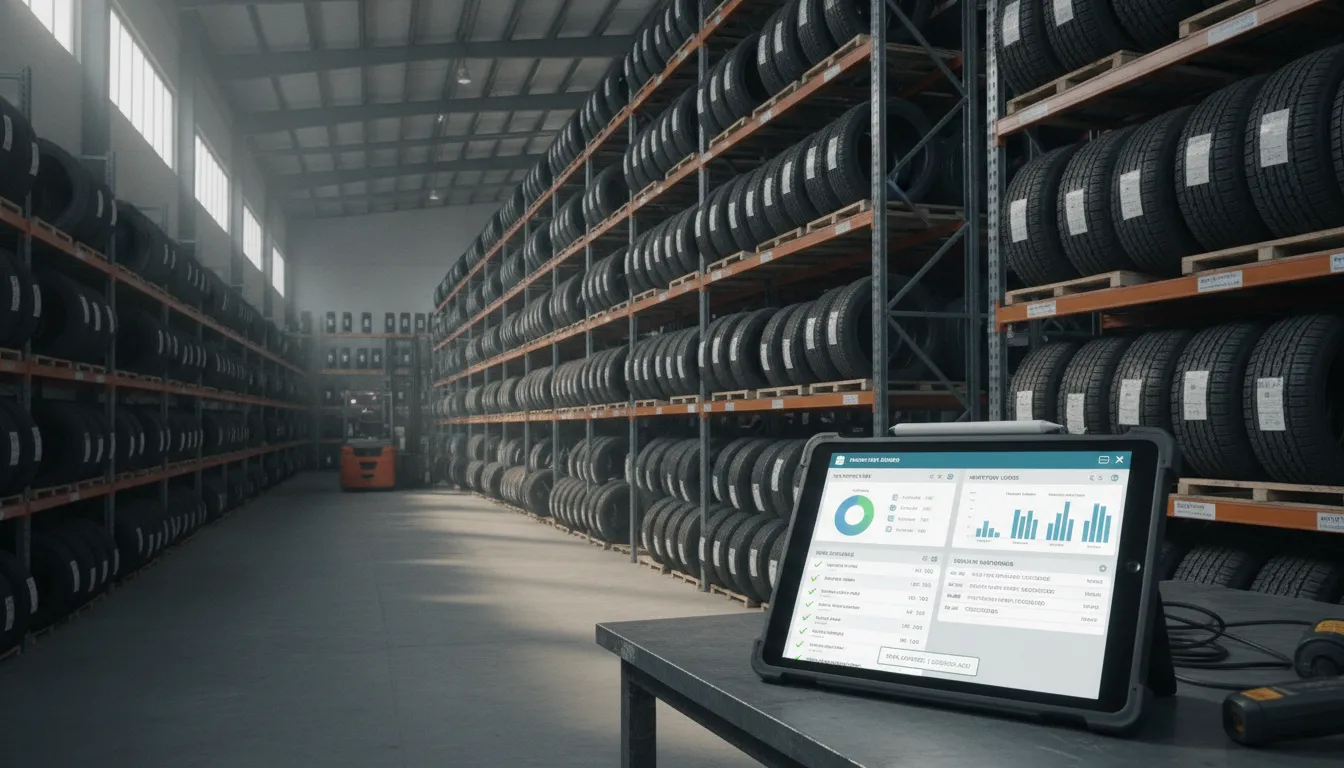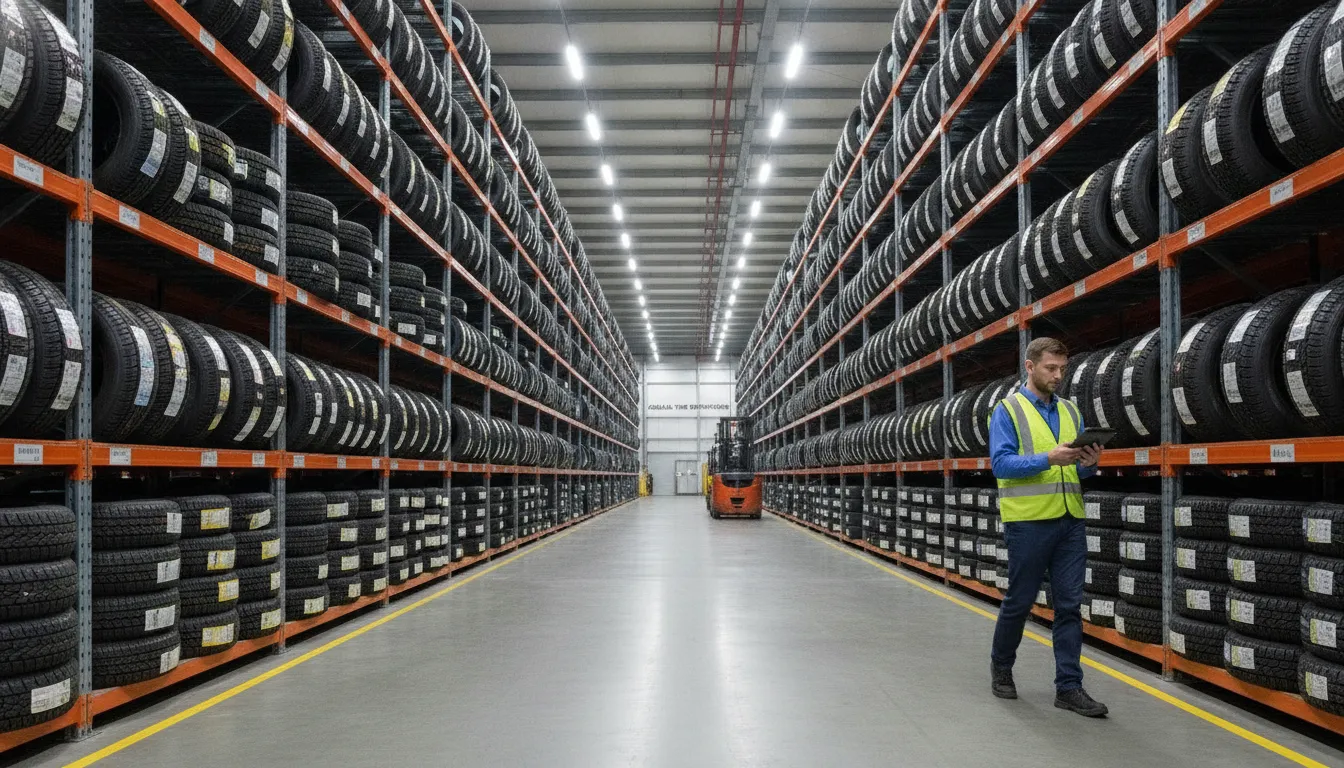

Warehouse-to-warehouse tire transfers help distributors put the right tire at the right location without buying more stock than the network needs. The work depends on accurate availability, clear requests, controlled picking and shipping, and a receiving step that updates both locations. This guide focuses on that transfer process specifically, while QBC's broader multi-location tire inventory guide covers the wider inventory-management system.
Schedule a Demonstration of TireServ for your distribution team
A reliable warehouse-to-warehouse tire transfer moves through six controlled stages: request, approval, allocation, pick and ship, in-transit tracking, and receipt. Each stage should preserve the tire's exact specifications, source and destination locations, quantity, expected arrival, and updated available balance. That shared record helps sales, purchasing, and warehouse teams make decisions from the same information.
Why Warehouse-to-Warehouse Tire Transfers Are Complex for Tire Distributors
Tire transfers look simple when described as moving a pallet from one building to another. In practice, a distributor is moving a very specific product between two operating environments, often while customer orders, supplier receipts, delivery promises, and seasonal demand are changing. The transfer decision must answer more than whether the network owns enough tires in total.
The source location needs enough stock to protect its own open orders and expected demand. The destination needs the correct size, brand, tread design, load rating, and quantity for the customer or branch request. A unit that is physically present but already committed is not available for a new transfer. A unit marked as shipped but not received should not be counted as available at either location.
Why total network quantity can mislead
Suppose a distributor has eight tires across three warehouses. That total may look healthy, but the location serving an urgent order may have none of the required specification. Moving stock from another warehouse can solve the service problem, but only if the source branch can release it without creating a second shortage. Location-level balances, commitments, incoming transfers, and local demand all matter.
Product identity creates another risk. Tire size alone is not enough to authorize a transfer. Brand, tread pattern, load or speed rating, seasonal fit, and other catalog details may determine whether the product can satisfy the request. A process that relies on a free-text description or a spreadsheet row can make it easy to pick a close substitute instead of the requested item.
Transfer delays affect customer promises
A transfer is also a timing commitment. The destination team needs to know when stock is expected, while customer service needs a realistic answer about what can ship or be picked up. If the system changes the source balance before the tire leaves, or changes the destination balance before it arrives, availability reports become unreliable. Clear status changes reduce the gap between physical movement and system records.
How Warehouse-to-Warehouse Tire Transfers Work in Tire Distribution
A repeatable process makes exceptions visible instead of hiding them in email threads or disconnected spreadsheets. The exact responsibilities vary by distributor, but the core stages below give teams a practical operating model.
- Request the transfer. The destination warehouse or an authorized planner records the item, quantity, source location, destination location, reason, needed-by date, and related customer or branch order when applicable.
- Check source availability. The source location verifies the exact item and quantity, separating available units from committed, damaged, reserved, or otherwise unavailable stock.
- Approve and allocate. An authorized person confirms that the move supports the network plan. The requested quantity is allocated so another order does not consume the same units while the transfer is being prepared.
- Pick and document. Warehouse staff pick the approved tires, confirm the product identity and quantity, and record the shipment against the transfer. A scan or second-person check can reduce errors where the operation supports it.
- Track in transit. The source location decreases available stock and the destination location records expected incoming stock without treating it as received. The transfer remains visible until the destination confirms arrival.
- Receive and reconcile. The destination counts the tires, checks the specification and condition, records any shortage or damage, and posts the receipt. The system then updates the destination balance and closes or escalates the transfer.
These stages establish a useful distinction between a requested move and a completed move. They also give managers a place to investigate exceptions. If a transfer is late, short, or received with a mismatch, the record should show where the process stopped rather than leaving both warehouses to reconstruct the history later.
For context on the broader platform, review the TireServ ERP solution for tire and automotive supply distributors. The important question is not whether a system has a transfer button. It is whether the transfer record connects to the inventory, order, purchasing, and reporting workflows the distributor already uses.
What Real-Time Transfer Visibility Should Show Across Tire Warehouses
Real-time visibility does not mean every report needs every detail. It means the people making a decision can see the status and quantity that matter at that moment. A transfer dashboard or location report should make the following distinctions easy to understand.
- Available: stock that can be allocated to a new order or approved transfer.
- Committed: stock reserved for an open customer order, branch request, or other defined purpose.
- In transit: stock released by the source but not yet received by the destination.
- Incoming: expected quantity tied to an open transfer or purchase receipt, with an expected date.
- Received: quantity physically confirmed at the destination and available under that location's rules.
- Exception: a late, short, damaged, rejected, or otherwise unresolved movement.
Location reporting should also let managers move between a single warehouse and the network view. A branch manager may need the available quantity on a specific item, while a purchasing manager may need to see whether multiple branches are independently requesting the same tire. Consolidated reporting can reveal that a transfer would balance the network better than another supplier order.
| Transfer status | What it means | Operational decision |
|---|---|---|
| Available | Stock can be allocated at the source. | Approve or reserve the move. |
| In transit | Stock has left the source but is not received. | Track timing and protect the destination promise. |
| Received | The destination counted and accepted the tires. | Make the quantity available under local rules. |
| Exception | The movement is late, short, damaged, or disputed. | Investigate before closing the transfer. |

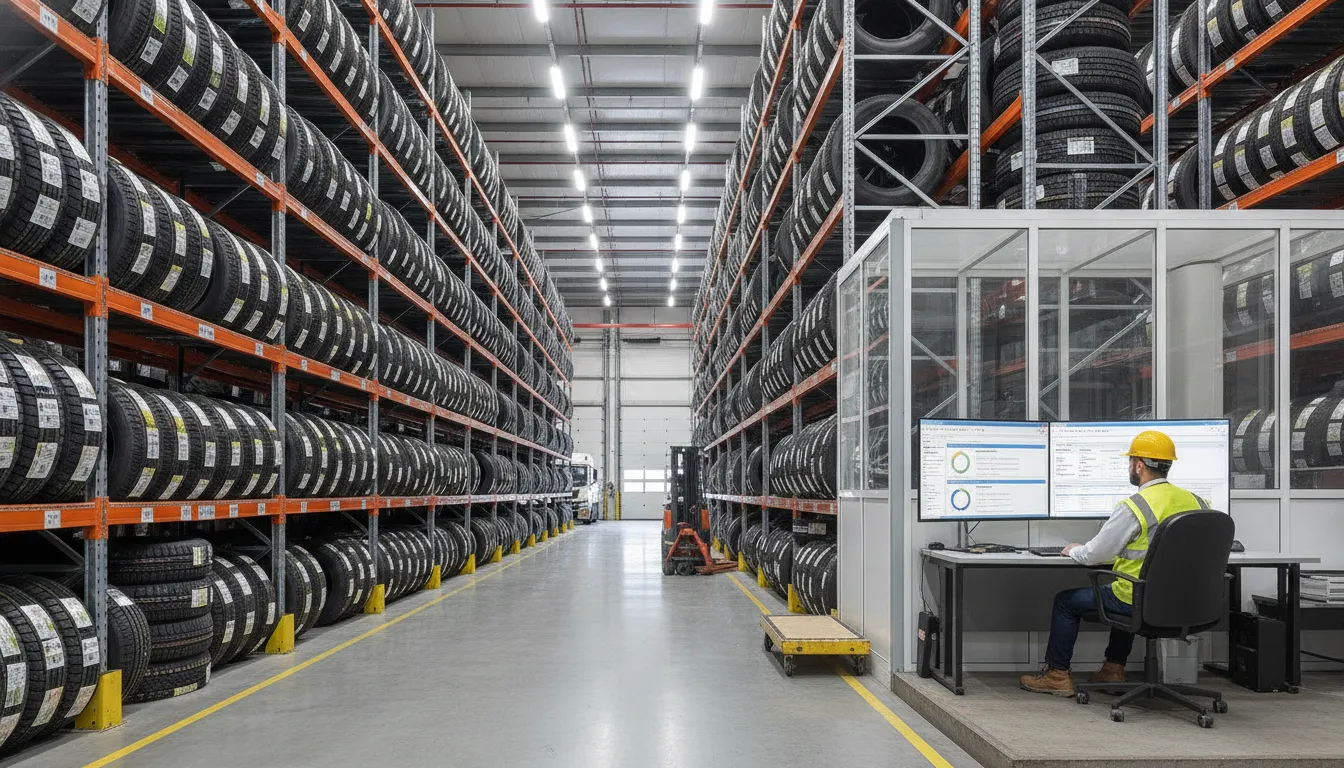
Clear transfer staging helps warehouse teams connect physical movement with inventory records.
Good visibility also supports customer communication. If a requested tire is at another location, the sales team can see whether it is available, already allocated, moving, or waiting for receipt. That is more useful than a single network total that cannot explain when or how the item can fulfill the order.
See how TireServ can connect transfer status with warehouse inventory reporting
QBC's guidance on wholesale tire inventory management and its multi-location inventory software guide for auto distributors provide broader context. This article narrows the operational question to the movement itself: who requested it, what was approved, what left, what is in transit, and what arrived.
How Transfer Triggers Prevent Stockouts and Overstock
A transfer should respond to a defined business trigger, not simply to the loudest request in the inbox. Distributors can use local demand, open orders, service commitments, storage capacity, and transfer lead time to decide when stock should move.
Common reasons to transfer tire inventory
- A destination warehouse has an open order but no available unit that meets the requested specification.
- A source warehouse has slow-moving units while another location has repeated demand for the same item.
- A seasonal shift changes the location where certain tire sizes or tread types are needed.
- A branch is preparing for a known customer, fleet, or promotional demand event.
- A supplier shipment is delayed and an internal transfer can protect an existing promise.
- A warehouse is approaching a storage limit and needs to rebalance selected inventory.
Each trigger should be tested against the source location's own needs. A transfer that prevents one stockout but creates another is only moving the problem. Managers should review the source's available and committed quantities, the destination's demand, the expected transfer time, and alternative fulfillment options before approving the move.
Use thresholds without treating them as automatic answers
Minimum and maximum levels can help identify candidates for balancing. They should be treated as decision signals rather than blind rules. A tire with a higher service priority or longer supplier lead time may deserve protection even when its current quantity is above a basic minimum. Conversely, transferring every unit above a threshold can create unnecessary handling and leave the network with the wrong mix.
Review transfer history as part of replenishment planning. Frequent moves between the same locations can indicate a persistent allocation issue, an incorrect stocking policy, or a demand pattern that purchasing should address. Repeated emergency transfers also add handling and freight work, so they should be visible in management reporting rather than treated as isolated events.
How ERP Reduces Manual Transfer Errors in Tire Distribution
An ERP system can reduce the number of disconnected handoffs by keeping locations, items, orders, purchasing, and transfer statuses in one operating record. That does not remove the need for warehouse discipline, but it gives the discipline a shared place to work.
Connect requests to inventory and orders
When a transfer request is linked to the item and the reason for the move, the warehouse can see what it is being asked to provide. The destination can track the expected quantity without counting it as received, and sales can distinguish a confirmed transfer from a general promise that stock may become available later.
Keep source and destination balances aligned
The system should reflect the transfer at the appropriate points in the process. Recording the request alone should not make the destination's available balance rise. Recording the shipment should not make the tires available at the destination before receiving. These state changes help location reports remain useful while the physical movement is underway.
Give managers one place to review exceptions
Exceptions deserve more attention than successful transfers. A useful report can identify movements that are overdue, short, damaged, rejected, or open beyond the expected time. Managers can then correct the underlying process, update the customer promise, or arrange another solution before an unresolved transfer becomes a hidden stockout.
These are the same reasons distributors look for ERP software that connects operational information rather than a stand-alone inventory spreadsheet. QBC also describes TireServ capabilities for tire distribution workflows and reporting, with implementation and support suited to the distributor's operating environment. Review the TireServ ERP guide for wholesale tire and auto parts distributors for the wider platform context.
How Should a Distributor Improve Warehouse-to-Warehouse Tire Transfers?
Start with one transfer path and make each handoff visible. Define who can request and approve a move, which product details must be confirmed, when the source balance changes, how in-transit stock is reported, and who closes the receipt. Then review late or mismatched transfers to improve the process instead of adding another spreadsheet.
For a distributor evaluating software, the useful test is practical. Can the system show the right tire at the right location? Can it preserve the request through receipt and give managers a consolidated view without erasing branch-level detail? A focused demonstration should use the distributor's real transfer scenarios, including stockouts, overstock, open orders, and an in-transit exception.
Schedule a Demonstration of TireServ for warehouse-to-warehouse transfers
Frequently Asked Questions
What information belongs on a tire warehouse transfer request?
Record the exact item specification, quantity, source and destination locations, requested-by date, reason for the move, related order or branch request, and the person authorized to approve it. The record should retain its status through picking, shipping, transit, receipt, and any exception.
When should a tire distributor transfer stock instead of placing a purchase order?
Compare the destination need with available network stock, source commitments, supplier lead time, transfer time, freight, and storage capacity. A transfer can make sense when another location has suitable available stock and the move protects service without creating a more urgent shortage at the source.
How can distributors prevent a transfer from creating a second stockout?
Check the source location's available quantity after open orders and reservations are accounted for. Use approval rules, allocation records, and location-level reporting so a transfer does not rely on a network total that hides commitments or expected local demand.
What should happen when a warehouse receives fewer tires than the transfer record shows?
The destination should record the actual quantity, identify the shortage or damage, and leave the exception open for investigation. The system should not silently close the transfer or make the missing tires available. A visible exception lets operations correct the record and update the affected customer or branch promise.
Warehouse-to-warehouse tire transfers work best when physical movement and system status stay aligned. A defined process, location-level visibility, and disciplined receiving can help tire distributors balance stock, prevent avoidable shortages, and make better replenishment decisions across the network.