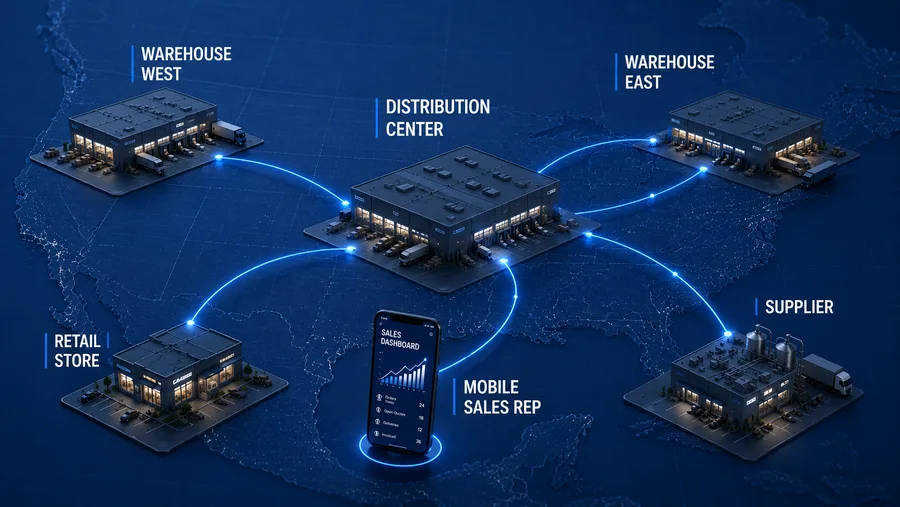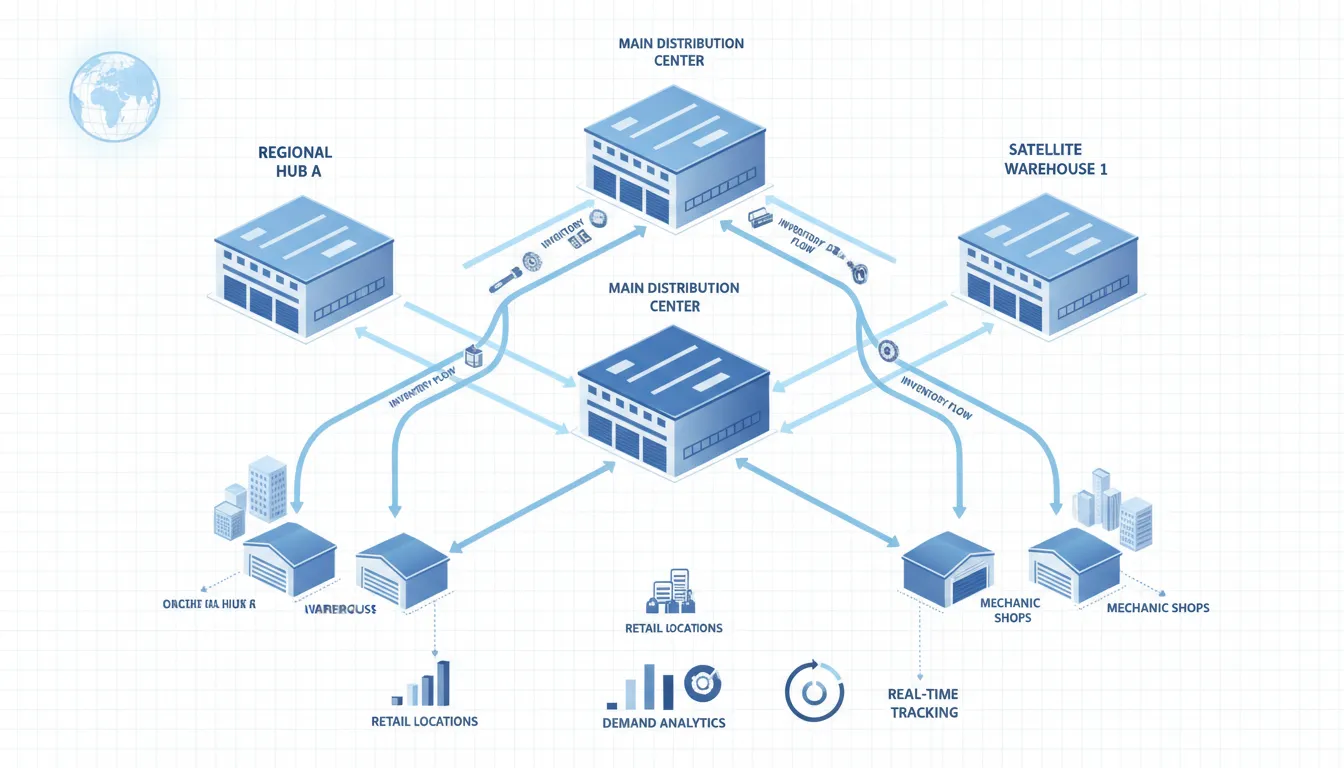

Distribution inventory replenishment software helps wholesale distributors decide what to buy, when to buy it, and where inventory should go. It connects demand history, item availability, supplier lead times, reorder rules, purchase orders, warehouse stock, and management review in one operating workflow. The value is not automatic purchasing for its own sake. The value is a consistent way to turn inventory signals into decisions that buyers and warehouse managers can review.
Talk with QBC Systems about your distribution replenishment workflow.
Replenishment affects more than the purchasing department. It influences customer service, warehouse capacity, working capital, order allocation, and the confidence sales teams have when they promise availability. A useful recommendation therefore needs to connect with receiving, transfers, order entry, and financial records. An isolated spreadsheet may show a reorder point, but it rarely shows the full operating context behind that recommendation.
This guide explains how replenishment software supports wholesale distribution. It shows which controls matter across multiple locations and how to evaluate an ERP platform for the work your team handles every day. The focus is practical: reliable item data, visible exceptions, sensible rules, and a review process that keeps recommendations useful as conditions change.
What Is Distribution Inventory Replenishment Software?
Distribution inventory replenishment software helps a distributor determine what stock to reorder, when to reorder it, and which warehouse or sales channel needs the supply. It uses item records, purchasing history, current orders, available quantities, supplier information, and location-level inventory status. Depending on the platform, it may produce suggested purchases, transfers, or exceptions for a buyer to review.
The best workflow does not treat a recommendation as an unquestionable answer. Buyers still need to consider supplier reliability, customer commitments, discontinued items, substitutions, minimum order quantities, and unusual demand. Software gives them a repeatable starting point and makes the inputs visible. That is more useful than asking someone to rebuild the same calculation across multiple spreadsheets every week.
In a connected ERP, replenishment works with inventory, purchasing, order entry, receiving, and accounting. A buyer can compare on-hand stock with committed quantities and open purchase orders. A warehouse manager can see whether the needed item is already available at another location. An owner or operations leader can focus on exceptions that need judgment instead of reviewing every SKU manually.
For a broader explanation of the connected systems behind distribution operations, read what ERP software does for distributors. Replenishment is one practical example of why an ERP should connect operational decisions rather than simply record transactions after they happen.
How the replenishment workflow works
- Capture the demand signal. Review item movement, historical orders, current demand, and stock status by SKU and location.
- Evaluate supply and timing. Compare on-hand quantities, committed units, open purchase orders, expected receipts, supplier lead time, and reorder rules.
- Create a recommendation. Identify a purchase, transfer, allocation, or review action for the responsible buyer or manager.
- Approve, purchase, receive, and allocate. Move the approved action through purchasing and receiving while keeping inventory status visible.
- Review exceptions and results. Update item data, supplier assumptions, and replenishment rules when operating conditions change.
How Does Distribution Inventory Replenishment Software Decide What to Order?
A replenishment recommendation is only as good as the rules and records behind it. Distribution inventory replenishment software organizes the inputs, but managers still need to decide which signals matter and how much protection the business needs. The most important inputs usually include demand, supply timing, inventory position, customer commitments, order minimums, and the cost of being short or overstocked.
Start with demand history, then add context
Historical purchasing and order patterns help show how quickly an item moves. That history should be reviewed by SKU and location. A commercial tire that moves quickly at one warehouse may move slowly at another. A beauty supply item may have different demand by account type, product line, season, or promotion. A general wholesale item may look stable until one large customer order changes the pattern.
History also needs context. A stockout can make demand appear lower because customers could not buy an unavailable item. A one-time project order can make demand appear higher than normal. Discontinued products, substitutions, returns, data-entry errors, and promotions can distort a simple average. A useful system gives the team visibility into the history while the people closest to the operation decide which exceptions should influence future rules.
Set reorder points around lead time
The reorder point is the level at which available supply should trigger a replenishment review. In practice, it depends on expected demand during supplier lead time, the reliability of that lead time, and the protection stock the distributor needs. If a supplier usually delivers in five business days but sometimes takes longer, a rule based only on the average may create avoidable shortages.
Reorder points should not be treated as permanent values. Review them when supplier performance changes, a product gains or loses demand, a sales territory expands, or a customer commitment changes the pattern. A recommendation that appears precise but uses stale assumptions can create more work than it removes.
Account for minimums, packs, and seasonality
Suppliers may sell in case packs, impose minimum order quantities, or offer terms that affect the sensible order size. The software should make those constraints visible before a purchase is approved. Otherwise, a recommendation may meet a calculated need while creating an impractical order or excess stock.
Seasonality also matters. Tire demand can shift with weather and regional driving patterns. Beauty supply demand can respond to promotions, events, or professional buying cycles. Industrial and general wholesale demand can follow customer projects. A buyer should be able to recognize when a recent period is not a reliable baseline and adjust the review rather than accepting a number without context.
Make exceptions visible
Strong replenishment workflows focus human attention on unusual conditions. Examples include a sudden demand spike, inaccurate on-hand stock, a delayed supplier, an unusually large purchase, or stock available at one location while another faces a shortage. These conditions deserve a clear review path because they can change the appropriate action from purchasing to transfer, substitution, or customer communication.
Research on inventory decisions under uncertainty reinforces the need to review assumptions as real-world conditions change. See this peer-reviewed inventory optimization research for additional context. The point is not to turn every distributor into a forecasting laboratory. It is to make the limits of a recommendation visible to the people responsible for the decision.
How Does It Work Across Multiple Warehouses?
Multi-warehouse replenishment starts with a location-level view of supply. A distributor may have inventory in several warehouses, but that does not mean the right product is available where the order needs to be fulfilled. A network-wide total can look healthy while one branch is short, another has excess stock, and a third has an inbound purchase that is not yet available.
Protect customer commitments
Committed inventory should be separated from genuinely available inventory. If an item is already promised on an open order, counting it as free stock can lead to an understated replenishment need. A useful system lets the team see demand by location and account while preserving a current view of what can be allocated.
Compare a purchase with a transfer
When one warehouse has excess and another has a shortage, an internal transfer may be a better first response than a new supplier purchase. That choice depends on freight, timing, customer priority, handling cost, and the condition of the stock. Replenishment software should make both paths visible so the decision is based on the full distribution network.
Example: balancing tire inventory
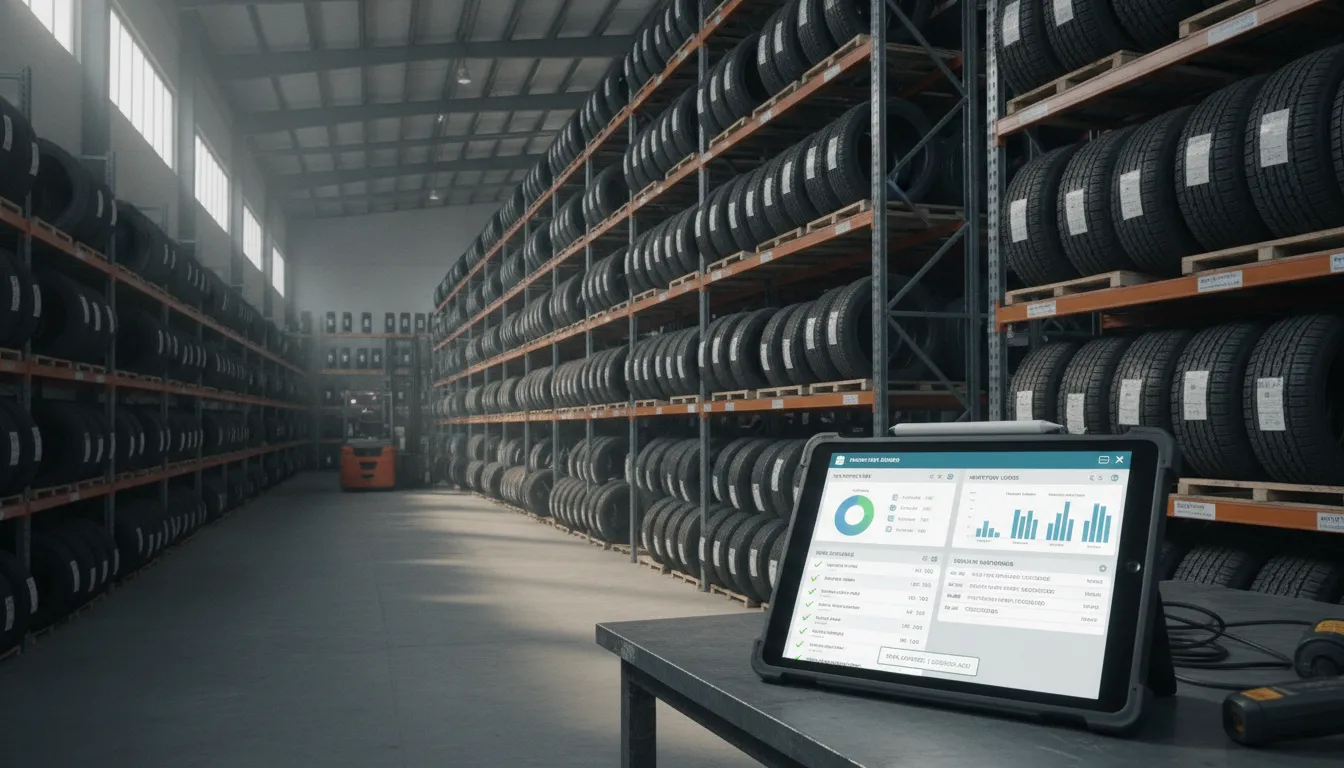
Consider a tire distributor with one location serving a dense urban market and another serving a lower-volume rural territory. A popular tire size may move quickly in the first warehouse but sit longer in the second. A network-level report could suggest buying more units even though the second location already has available stock. A location-aware process can flag the imbalance, show committed quantities, and let the team compare a transfer with a supplier order.
This same logic also applies to beauty supply wholesalers and general distributors. Each location may need different rules, but managers still need one network-wide view.

Which ERP Features Support Better Replenishment?
Feature lists are less useful than the operating connections behind them. When comparing distribution inventory replenishment software. Look for a workflow that allows your team to move from a demand signal to a reviewed purchasing or transfer decision without rekeying the same information in multiple systems.
Inventory visibility by SKU and location
The system should show on-hand, committed, available, and incoming quantities by item and warehouse. It should also make item status clear enough for a buyer to distinguish active products from discontinued, substituted, or restricted items.
Purchasing connected to supplier data
Supplier lead times, order minimums, pack sizes, costs, and expected receipts affect the decision. The purchasing workflow should preserve that context and allow the team to track what was ordered, what was received, and what remains outstanding.
History and reporting for daily decisions
Reporting should help managers investigate why a recommendation appeared. Useful views may include item movement, purchase history, stockouts, open commitments, supplier performance, and location comparisons. Reports should support a decision rather than simply add another dashboard to monitor.
Order integration and exception control
Replenishment becomes more valuable when it connects to order entry, allocation, receiving, transfers, and customer pricing. Exceptions should be visible to the right person, with enough detail to decide whether to buy, move stock, change a rule, or contact a customer.
Cloud access and implementation support
Distributors should also evaluate implementation, training, and support. QBC Systems provides cloud-based ERP solutions accessible through a web browser. Its products support distribution operations through inventory, purchasing, order processing, reporting, and financial modules. Evaluate fit with your item structure, warehouses, users, and procedures, not only a feature checklist.
| Capability | Why it matters to replenishment |
|---|---|
| SKU and location visibility | Shows on-hand, committed, available, and incoming quantities where the need exists. |
| Supplier and purchasing context | Connects lead times, order minimums, pack sizes, costs, and expected receipts to the recommendation. |
| History and reporting | Helps buyers understand item movement, stockouts, open commitments, and supplier performance. |
| Transfers and exception control | Lets teams compare an internal transfer with a new purchase and route unusual conditions for review. |
How Should a Distributor Implement Replenishment Controls?
Implementation should begin with the decisions the team needs to make, not with a promise that software will solve every inventory issue automatically. A measured rollout gives the distributor a chance to correct data and adjust rules before the process covers every item and location.
1. Establish a reliable baseline
Review item numbers, descriptions, units of measure, supplier records, warehouse locations, open orders, open purchase orders, and current quantities. If the baseline is wrong, a more sophisticated recommendation will still be wrong. Document which fields are trusted and which need cleanup.
2. Classify items before setting rules
Not every SKU deserves the same review frequency or protection level. Separate fast-moving and high-impact items from slow movers, seasonal products, special-order items, and products nearing discontinuation. Classification gives buyers a practical way to focus time where an error would have the greatest operational cost.
3. Set rules that reflect the operation
Define the relevant demand period, supplier lead time, safety stock approach, minimum order constraints, pack sizes, and warehouse responsibilities. Avoid copying a rule from another location without checking whether customer mix and supplier performance are comparable.
4. Pilot, review, and measure
Start with a meaningful product group or warehouse. Compare recommendations with buyer judgment, stockout activity, excess inventory, supplier performance, and the time required to review exceptions. Use the findings to refine rules and training before expanding the process.
A pilot is not a reason to keep replenishment separate forever. It is a controlled way to build confidence and identify where item data, ownership, or system configuration needs attention. Once the process is stable, managers can establish a regular review cadence and assign clear responsibility for maintaining the inputs.
Which QBC ERP Fits a Distribution Replenishment Workflow?
QBC Systems serves different distribution environments through its vertical ERP products. The best fit depends on the products handled, warehouse structure, customer types, and the depth of distribution controls required.
TireServ for tire and automotive supply distribution
TireServ ERP for tire and automotive distributors is designed for tire and automotive supply distribution. Its capabilities include inventory management, purchasing, order processing, multi-warehouse support, reporting, and a customer-facing web portal. A tire distributor can evaluate how those connected workflows would support item availability, replenishment review, and customer commitments.
For additional context on the vertical, see QBC's guide to wholesale tire distribution and inventory ERP. The guide provides a broader view of the operational systems surrounding replenishment.
BeautyServ for beauty supply wholesalers
BeautyServ for beauty supply distribution is built for beauty wholesalers managing product lines, professional accounts, and distribution workflows. Teams can evaluate how item history, customer pricing, kit or assembly needs, and warehouse controls relate to replenishment decisions.
ShadowERP for general wholesale distribution
ShadowERP for general wholesale distribution supports distributors that need a flexible ERP foundation across inventory, purchasing, sales, reporting, and financial operations. It is a logical option to investigate when the business does not fit a single specialized vertical.
QBC's ERP software solutions overview provides a starting point for comparing the product lines. A productive evaluation should include the people who buy, receive, allocate, sell, and manage inventory. Ask each participant to describe the exception they handle most often. That discussion usually reveals more about fit than a generic demonstration.
Contact QBC Systems to discuss a replenishment workflow built around your distribution operation.
FAQs: Distribution Replenishment Software
What is the main benefit of distribution inventory replenishment software?
The main benefit is a consistent way to connect demand, available supply, supplier timing, and warehouse needs before a purchasing decision is made. It gives buyers clearer recommendations and makes exceptions easier to review. It does not remove the need for buyer judgment.
Can replenishment software support multiple warehouses?
Yes. A distribution ERP can support location-level views of on-hand, committed, incoming, and available inventory. This helps a team compare a transfer with a new purchase and avoid relying only on a network-wide total that hides local shortages.
How should a distributor set reorder points?
Start with expected demand during supplier lead time, then account for lead-time variation, customer commitments, order minimums, pack sizes, seasonality, and the cost of a stockout. Review the rule when demand or supplier performance changes. A reorder point should be useful for the operation, not merely precise on paper.
Does replenishment software replace a purchasing manager?
No. It organizes the information and can suggest an action, but a purchasing manager still evaluates unusual demand, supplier relationships, customer priorities, substitutions, and business risk. The strongest workflow uses software for consistency and people for judgment.
What should I ask when comparing ERP replenishment features?
Ask how the system handles item history, open commitments, supplier lead times, minimums, pack sizes, multi-warehouse availability, transfers, exceptions, reporting, implementation, training, and ongoing support. Also ask whether buyers can see why a recommendation was created and what information they can use to approve or change it.
Replenishment improvements begin with an honest look at item data, supplier timing, warehouse responsibilities, and daily buyer decisions. QBC Systems works with distributors evaluating ERP workflows for tire and automotive supply, beauty supply, and general wholesale operations.
Contact QBC Systems about replenishment requirements.
.