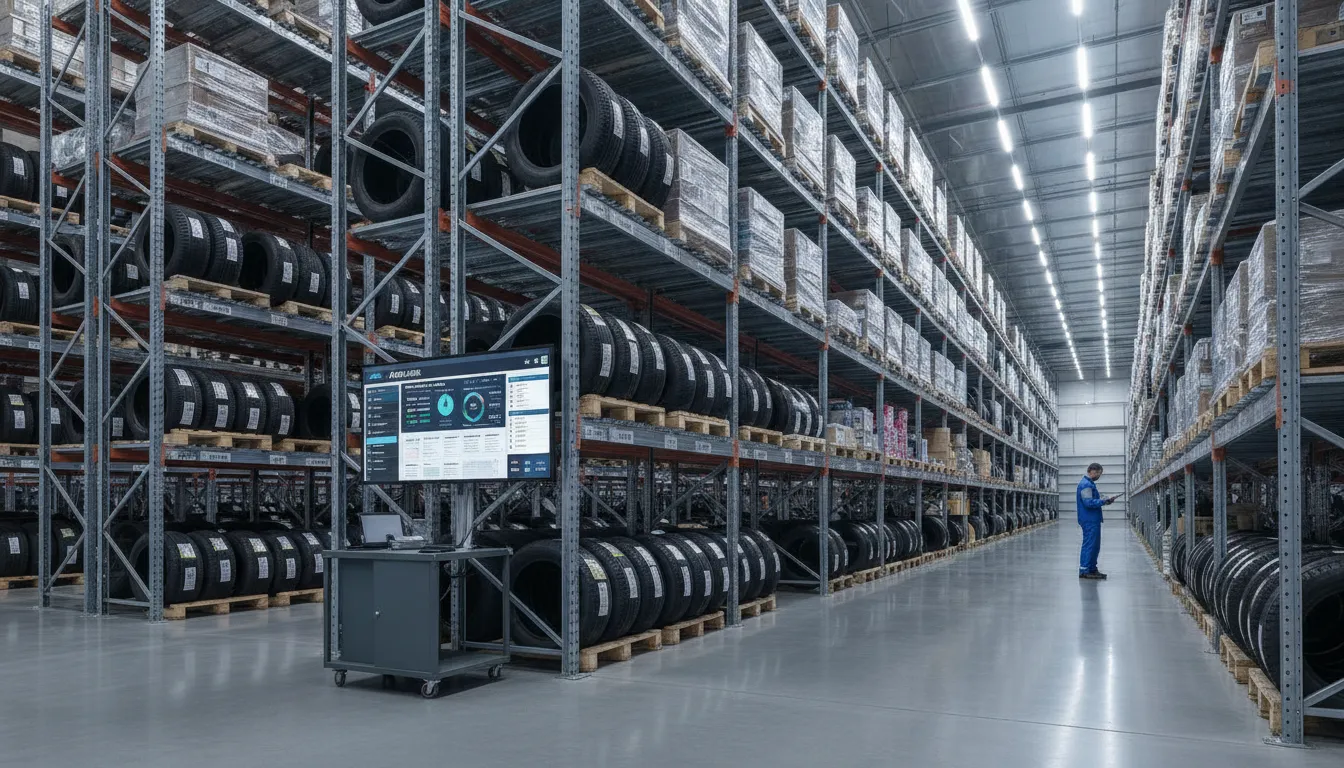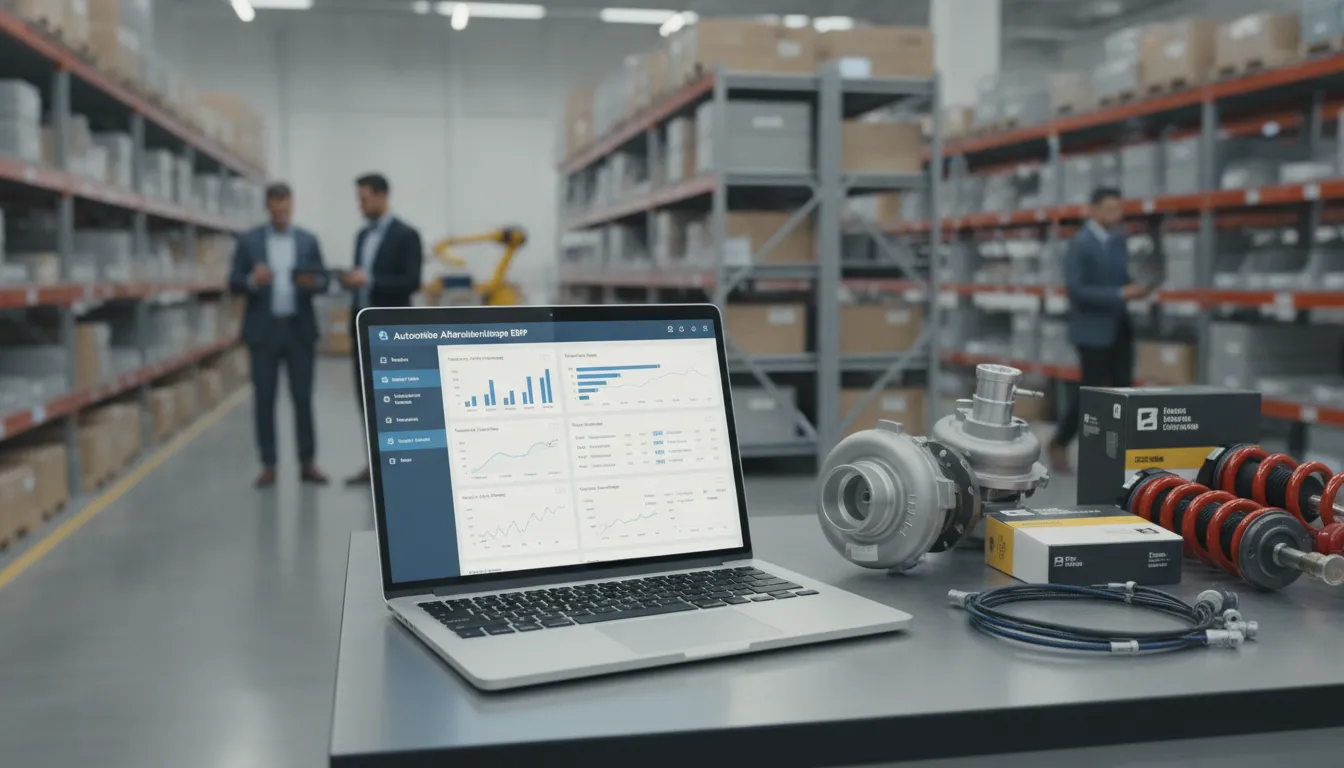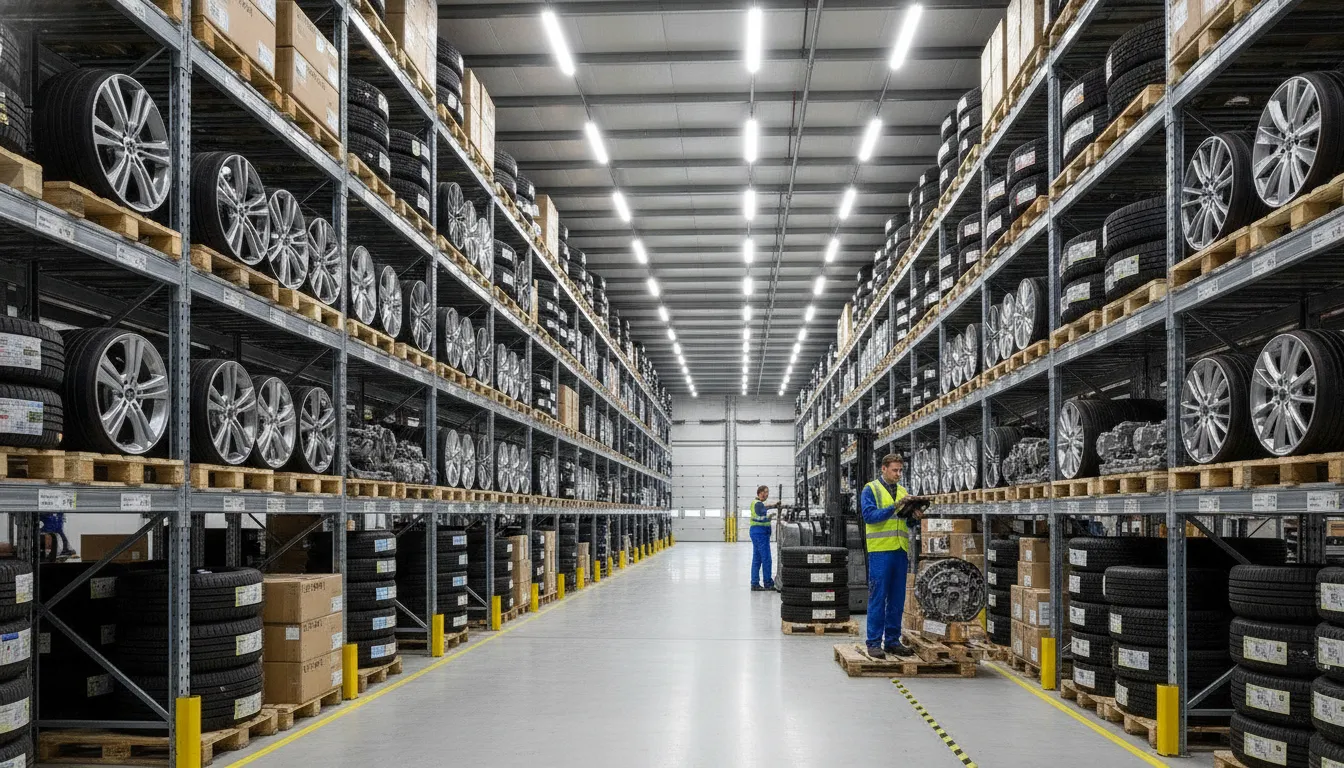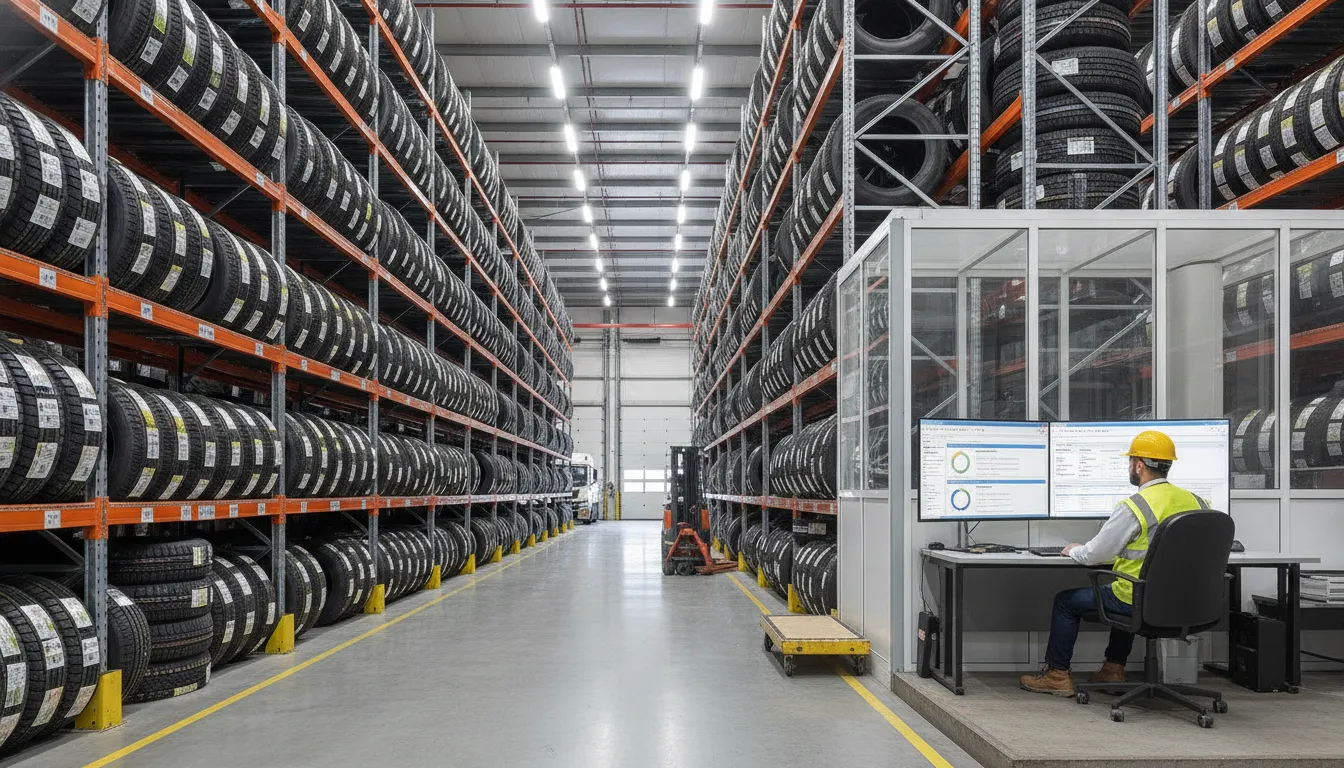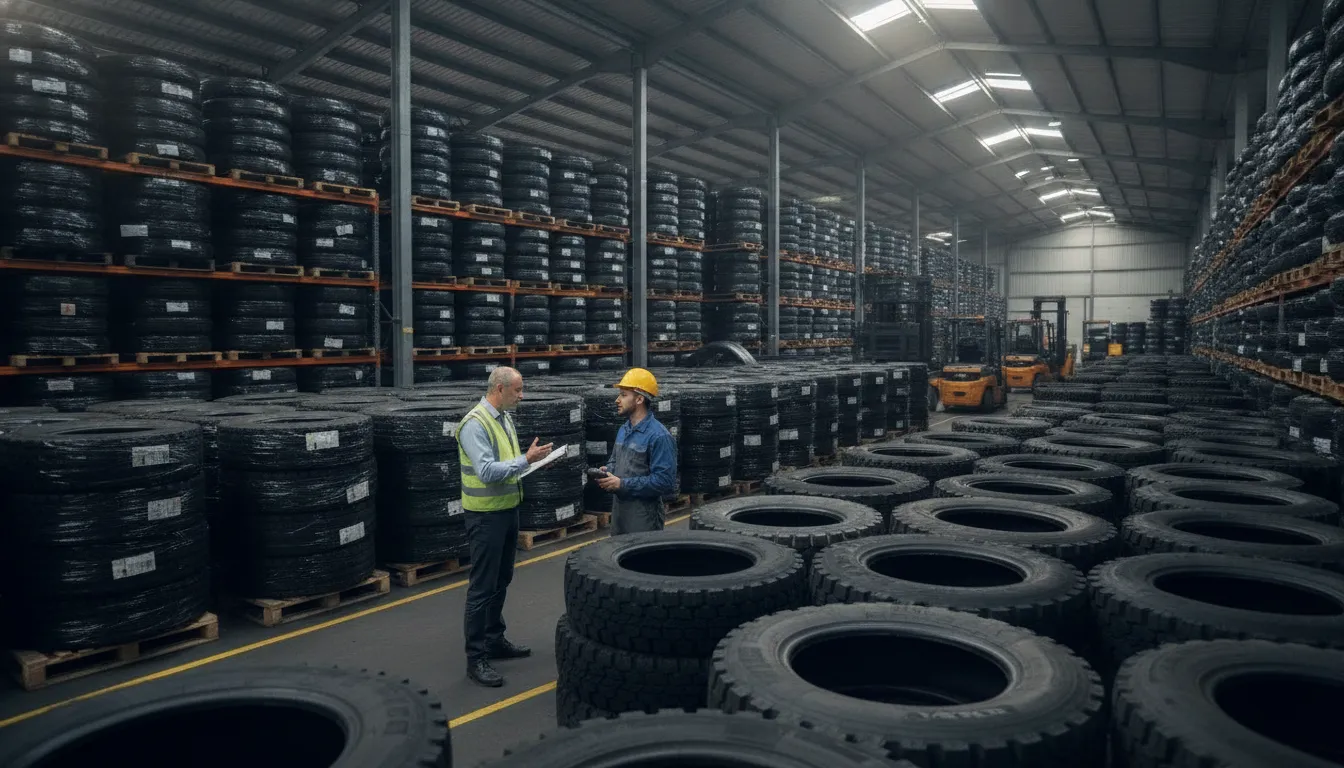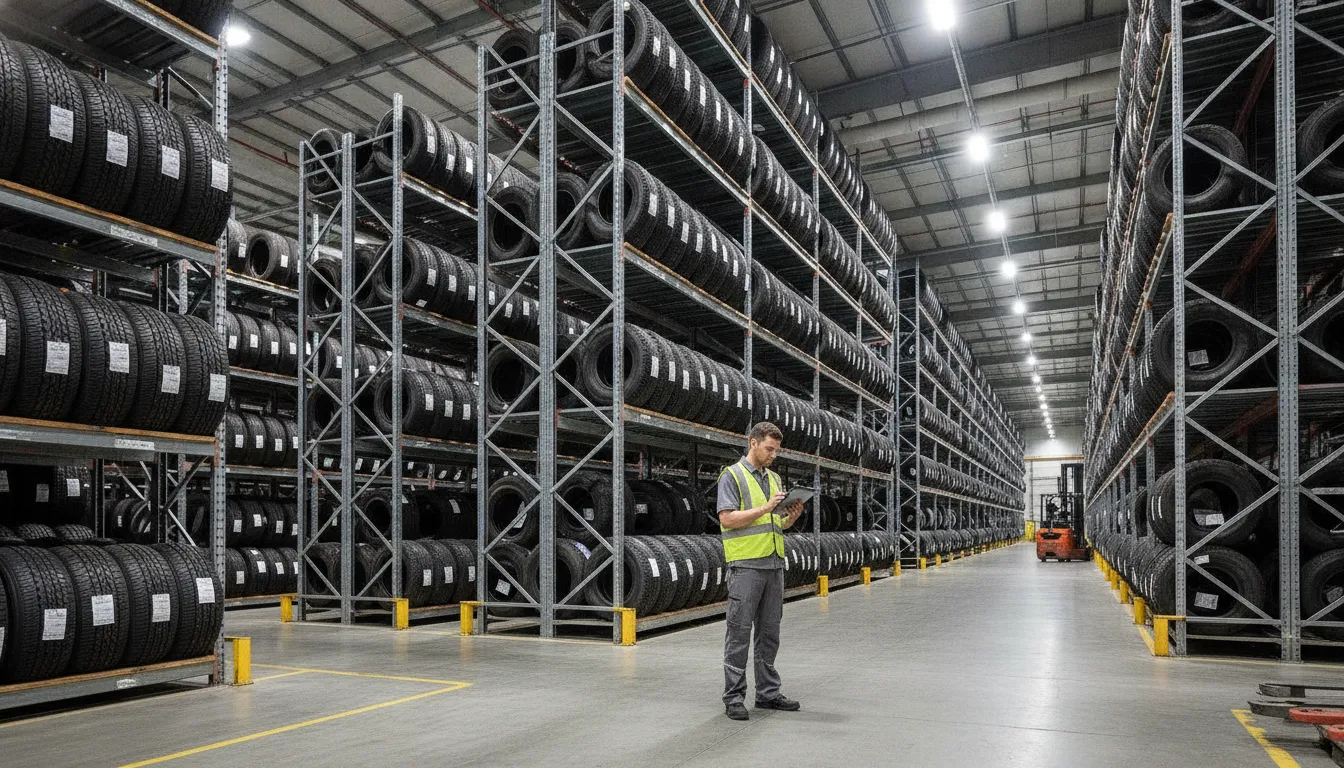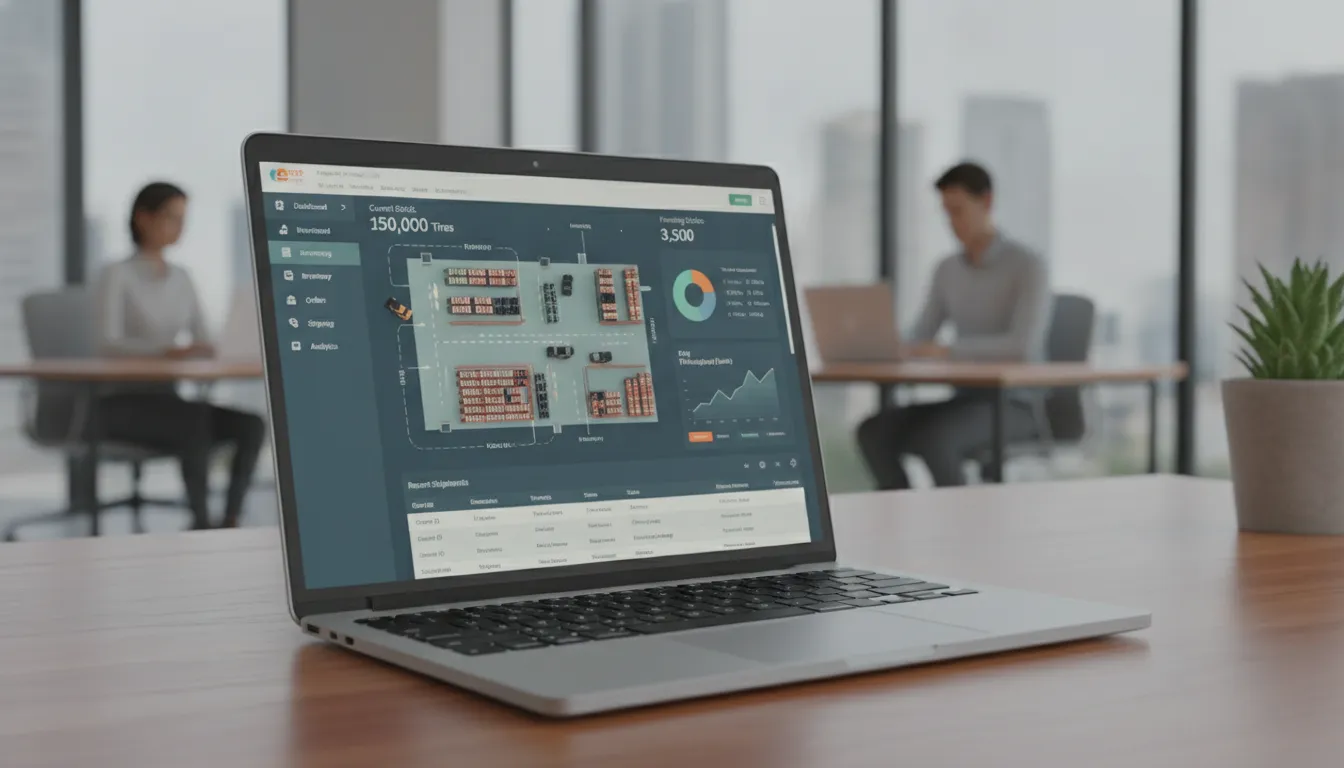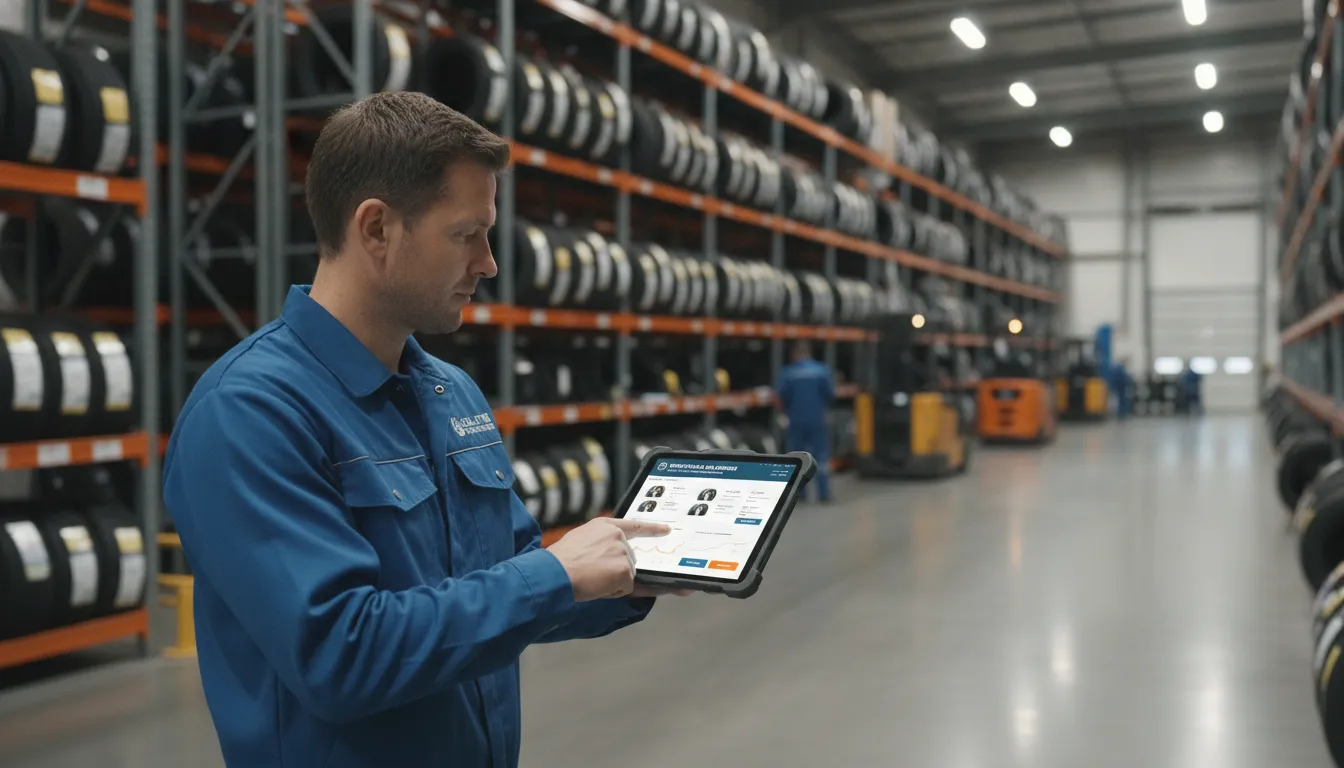
For an aftermarket parts distributor, an ERP decision is not just a software comparison. The right system should connect product and customer information with purchasing, pricing, inventory, order entry, and warehouse activity.
Automotive aftermarket ERP software should help distributors manage complex assortments, location-level inventory, supplier purchasing, customer-specific pricing, quotes, and orders. Test fitment, catalog, replenishment, transfer, reporting, implementation, and support workflows. Review TireServ ERP for wholesale tire and auto parts distributors.
The first step is defining what this category includes and whether it fits your operation. That means separating distributor workflows from software designed for repair shops, then mapping the capabilities your sales, purchasing, warehouse, and finance teams actually need.
What Is Automotive Aftermarket ERP Software and Who Needs It?
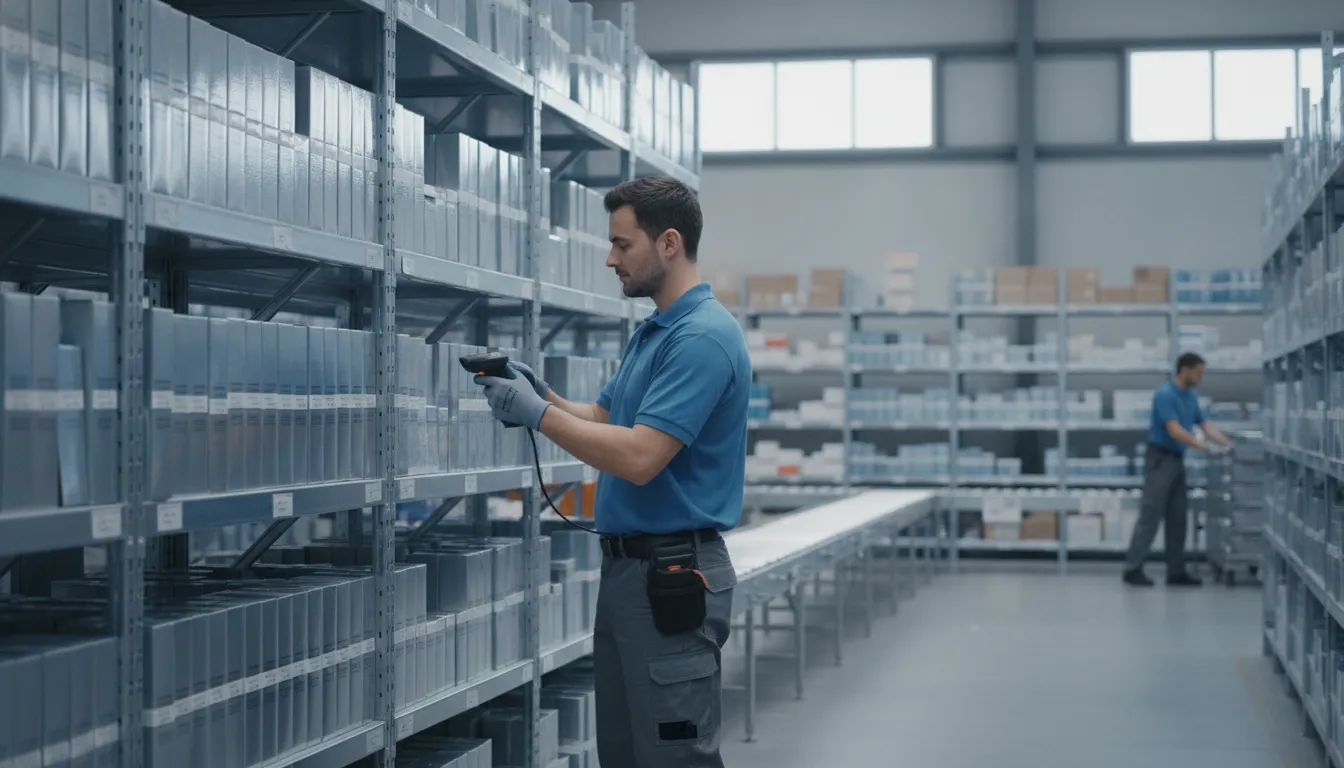
Automotive aftermarket ERP software is a business management system built to connect the work of distributing tires, automotive parts, and related products. Instead of keeping purchasing, inventory, order entry, warehouse activity, and accounting in separate systems, an ERP gives teams a shared operational record.
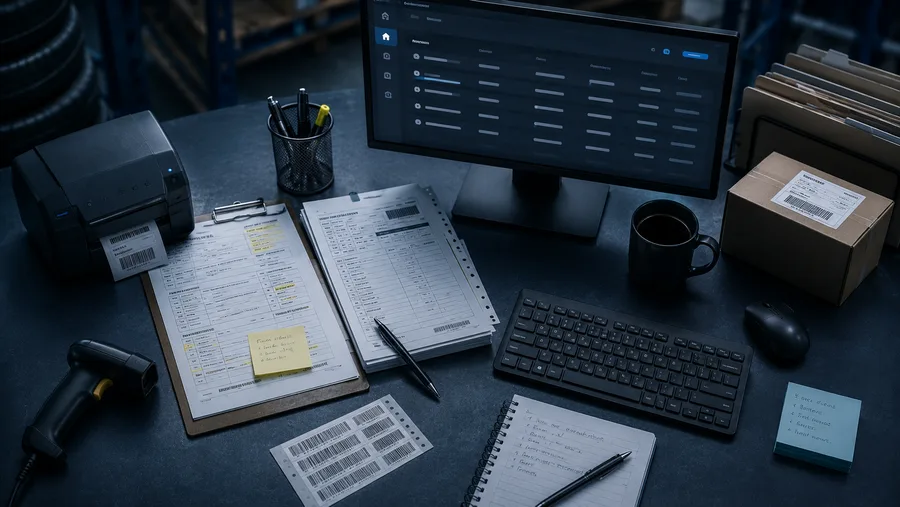
The goal is practical. Teams should see what is available, what customers need, what suppliers owe the business, and how each transaction affects the financial side of the company.
For a tire or automotive supply distributor, that scope is different from auto repair shop management software. A repair shop typically needs tools for appointments, vehicle service work, labor, and customer repair history. A distributor needs to manage products moving through a wholesale network, including quotes, sales orders, purchasing, receiving, warehouse activity, customer pricing, and fulfillment. The customer may be a tire shop, dealer, fleet operator, or another business placing an order, not a vehicle owner booking service.
That distinction matters when evaluating software. Ask whether a system supports the daily flow of a distribution business. Do not assume that any automotive label means it is designed for the same work.
Fitment lookup, catalog depth, interchange data, and ACES or PIES support may also be important questions. These should be demonstrated and verified with each provider.
Who benefits from this type of ERP?
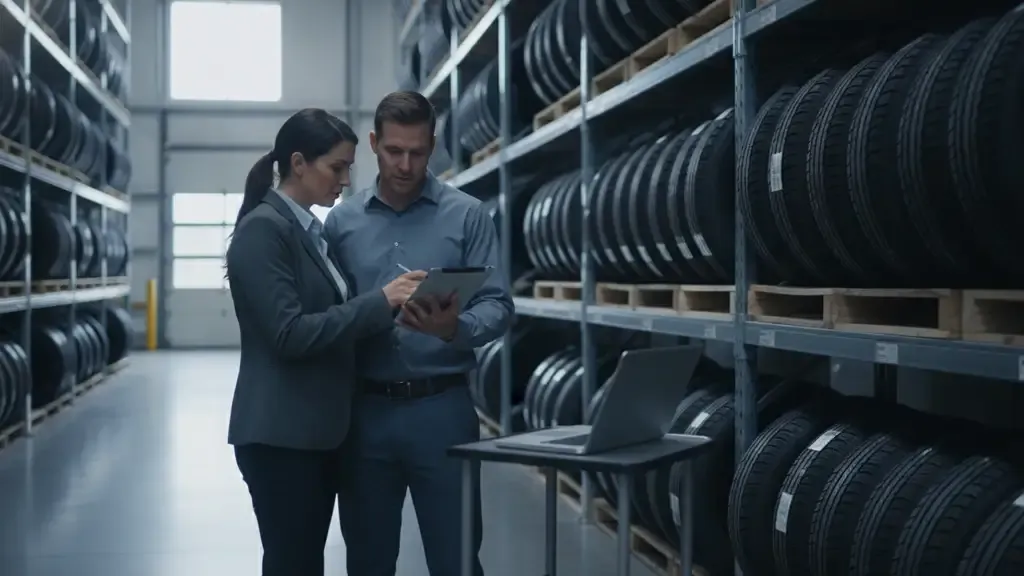
The strongest fit is usually a distributor whose product range, locations, order volume, or customer requirements have outgrown spreadsheets, basic accounting software, or disconnected legacy tools. Owners and operations managers need visibility across the business. Purchasing teams need better information for replenishment. Sales teams need accurate price and availability answers. Warehouse teams need dependable inventory information. Finance leaders need transactions that connect to accounts receivable, accounts payable, and the general ledger.
- Tire and automotive supply distributors managing wholesale orders, inventory, purchasing, and customer accounts.
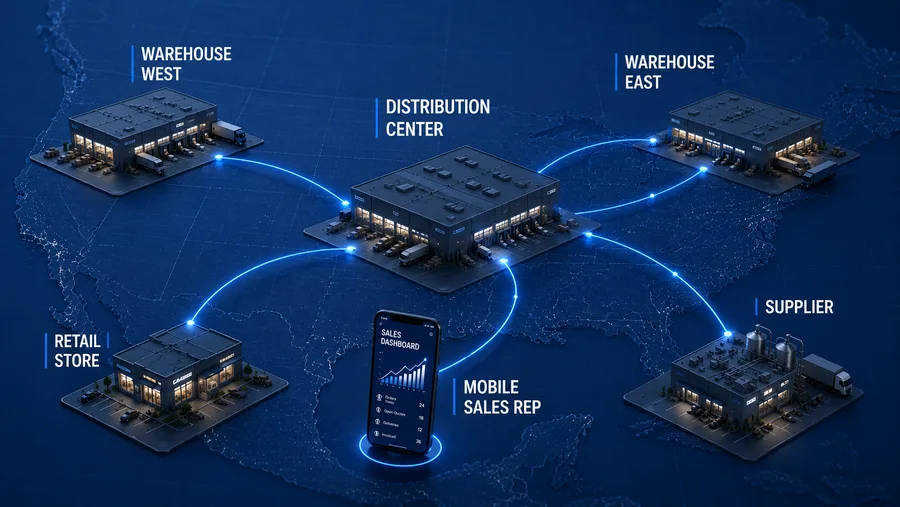
- Multi-warehouse businesses coordinating stock, branch activity, transfers, and consolidated reporting.
- Growing distributors replacing duplicate entry and disconnected workflows with a shared system.
- Teams with field or B2B sales channels that need access to quotes, orders, pricing, or availability beyond the main office.
QBC's TireServ ERP is designed for tire and automotive supply distributors. Its documented areas include POS, inventory management, purchasing and vendor management, sales orders with quoting, CRM, accounts receivable, accounts payable, general ledger, reporting, and multi-warehouse operations. The platform also documents price and availability inquiries, online order entry, and a customer-facing B2B portal. Learn more about TireServ ERP for tire and automotive supply distributors or review this guide to ERP for wholesale tire and auto parts distributors.
How Is Aftermarket Parts Distribution Different From Generic Distribution?
A generic distribution system may handle purchasing, inventory, sales orders, and accounting. An aftermarket distributor should test whether those functions reflect the way parts are identified, priced, located, and sold. The difference is not simply the number of products in the warehouse. It is whether the system helps staff answer the right operational questions quickly and consistently.
Can the system support fitment and catalog complexity?
Fitment data, catalog depth, and manufacturer catalog connections are important evaluation questions for many aftermarket businesses. Ask a prospective vendor to demonstrate how a user finds the right part, confirms vehicle or application details, handles aliases and substitutes, and keeps product information current. ACES and PIES support may also matter, depending on your catalog and sales channels. These capabilities should be verified in a demonstration rather than assumed because a product is marketed as automotive aftermarket ERP software.
A useful evaluation should also cover the less visible catalog work behind a customer inquiry. Can sales staff identify the correct item without relying on a separate spreadsheet? Can the system show availability by warehouse? Can purchasing and inventory teams see how a product is described and sold across locations? The answers will vary by platform and configuration.
How do pricing and inventory needs differ?
Aftermarket distributors often need to manage more than one relationship between an item and a customer. Ask about customer-specific pricing, price updates, promotions, rebates, quotes, and order history. Also examine whether the system can support your SKU breadth, replenishment rules, substitutions, and warehouse transfers without forcing staff into disconnected workarounds.
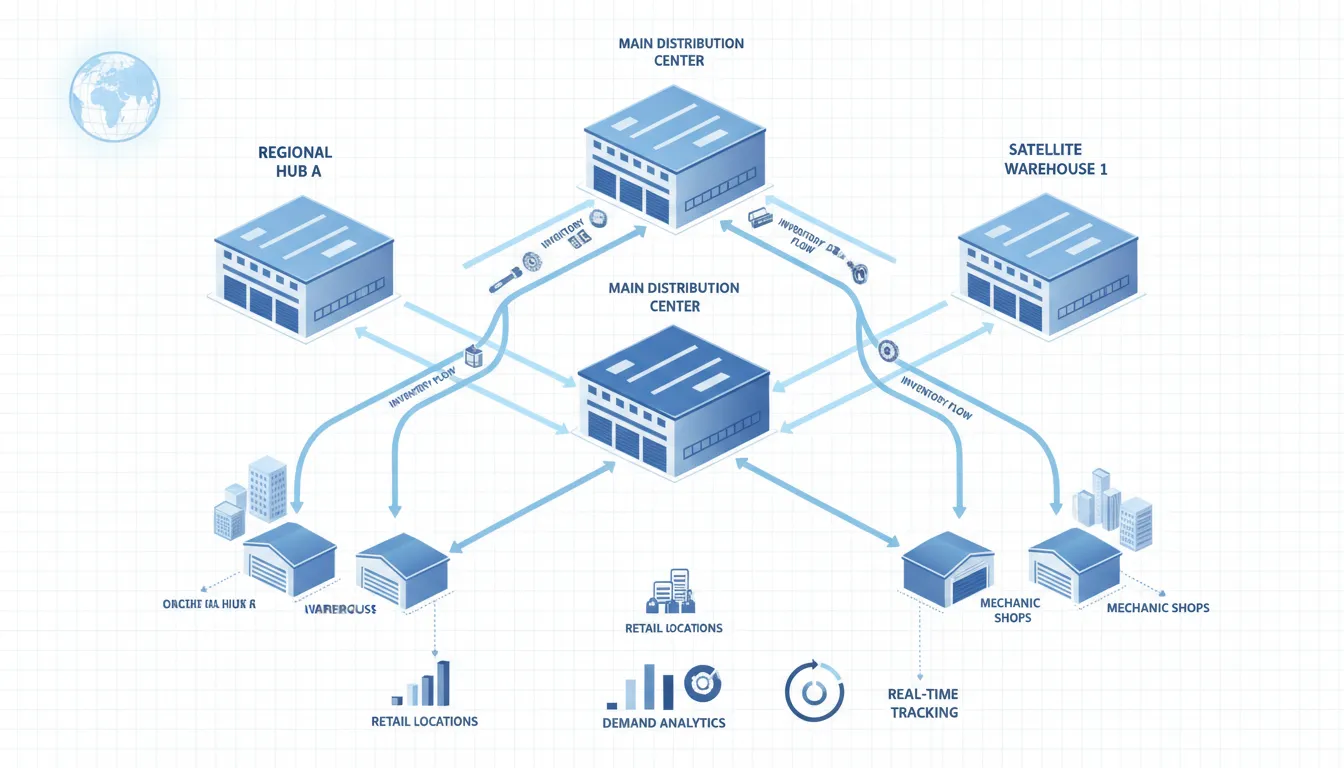
Warehouse design matters as well. A distributor with multiple locations may need visibility into stock, branch requisitions, transfers, and consolidated reporting. QBC documents TireServ for tire and automotive supply distributors, with functions including inventory management, purchasing. Sales orders and quotes, pricing and cost updates, promotions and rebates, replenishment logic, and multi-warehouse operations. Those documented workflows provide a starting point for discussion, not a substitute for testing your own processes.
For a broader overview of the questions involved, see TireServ ERP for wholesale tire and auto parts distributors. You can also review auto parts distribution ERP features before building a demonstration checklist. The right vertical fit is the system that matches your actual catalog, pricing, order-entry, and warehouse decisions, with any specialized data or integration requirements clearly confirmed before implementation.
| Evaluation area | Questions to test |
|---|---|
| Catalog and fitment | Can users find, verify, substitute, and maintain the parts your customers request? |
| Pricing | Can the system apply customer-specific prices, promotions, rebates, and cost updates? |
| Distribution | Can teams see availability by warehouse, receive products, transfer stock, and replenish consistently? |
Which Modules Matter in Automotive Aftermarket ERP Software?
The right module set should follow the way an aftermarket distributor actually buys, stores, sells, and accounts for products. A system may list many features, but the practical test is whether information moves cleanly from purchasing to receiving, inventory, order entry, fulfillment, invoicing, and reporting.
Inventory management is the operational starting point. Look for visibility by warehouse, branch, and item, along with availability inquiries, replenishment support, cost updates, and pricing controls. If you operate multiple locations, verify how the system handles transfers, branch requisitions, and consolidated reporting. QBC's wholesale tire inventory management guidance provides useful context for evaluating these workflows.
Purchasing and vendor management should connect demand to purchase orders and receiving. Ask how the system identifies items to reorder, tracks items on order, supports branch purchasing, and handles back orders. The goal is not simply to create a purchase order. It is to give purchasing staff enough context to buy the right quantity while avoiding unnecessary overstock.
That connection is easier to evaluate when you walk through a real purchasing scenario. From an item falling below its desired level to the receipt being posted and inventory becoming available.

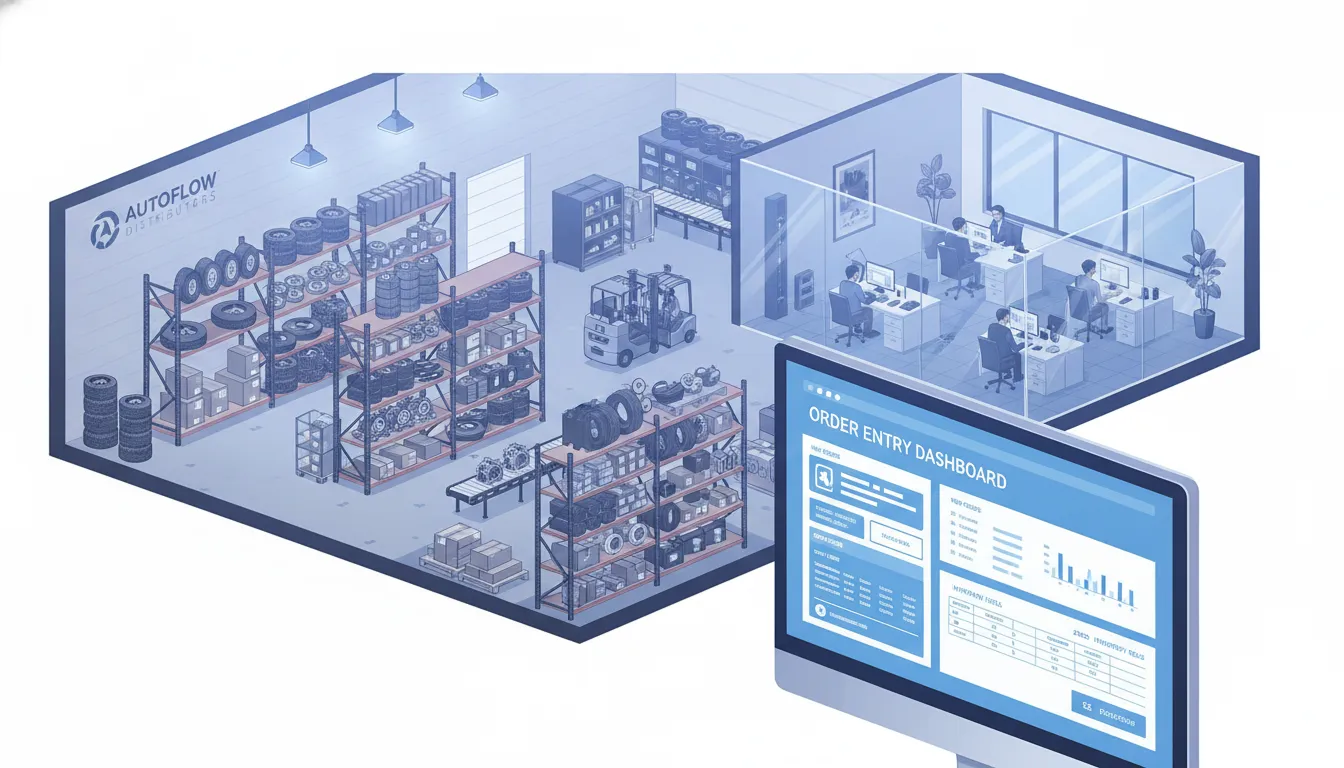
Sales orders, quotes, and POS should support the pace of counter sales, phone orders, and account-based distribution. Documented TireServ capabilities include price and availability inquiries, formal quotations, order processing, online order entry, and POS. During a demonstration, test whether a quote can move into an order without rekeying information, and whether sales staff can see the relevant inventory and customer pricing.
Pricing, promotions, and rebates deserve their own evaluation. Automotive distributors may need different prices by customer, product, or business arrangement. Ask the provider to demonstrate how costs, selling prices, promotions, and rebates are maintained, approved, and reflected in orders. Do not assume that a vendor's references to pricing rules mean the same thing as a distributor pricing matrix.
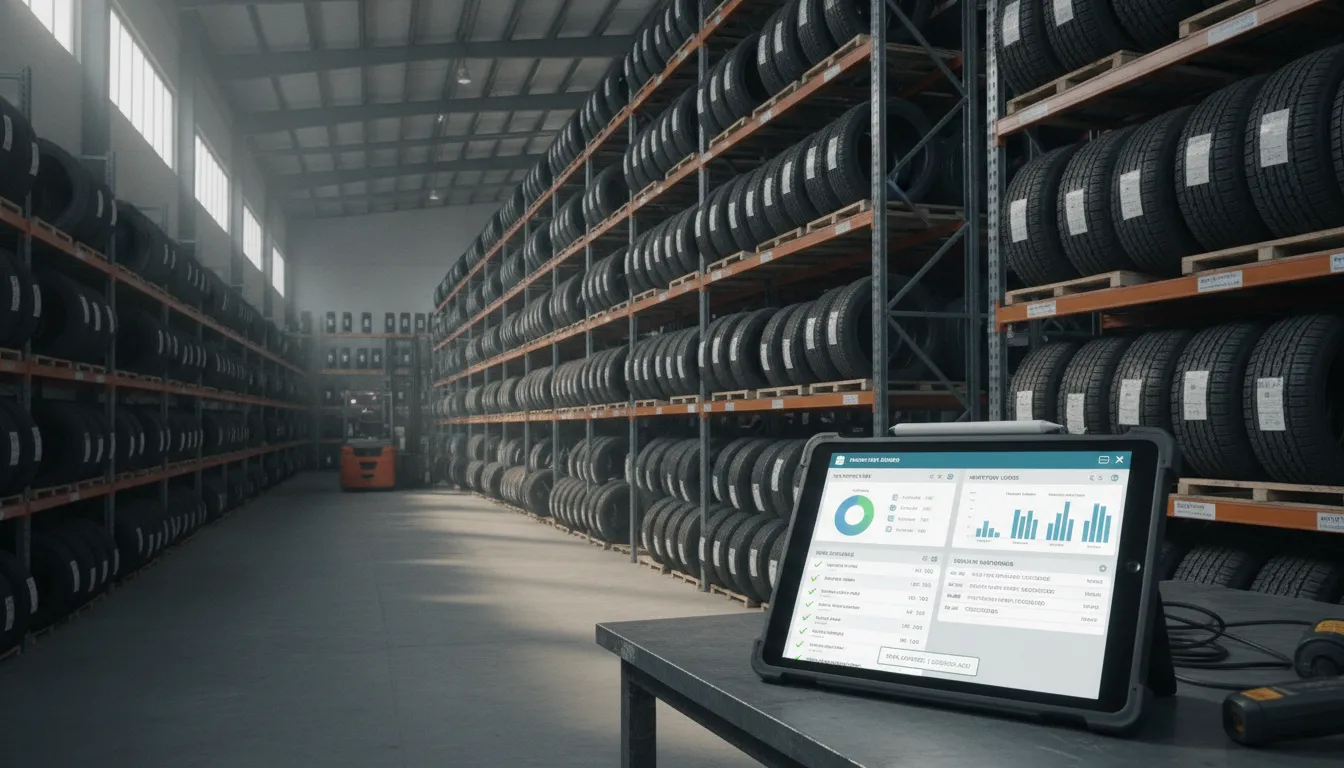
Financial modules should not be an afterthought. Accounts receivable, accounts payable, banking management, and the general ledger should connect to daily transactions. Reporting should then turn those records into usable views of sales, inventory, margins, customers, vendors, and financial performance. TireServ materials document these financial modules and more than 150 standard reports and inquiries.
Finally, consider the customer portal and multi-warehouse tools together. A B2B portal can give customers access to their pricing, availability, and online ordering, while multi-warehouse functionality helps staff manage branch inventory and transfers. Review the guide to multi-location inventory for auto distributors and compare its questions with your own branch workflow. For a broader feature overview, see auto parts distribution ERP features.
How Does Automotive Aftermarket ERP Software Handle Purchasing and Distribution?
Purchasing and distribution are closely connected in an automotive supply business. A purchasing decision affects warehouse availability, customer pricing, margin, and the ability of sales staff to answer an order question accurately. The right automotive aftermarket ERP software should connect those activities without forcing teams to maintain separate spreadsheets or duplicate information across departments.
Start with supplier and replenishment workflows. The system should give purchasing staff a practical view of what is on hand. What is already on order, and what demand or stocking rules indicate may be needed next. TireServ materials describe replenishment logic, purchasing and vendor management, and tools for updating costs and pricing. Those functions help a distributor review buying decisions in the context of inventory and selling activity, rather than treating each purchase order as an isolated transaction.
Cost changes also need a controlled path into day-to-day operations. When purchase costs change, managers should be able to review how those changes affect pricing and margin before sales teams quote or enter new orders. A demonstration should show how the system handles your actual approval practices, vendor terms, promotions, rebates, and customer-specific pricing. Avoid assuming that a product supports a particular catalog integration or automated vendor feed unless the provider documents it and can demonstrate it.

From receiving to warehouse transfers
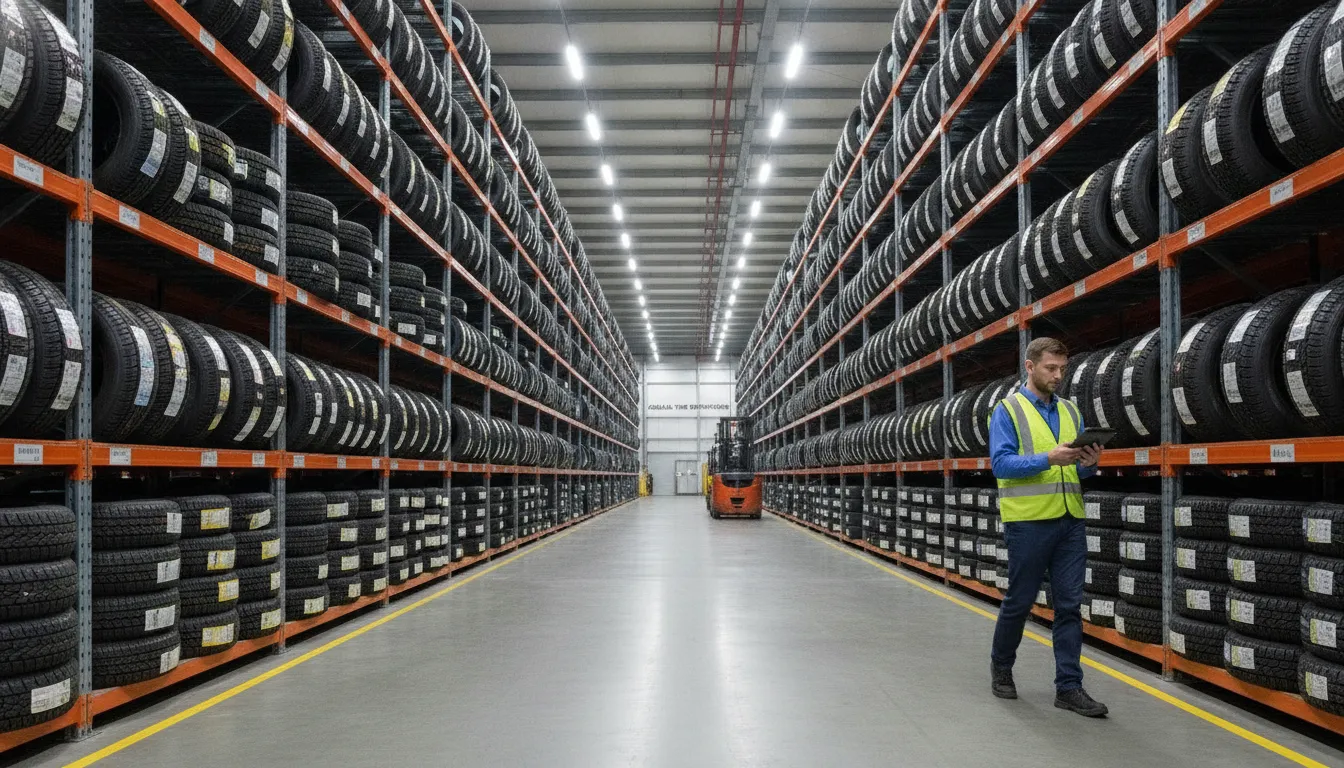
Receiving should update inventory records in a way that warehouse and sales teams can trust. For businesses with multiple locations, the workflow should also account for branch needs, requisitions, and transfers. QBC technical materials document multi-warehouse operations, branch transfers, consolidated reporting, and real-time updates. That gives managers a clearer view of where inventory is located and whether an item may be available at another branch before placing an unnecessary purchase order.
- Review stock, open orders, and replenishment needs.
- Receive products and update branch-level availability.
- Transfer inventory when another warehouse can serve the demand.
- Connect availability and pricing to order entry.
Making ordering easier for customers and staff
Distribution continues after the product reaches the warehouse. Sales staff need price and availability inquiries, quotations, and order processing in one workflow. Customers may also need a self-service option that shows their applicable pricing and available products. QBC describes a customer-facing B2B portal with customer-specific pricing and availability, online order placement, and order history access. These capabilities can reduce repeated calls and rekeying, while giving account teams better visibility into what a customer has ordered previously.
For a closer look at the broader workflow, review the TireServ ERP guide for wholesale tire and auto parts distributors and the overview of auto parts distribution ERP features. During a demonstration, ask the provider to walk through one purchase, receipt, transfer, customer inquiry, and online order using your terminology and approval process.
How Should You Choose Automotive Aftermarket ERP Software?
Use a structured evaluation rather than relying on a polished demonstration. Ask each vendor to show how the system handles your actual distribution workflows, data, pricing rules, and warehouse processes. A practical checklist for evaluating automotive aftermarket ERP software includes:
- Map your current workflow first. Document how a quote becomes an order, how inventory is allocated, how purchasing responds to demand, and how invoices reach accounting. Include sales, customer service, purchasing, warehouse, finance, and management users. The right system should reduce duplicate entry and improve visibility without forcing every department into disconnected workarounds.
- Test fitment and catalog requirements directly. Ask whether the system supports the product identifiers, attributes, substitutions, supersessions, and catalog sources your team uses. If you need fitment lookup, ACES or PIES data, or vendor catalog connections. Ask the vendor to demonstrate the exact workflow and explain what is included, configured, or supplied by another provider. Do not assume that an automotive label means those functions are built in.
- Verify pricing and customer-specific rules. Bring representative examples of account pricing, promotions, rebates, margins, and price changes. Confirm how prices are maintained, approved, displayed, and used in quotes, orders, portals, and invoices. Ask for a written explanation of the pricing model and implementation costs. Public feature lists are not a substitute for testing your own rules.
- Review purchasing and replenishment. Ask the vendor to show reorder recommendations, purchase orders, receiving, back orders, substitutions, and allocation. Verify whether the system supports your purchasing approval process and whether replenishment can account for stock at other locations. The goal is a repeatable process, not another spreadsheet maintained beside the ERP.
- Walk through multi-warehouse inventory. Test availability by location, transfers, branch requisitions, committed stock, physical counts, and consolidated reporting. QBC materials document multi-warehouse operations, transfers, and online updates for its distribution ERP products, but every buyer should validate how those workflows fit its own locations and controls. For additional context, review this guide to multi-location auto distributor inventory.
- Test order entry and customer access. Demonstrate phone orders, sales orders, quotes, will-call or delivery requirements, and online ordering. Confirm whether customers can see their own pricing and availability, review order history, and place orders through the portal. Ask how errors, approvals, credit holds, and exceptions are handled.
- Evaluate reporting, implementation, training, and support together. Identify the reports managers need for sales, inventory, margins, purchasing, and finance. Then ask who handles configuration, data migration, user training, troubleshooting, and ongoing support. QBC offers implementation, end-user training, and technical support as part of its full-service model. Compare the complete plan, responsibilities, and expected customer effort, not just the software feature list. See this ERP evaluation guide for distributors for additional planning questions.
Frequently Asked Questions
How should distributors evaluate fitment and catalog support?
Ask how the system handles vehicle applications, product attributes, catalog updates, and exceptions. Confirm whether it supports the data standards and catalog sources your team already uses, and test several real parts during the demonstration. QBC materials do not verify specific fitment, ACES, or PIES functions, so treat those as questions to validate rather than assumed features.
Which modules should an automotive supply distributor expect?
At minimum, review inventory, purchasing and vendor management, quotes, sales orders, point of sale, reporting, and financial workflows. TireServ documentation lists these areas along with CRM, accounts receivable, accounts payable, and general ledger support. The right mix depends on how your teams currently buy, stock, sell, and replenish products.
Can an ERP support inventory across multiple warehouses?
It can, but confirm the specific workflows before choosing a platform. Ask the vendor to demonstrate location-level availability, transfers, branch requisitions, replenishment, and consolidated reporting. TireServ documentation describes multi-warehouse operations, branch requisitions and transfers, and consolidated reporting, which are useful capabilities to review against your actual distribution process.
What should we test during an ERP demonstration?
Use real examples from purchasing through fulfillment. Ask the vendor to show a supplier order, receiving, inventory availability, pricing or cost updates, a quote, a sales order, and customer-facing order entry. Also discuss implementation, data migration, training, and ongoing support so your evaluation covers adoption and operational fit, not just the module list.
Ready to Evaluate Your Distribution Workflow?
A focused demonstration can help your team compare automotive aftermarket ERP software against the fitment, catalog, pricing, purchasing, inventory, and order workflows that matter in daily distribution operations. Bring your current process questions so the discussion stays practical and relevant to your business.