When a distributor shops for business software, most of the attention goes to the feature list. That's understandable, and it's a mistake. Feature lists converge — most serious systems handle orders, inventory and accounting. What differs, sometimes enormously, is the provider behind the software: who implements it, who answers when it breaks, and what the relationship costs over the ten or more years you'll realistically live with the decision.
Start with industry fit
A system built for your kind of business already speaks your language — your units, your pricing structures, your workflows. A generic system can usually be bent into shape, but every bend is a customization you'll pay for twice: once to build, and again at every upgrade. Ask the provider how many businesses like yours they serve, and ask to see the software running a business like yours. It's the reason industry-specific systems exist at all — the way TireServ is built around tire & automotive supply, BeautyServ™ around beauty supply and salons, and ShadowERP™ around general wholesale and retail distribution.
Ask who does the implementation and training
Software fails at implementation far more often than it fails in code. Find out exactly who converts your data, configures the system and trains your staff — the provider's own people, or a third-party partner you've never met? A provider who implements what they build has skin in the game; a provider who hands you off after the sale does not.
Understand the support model
The question to ask is simple: when something breaks at 9 a.m. on your busiest day, who picks up the phone? Is it a person who knows your account, a ticket queue, or an offshore call center reading from the same screen you are? Ask for specifics — response times, escalation paths, and whether support staff have actually worked with businesses like yours.
Make sure you own your data
Your item history, customer records and transaction history are among your most valuable assets. Confirm you can get them out — completely, in a usable format, without a fee designed to discourage you. Systems built on open databases make this straightforward; closed systems can make your own data a hostage in every future negotiation.
Count the total cost, not the sticker price
Compare providers on the full cost over five to ten years: licenses or subscriptions, implementation, training, customizations, hardware, upgrades and support. A low entry price with expensive change orders routinely ends up costing more than an honest number up front. Specificity is a good sign — a provider who itemizes is a provider who has done this before.
Weigh longevity and count your vendors
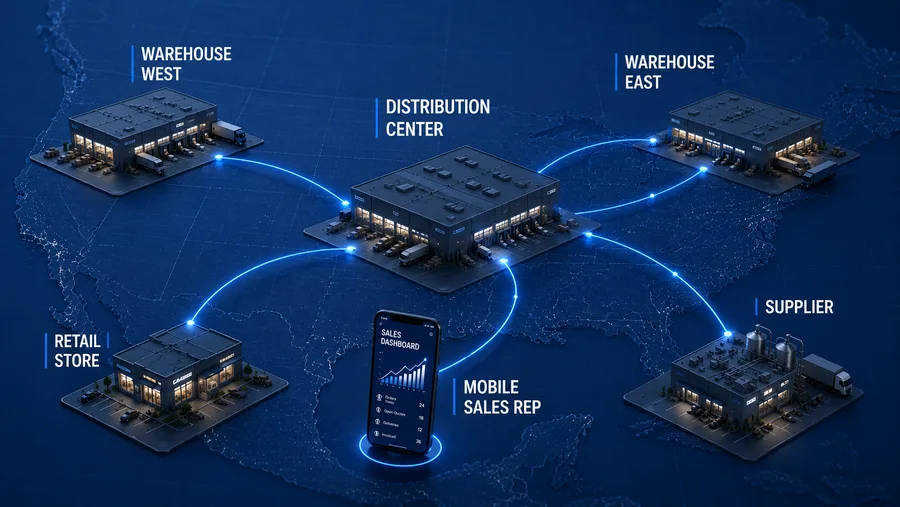
Business software outlives laptops, servers and often the salesperson who sold it, so the provider's staying power is part of the product. Then look at how many vendors the arrangement leaves you managing — when software, hardware and network support come from different companies, problems get passed around instead of fixed. It's worth asking whether one partner can carry the whole load; that one-partner model, and staying at it since 1978, is the basis QBC Systems works from.
Finally: demand a real demonstration
Slide decks demo well. Ask instead to see the actual system processing an order like yours, end to end, with your questions interrupting the script. An hour of that tells you more than any proposal document — about the software, and about the people you'd be working with.
Ready to put us through that test? Schedule a demo with QBC Systems.