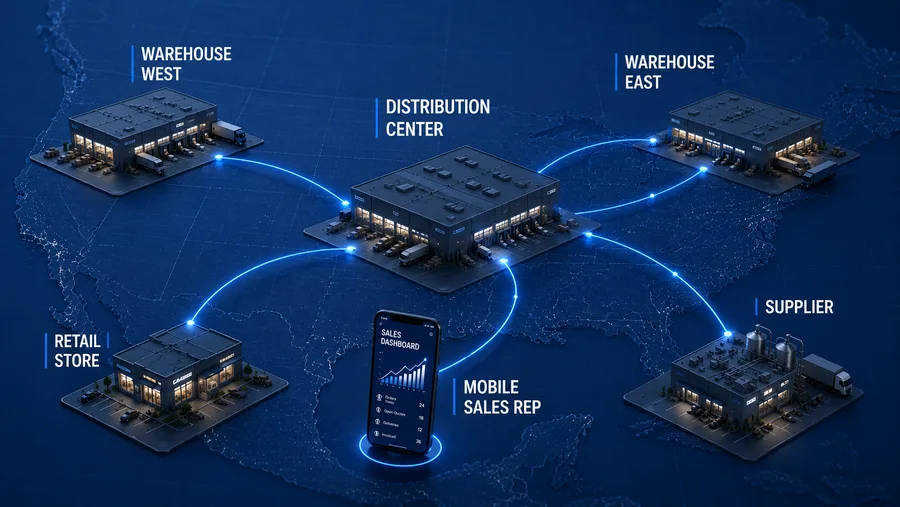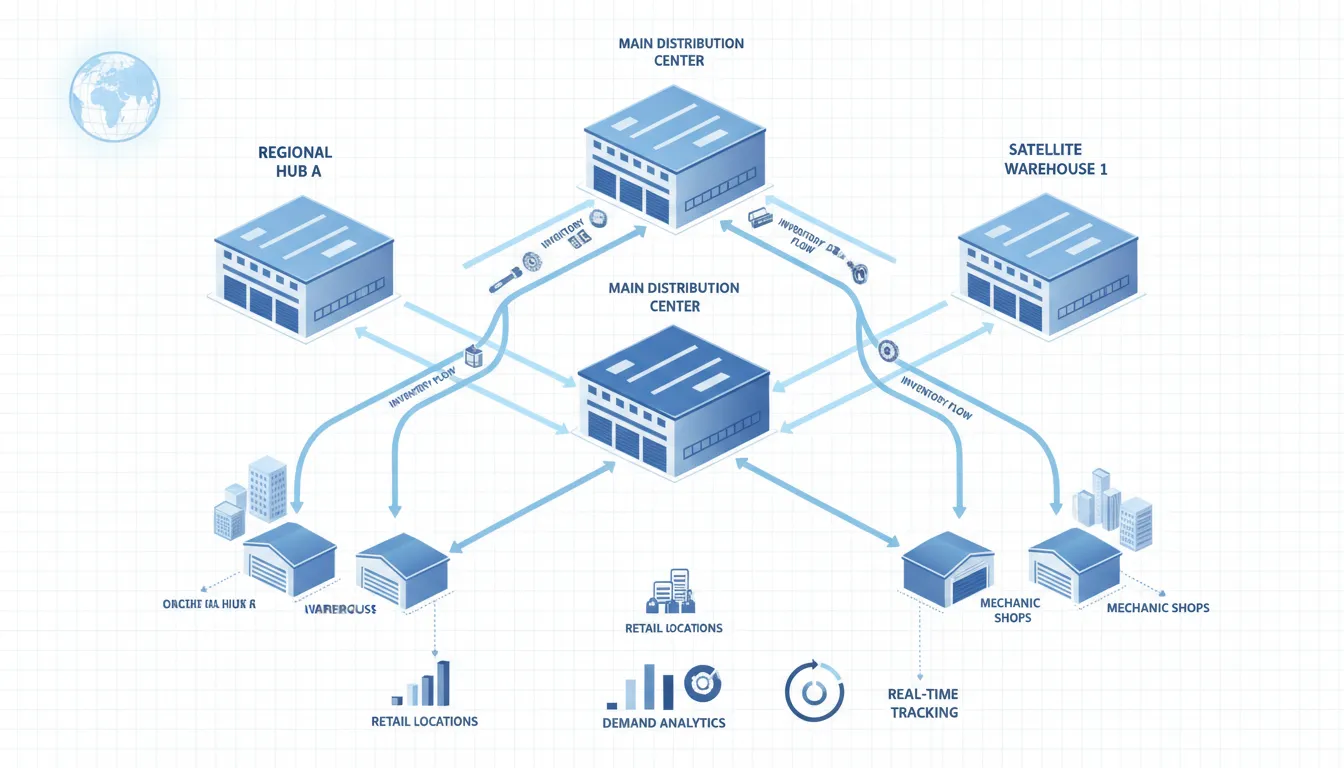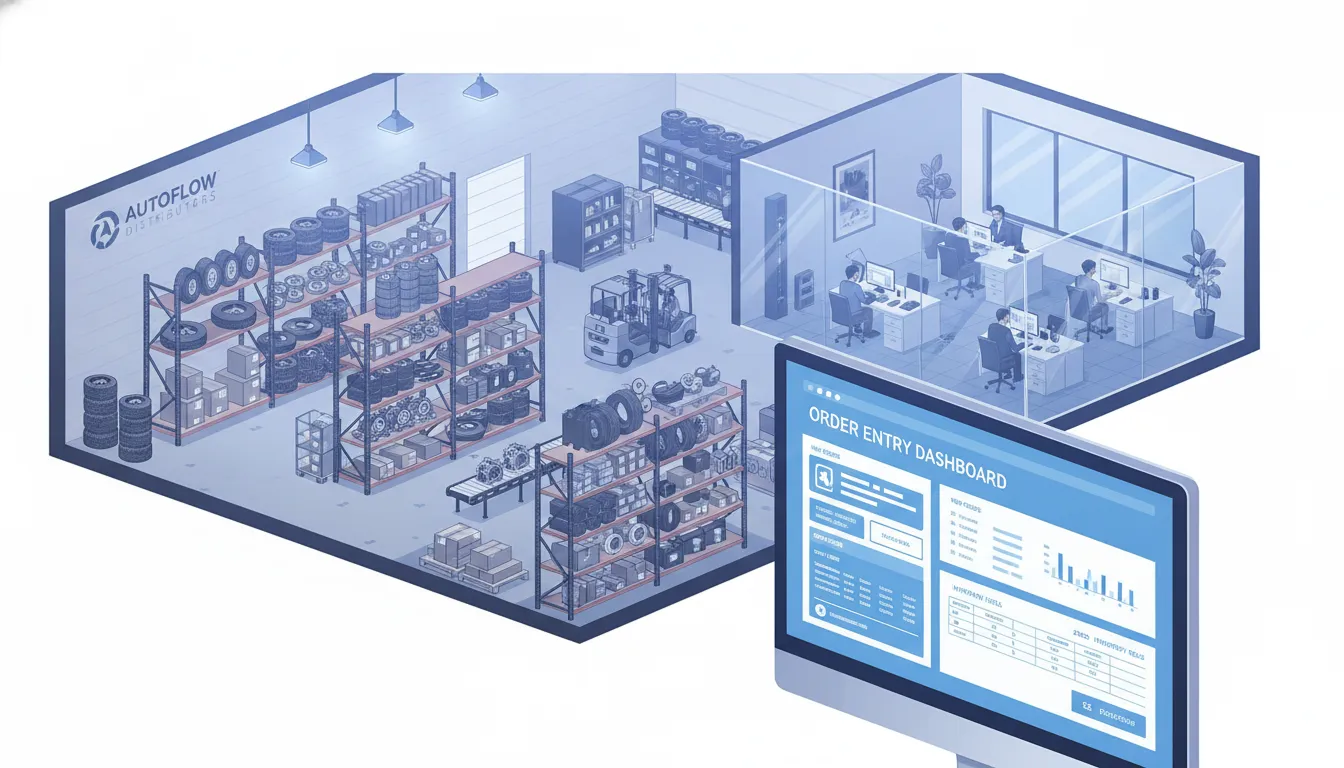

ERP evaluation and implementation for distribution companies is not a software shopping exercise. It is a decision about how your people will buy, receive, store, price, sell, deliver, account for, and support products every day. The right system should make those workflows easier to manage without forcing your team to work around generic assumptions.
For a distributor, a useful evaluation connects operational requirements to implementation realities. Understand which capabilities matter, how data will move, and who owns the project. Plan how employees will learn new processes and what support will look like after go-live. This guide lays out a practical path from requirements through adoption.
Schedule a Demonstration with QBC Systems
QBC Systems has served distribution businesses since 1978 and supports tire and automotive supply distributors, beauty supply wholesalers, and general wholesale operations. The first step is to define the work your ERP must support. From there, you can compare systems on fit, implementation ownership, and long-term partnership rather than on a feature list alone.
What Should Distribution Companies Define Before Evaluating an ERP?
QBC Systems recommends defining the work your distribution operation must improve before comparing ERP demonstrations. Because a clear requirements list keeps the evaluation grounded in daily processes rather than impressive but irrelevant features.
The goal is not to create a perfect technical specification. Document how work happens now, where delays or errors occur, and which information people need. Define what a better operating model should look like. This gives your team a consistent way to evaluate ERP software and implementation for distribution companies.
- Map the current workflows. Follow a typical transaction from start to finish. Document how a customer order arrives, how inventory availability is checked, how stock is allocated and picked, how shipping is confirmed, and how billing is completed. Do the same for purchasing, receiving, returns, transfers, and replenishment. Include workarounds such as spreadsheets, duplicate data entry, manual approvals, and phone calls between locations. These details often reveal the real requirements more clearly than a list of desired features.
- Define the information each team needs. Ask sales, purchasing, warehouse, accounting, customer service, and management what they need to see and when they need it. Requirements may include customer-specific pricing, vendor information, open orders, inventory by location, purchasing history, receivables, payables, general ledger data, or management reports. Specify whether the information must be available in real time, shared across locations, or accessible away from a workstation. A requirement should describe a decision or task, not merely name a software module.
- Separate must-haves from preferences. Rank each requirement as essential, important, or optional. An operation with multiple warehouses may consider inventory visibility, transfers, branch purchasing, and consolidated reporting essential. Another distributor may place greater emphasis on B2B ordering, vendor catalogs, EDI, shipping, or ecommerce connections. Make the list specific to your business. A long inventory of every possible feature makes it harder to identify what will materially improve operations.
- List the users, locations, and responsibilities. Record who will use the system, which processes they own, and how work differs between warehouses, branches, offices, and sales channels. Include occasional users as well as daily users. Consider approval responsibilities, segregation between duties, mobile or browser access, and the reports managers need to run without asking another department. This user map will later support implementation planning, permissions, training, and testing.
- Document required integrations and data sources. Identify the accounting system, shipping tools, ecommerce storefronts, vendor catalogs, EDI relationships, payment processes, and other systems that exchange information. Clarify the source of truth for customers, products, prices, orders, and financial records. List data to migrate, such as item records, customer accounts, pricing structures, open orders, purchasing history, and balances. Ask how each integration works, what data moves, and who owns setup and support.
- Set measurable success criteria. Describe what should be different after implementation. Examples include fewer manual handoffs, more reliable inventory information, faster order processing, cleaner purchasing decisions, better visibility across warehouses, or more consistent reporting. Assign an owner to each outcome and establish how your team will verify it during user acceptance testing and after go-live. Keep the criteria operational and achievable rather than promising an unsupported percentage improvement.
Turn the checklist into an evaluation brief
Bring the completed requirements to every ERP discussion and ask the provider to demonstrate the relevant workflows using your terminology. A distributor evaluating multi-warehouse inventory visibility should see how locations, transfers, replenishment, and fulfillment are handled. A business focused on order accuracy should walk through its warehouse order management workflow, from intake through billing handoff.
Use the same brief to evaluate the implementation partner, not just the application. QBC Systems has served distribution businesses since 1978 and combines ERP software with implementation, data migration, configuration, training, technical support, and related technology services. The right evaluation should therefore cover both the system's fit and the practical plan for putting it into daily use.
How Do You Compare ERP Systems for Distribution Operations?
QBC Systems recommends comparing an ERP by how well it supports the work your distribution team performs every day, not by a feature list alone. A useful evaluation looks at the complete operating model: purchasing, inventory, warehouse activity, order processing, customer pricing, accounting, reporting, integrations, implementation, and support. This approach helps a distributor distinguish between software that appears capable in a demonstration and a system that can be adopted and maintained in practice.
Use the criteria below as a working comparison framework. Ask each ERP provider what is included and what requires configuration. Clarify what depends on another system. Confirm who owns the work before and after go-live.
| Evaluation area | What to examine | Questions to ask |
|---|---|---|
| Capability fit | Coverage for inventory, purchasing, sales orders, warehouse processes, customer pricing, accounting, and reporting. | Can the system support our actual workflows without spreadsheets or unnecessary workarounds? |
| Vertical fit | Experience with the realities of tire and automotive supply, beauty wholesale, or general distribution. | Can the provider demonstrate our products, pricing rules, warehouse activity, and customer-order scenarios? |
| Deployment | How users access the system, what installation is required, and how locations and mobile users are supported. | What technical changes are required at each site, and what responsibilities remain with our team? |
| Integrations | Connections involving accounting, shipping, vendor catalogs, EDI, ecommerce, payment processes, or other operating tools. | Which integrations are available, who maintains them, and how are failures identified and resolved? |
| Implementation ownership | Planning, configuration, data migration, testing, cutover, project management, and decision-making responsibilities. | Who is accountable for each phase, and what deliverables mark readiness for the next phase? |
| Training | Role-based instruction for warehouse, purchasing, sales, accounting, and management users. | How will training reflect our processes, and what help will users have during adoption? |
| Support | Access to technical assistance, issue resolution, system guidance, and ongoing operational improvement. | Who do we contact after launch, and how does the provider learn from recurring questions? |
| Total cost | Software, implementation, migration, training, integrations, hardware, networking, support, and internal staff time. | What work is included, what is optional, and what continuing costs should be planned for? |
Look beyond the demonstration
A strong demonstration should follow a real transaction from beginning to end. For example, ask the provider to show how a buyer creates or updates a purchase order. Receives inventory, makes stock available across locations, applies customer-specific pricing, processes an order, and reports the result. Include exceptions such as substitutions, backorders, returns, or an item that is unavailable. These scenarios reveal the amount of manual intervention the system requires.
Vertical fit also deserves close attention. Tire and automotive supply distributors, beauty supply wholesalers, and general wholesale distributors may all need inventory and accounting, but their product, pricing, and customer workflows can differ substantially. QBC Systems offers TireServ, BeautyServ, and ShadowERP for defined distribution contexts. The right comparison is not which product has the longest list of features. It is whether the proposed system fits your operation and whether the provider can take responsibility for implementation, training, and ongoing support.
Finally, evaluate the relationship you are buying. QBC Systems has served distribution businesses since 1978 and provides implementation, data migration, configuration, training, technical support, hardware, networking, and managed IT services. That full-service model is one example of the ownership buyers should clarify during ERP evaluation and implementation for distribution companies. Request a written scope, identify internal owners, and make sure the plan covers the weeks after launch.
How ERP Evaluation and Implementation for Distribution Companies Comes Together
QBC Systems treats implementation as an operational project, not a software installation. For a distributor, the ERP touches purchasing, inventory, warehouse activity, sales orders, customer pricing, accounting, reporting, and daily decision-making. A successful rollout therefore requires people, process decisions, reliable data, and a clear plan for moving from the current way of working to the new one.
Set ownership and confirm the requirements
Implementation needs an accountable project owner and participation from the employees who understand the work in detail. An owner or operations manager may set priorities, while warehouse, purchasing, sales, accounting, and customer service users confirm how requirements should work in practice. This governance prevents the project from becoming a collection of disconnected requests.
Confirm requirements before configuration begins. Document how orders arrive, how stock is received and allocated, how replenishment decisions are made, and how customer-specific pricing is maintained. Record what managers need in reports. These conversations expose exceptions and separate essential requirements from later preferences.
Prepare the system and the operating environment
Configuration translates confirmed requirements into items such as users, permissions, warehouses, inventory rules, pricing structures, approval steps, and reports. It should reflect the distributor's operating model rather than forcing every department into an unfamiliar process. The implementation team also needs to plan data migration. Customer records, suppliers, products, inventory balances, pricing, open orders, and financial information should be reviewed, cleaned, mapped, and tested before they are treated as ready for production.
The surrounding technology matters as well. Workstations, warehouse devices, internet connectivity, networking, backups, and security practices affect consistent system use. QBC's service model includes hardware and networking support, along with managed IT, backup, disaster recovery, and technical support. Discuss these areas early rather than discovering them as go-live blockers.
Test, train, and manage the change
Testing should follow real distribution scenarios, not just isolated button checks. Users can walk through receiving, purchasing, order entry, allocation, picking, shipping, invoicing, returns, transfers, and reporting with representative data. Findings should be assigned, corrected, and retested. A controlled test conversion also gives the team a practical way to verify migrated records before the final cutover.
Training then connects the configured system to daily work. Role-based sessions are more useful than a broad feature tour. Warehouse employees need practice with their transactions, while purchasing, sales, accounting, and managers need workflows and reports relevant to their responsibilities. Written procedures and designated super users provide support when questions arise after launch.
- Confirm process owners, requirements, and decision rights.
- Clean and validate data before each test conversion.
- Test complete workflows with the users who perform them.
- Train by role, document procedures, and plan post-go-live support.
Change management completes the work. Leaders should explain what is changing, why it matters, and when employees will practice the new process. Evaluate feedback against agreed requirements instead of adding changes casually. A partner that provides implementation, migration, configuration, training, and support can keep these workstreams connected. For background on ERP basics for distributors, start with the system's role in connecting the business. Then evaluate the people and preparation required to make that connection useful.
How Should You Plan Data Migration and Go-Live?
QBC Systems treats data migration and go-live as operating changes, not as a final software installation step. For a distributor, the quality of the first inventory count, customer record, open order, and purchasing transaction affects confidence in the entire ERP project. A practical plan gives your team clear ownership, several chances to test the conversion, and a controlled path from the old system to the new one.
Clean the data before it moves
Start by identifying the records the business actually needs. Review item masters, descriptions, units of measure, vendor numbers, customer accounts, ship-to addresses, price levels, tax details, open orders, purchase orders, receivables, and on-hand quantities. Remove duplicate customers, inactive items, obsolete price records, and inconsistent abbreviations where appropriate. Do not treat cleanup as an IT exercise. Purchasing, sales, accounting, and warehouse leaders should decide which records are accurate and which can be archived.
Inventory deserves special attention. Confirm whether quantities represent available stock, committed stock, damaged goods, or stock held at another location. If warehouses use different item codes or units, document the relationship instead of assuming that a conversion tool will resolve it correctly.
Assign ownership and map every important field
Create a simple migration register that names the source field, its destination, the person responsible for approving it, and the rule used to transform it. For example, an old customer code may map to a new account number. While a legacy item category may need to be converted into a more useful product group. Record exceptions in writing. This prevents the project team from making undocumented decisions that users discover only after launch.
Mapping should cover more than names and addresses. Include warehouse locations, customer pricing, sales representatives, vendor terms, order statuses, general ledger references, and any data exchanged with shipping, ecommerce, EDI, or accounting systems. When a field cannot be migrated, decide whether it belongs in an archive, a report, or a new process.
Run test conversions with real operating scenarios
Do not approve a migration because the records loaded without an error message. Run at least one test conversion using representative data, including high-volume items, multiple warehouses, customers with special pricing, backorders, partial receipts, returns, and open balances. Then ask the people who perform the work to complete normal tasks in the new system.
Compare source and converted results. Check item counts, inventory totals, customer balances, open order lines, pricing, and purchasing information. Reconcile differences, update the mapping rules, and run the conversion again. A test is valuable only when the business signs off on both the data and the workflow.
Define the cutover window and contingency plan
Choose a specific point at which the old system stops accepting transactions. Communicate the schedule to every department, including sales staff, warehouse personnel, drivers, purchasing, and accounting. Before cutover, finish the final cleanup, back up the source data, document the last transaction number, and establish who can approve an exception.
Prepare a contingency plan that explains what happens if a conversion issue appears. This may include retaining read-only access to the old system, recording urgent transactions in a controlled temporary log. And assigning one person to reconcile those transactions after the new system is available. A contingency plan is not an admission that implementation will fail. It is a way to protect customer service while the team resolves an unexpected issue.
Stage adoption and validate the first transactions
Where the operation allows it, introduce workflows in stages. Begin with a controlled group of trained users or one warehouse, then expand after the team validates receiving, picking, shipping, invoicing, purchasing, and reporting. Keep the acceptance criteria practical: can staff find the correct item, apply the right customer pricing, process an order, transfer stock, and produce the reports management needs?
During the first days after launch, schedule structured checks rather than relying on informal feedback. Review inventory movements, customer records, open orders, invoices, and warehouse activity with the responsible managers. The goal is a dependable operating transition, with issues identified quickly and ownership clear after go-live.
What Does ERP Training and Post-Go-Live Support Look Like?
QBC Systems treats training and post-go-live support as part of the implementation, not as an afterthought once the software is switched on. A distribution ERP affects purchasing, receiving, inventory, sales, shipping, accounting, and management reporting. Each group needs practical instruction tied to the work it performs every day.
Role-based training begins with the processes that matter most to each team. Warehouse employees may need receiving, transfers, picking, adjustments, and inventory inquiries. Purchasing staff may focus on replenishment, vendor records, purchase orders, and cost updates. Sales users need customer records, pricing, order entry, availability checks, and order status. Accounting users need the handoffs between sales, purchasing, receivables, payables, the general ledger, and reporting. Managers need to review exceptions, interpret reports, and make decisions from current operational information.
This approach is more useful than giving every employee the same general software tour. It also exposes process questions before go-live. If a warehouse manager cannot explain how a transfer is approved, or a sales representative is unsure which customer price applies. The project team has found a training and workflow issue that should be resolved before it affects live orders.
Build internal ownership with super users
Super users are experienced employees who receive deeper training and help connect the implementation team with the rest of the organization. They can answer routine questions, reinforce the agreed process, identify recurring friction, and distinguish a user mistake from a system or data problem. Choose super users from the departments and locations that will use the ERP, rather than assigning the responsibility only to an executive or an IT generalist.
Good training also leaves behind usable documentation. That can include process guides, role-specific checklists, definitions for important fields, approval rules, and short instructions for common tasks. Documentation should reflect the company's configured workflows, not generic software terminology. It should be easy to update when a process, responsibility, or screen changes.
Make support ownership clear after go-live
Post-go-live support should identify where employees take questions, who owns triage, and how issues are prioritized. A failed order process, incorrect inventory balance, or accounting posting concern may require faster attention than a request for a report enhancement. The support process should capture the user, location, transaction or record involved, business impact, and steps that led to the issue. That information helps the support team investigate instead of sending users through repeated explanations.
- Routine questions: Super users or designated internal owners handle common how-to guidance.
- Process issues: The implementation or support team reviews configuration, workflow, and user permissions.
- Data issues: The team checks the source record, conversion, entry process, and related transactions.
- System issues: Technical support investigates errors, access problems, integrations, or infrastructure concerns.
- Improvement requests: Management evaluates the business value, impact, and timing before changing the process.
Support should not end when the first wave of questions declines. Regular reviews can identify repeated workarounds, reports that managers still build manually, and training gaps that affect adoption. QBC Systems provides implementation, data migration, configuration, training, and technical support as part of its full-service model. That is the type of ownership distribution companies should look for during ERP evaluation and implementation for distribution companies. Choose a partner that helps employees use the system effectively, investigates issues, and improves the operation over time.
Which ERP Approach Fits Your Distribution Business?
QBC Systems helps distribution businesses evaluate ERP fit by starting with the operation, not by forcing every company into the same software selection. The right approach depends on the products you sell, the way you purchase and replenish inventory. Your warehouse model, your customer-order process, and the requirements your team must support every day. Those factors should shape both the system shortlist and the implementation plan.
A tire distributor may need to assess workflows that are different from those of a beauty supply wholesaler or a general wholesale operation. That does not mean choosing a product based on a label alone. It means asking whether the vendor understands the work behind that label, can demonstrate relevant processes, and can explain how data, users, training, and support will be handled. This is the practical foundation of ERP evaluation and implementation for distribution companies.
| Distribution context | Relevant QBC product | What to evaluate |
|---|---|---|
| Tire and automotive supply distribution | TireServ | Whether the system aligns with your purchasing, inventory, pricing, order processing, warehouse, and customer-order workflows. |
| Beauty supply wholesale and distribution | BeautyServ | Whether the system reflects your product lines, customer relationships, pricing requirements, purchasing, sales, and reporting needs. |
| General wholesale and retail distribution | ShadowERP | Whether the system supports the breadth of your wholesale or retail operation without adding unnecessary complexity. |
Start with the work your team must control
Use product fit as a starting point for questions, not as a substitute for requirements gathering. Map how an order moves from customer request to allocation, picking, shipping, invoicing, and reporting. Do the same for purchasing, receiving, replenishment, returns, customer pricing, and accounting handoffs. If you operate more than one warehouse or location, document transfers, requisitions, visibility, and management reporting across those sites.
Then separate essential requirements from preferences. Identify which processes must work at go-live, which information needs to be available to each role, and which integrations or data exchanges require validation. A useful demonstration should use scenarios from your business. Ask the vendor to show the workflow and explain what is standard, what requires configuration, and what remains your team's responsibility.
Match the partner to the implementation responsibility
The product is only one part of the decision. QBC Systems has served distribution businesses since 1978 and offers implementation, data migration, configuration, training, and technical support alongside its ERP software. Its broader service model also includes hardware, networking, managed IT, backup, and disaster recovery. During evaluation, ask any ERP partner how it will prepare your data, train each user group, test the system, manage cutover, and support the operation after go-live.
For a smaller distributor, a focused vertical product may provide a clearer path than a broad system that requires extensive adaptation. For a complex operation, the deciding factor may be the partner's ability to understand multiple warehouses, connected departments, and long-term operating requirements. In either case, choose the approach that can be demonstrated against your real workflows and supported through implementation, adoption, and ongoing improvement.
What Questions Should You Ask an ERP Partner Before You Buy?
QBC Systems recommends treating vendor interviews as working sessions, not product demonstrations. A distribution ERP must fit the way your teams purchase, receive, store, sell, ship, invoice, and report on inventory. Ask each provider to show evidence, explain ownership, and identify limitations before you commit to an ERP evaluation and implementation for distribution companies.
Use your own workflows and sample transactions during the discussion. A polished overview can hide gaps that become expensive workarounds after go-live. Ask the vendor to walk through the following questions:
- How does the system fit our daily workflows? Ask the vendor to demonstrate purchasing, receiving, inventory adjustments, customer-specific pricing, order entry, allocation, picking, shipping, billing, returns, and reporting. Include backorders, substitutions, partial shipments, transfers, and urgent orders. The goal is to see whether the software supports your process or expects your staff to redesign it around generic screens.
- Who will lead implementation? Ask for the roles, experience, and availability of the implementation team. Clarify who gathers requirements, configures the system, manages decisions, coordinates testing, and handles issues. You should know whether the people selling the system remain involved after the agreement is signed and who has authority when the project encounters a difficult requirement.
- How will you migrate our data? Ask which records can be migrated, how duplicates and outdated records will be handled, and who is responsible for cleansing and validating the data. Request a mapping plan for customers, vendors, products, price levels, inventory, open orders, balances, and historical information. Ask when test conversions occur and how your team will approve the results before cutover.
- Which integrations are supported, and what is the ownership model? Discuss accounting, shipping, vendor catalogs, EDI, ecommerce, payment processing, and any specialized systems you rely on. Ask whether each connection is standard, configurable, or custom. Confirm who monitors failures, maintains the connection, documents changes, and pays for future work. Do not accept a vague promise that an integration is possible without seeing its scope and dependencies.
- How are security and deployment handled? Ask where the system runs, how users access it, how permissions are assigned, how backups and recovery are managed, and how updates are tested and communicated. Request clear answers about authentication, audit history, data ownership, incident response, and your ability to retrieve your information. A vendor should distinguish documented practices from assumptions and avoid presenting broad security language as a guarantee.
- What training will each role receive? Ask for a role-based plan covering purchasing, sales, warehouse, accounting, management, and system administration. Find out whether training uses your data and workflows, whether super users are coached, and what documentation remains after launch. A training calendar should include practice, testing, and time for questions rather than one general presentation.
- What support is available after go-live? Ask how users report problems, who responds, what information support needs, and how urgent operational issues are escalated. Clarify support hours, onboarding assistance, documentation, release communication, and the process for requesting enhancements. Also ask how the partner helps identify improvements once your team has real usage experience.
- Can you provide relevant references and explain the roadmap? Request references from businesses with comparable distribution workflows, warehouse complexity, and implementation needs. Ask what those customers changed during rollout and what they would plan differently. Review the product roadmap, release process, and policy for requirements that change after selection. Your needs will evolve, so the partner should explain how new workflows, locations, integrations, and reporting requests are evaluated without promising every request in advance.
Finally, ask what is not included. Separate software capabilities, implementation services, data work, integrations, training, infrastructure, and support. QBC Systems has served distribution businesses since 1978 and combines ERP software with implementation, data migration, training, technical support, hardware, networking, backup, disaster recovery, and managed IT services. That full-service model is worth examining when you schedule a demonstration.
Frequently Asked Questions
How do you evaluate an ERP system for a distribution business?
Start with documented workflows, not vendor feature lists. Map purchasing, inventory, warehouse activity, order processing, customer pricing, accounting, reporting, and integrations. Then score each system against must-have requirements, implementation ownership, training, support, deployment approach, and total ownership considerations. Include the people who use these processes every day.
What features are most important in a distribution ERP?
Look for practical coverage of inventory and warehouse management, purchasing, sales orders, fulfillment, financial processes, reporting, and connections to the tools your business will keep. Multi-warehouse distributors should also examine transfers, replenishment, consolidated reporting, and how quickly users can see dependable operational data.
How should a distributor prepare data for ERP migration?
First decide which records the new system truly needs. Clean duplicate customers, suppliers, products, pricing, and inventory data before mapping fields. Require a test conversion, review the results with process owners, and document the cutover plan. Older information may be retained for reference rather than moved into daily operating tables.
What should an ERP implementation partner provide?
A capable partner should explain who owns requirements, configuration, data migration, testing, training, cutover, and post-go-live support. Ask for a clear project plan, role-based training, user documentation, escalation contacts, and a method for handling issues after launch. A distributor should not be left to complete a complex implementation through self-service instructions alone.
What is the best ERP for distribution companies?
There is no universal best choice. The right system fits your distribution model, warehouse structure, workflows, reporting needs, integrations, users, and growth plans. Compare vendors using realistic scenarios from your operation, such as receiving inventory, processing a customer order, transferring stock, and correcting an invoice. Do not rely on a generic demonstration.
Ready to Plan Your ERP Evaluation?
QBC Systems can help you connect ERP requirements, vendor selection, implementation planning, and go-live preparation to the realities of your distribution operation. A focused conversation can clarify which workflows and questions deserve the most attention before you commit to a system. Schedule a demonstration or contact QBC Systems for a free consultation about ERP evaluation and implementation for distribution companies.