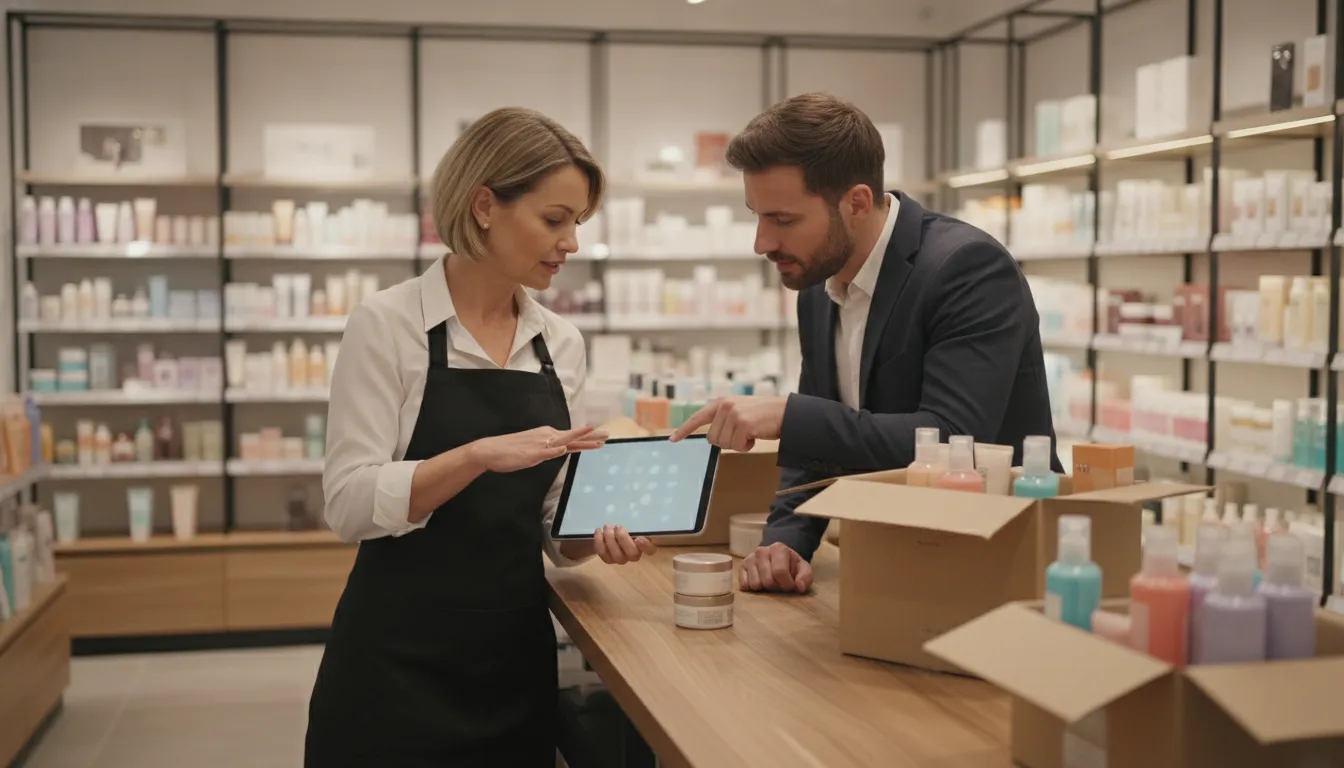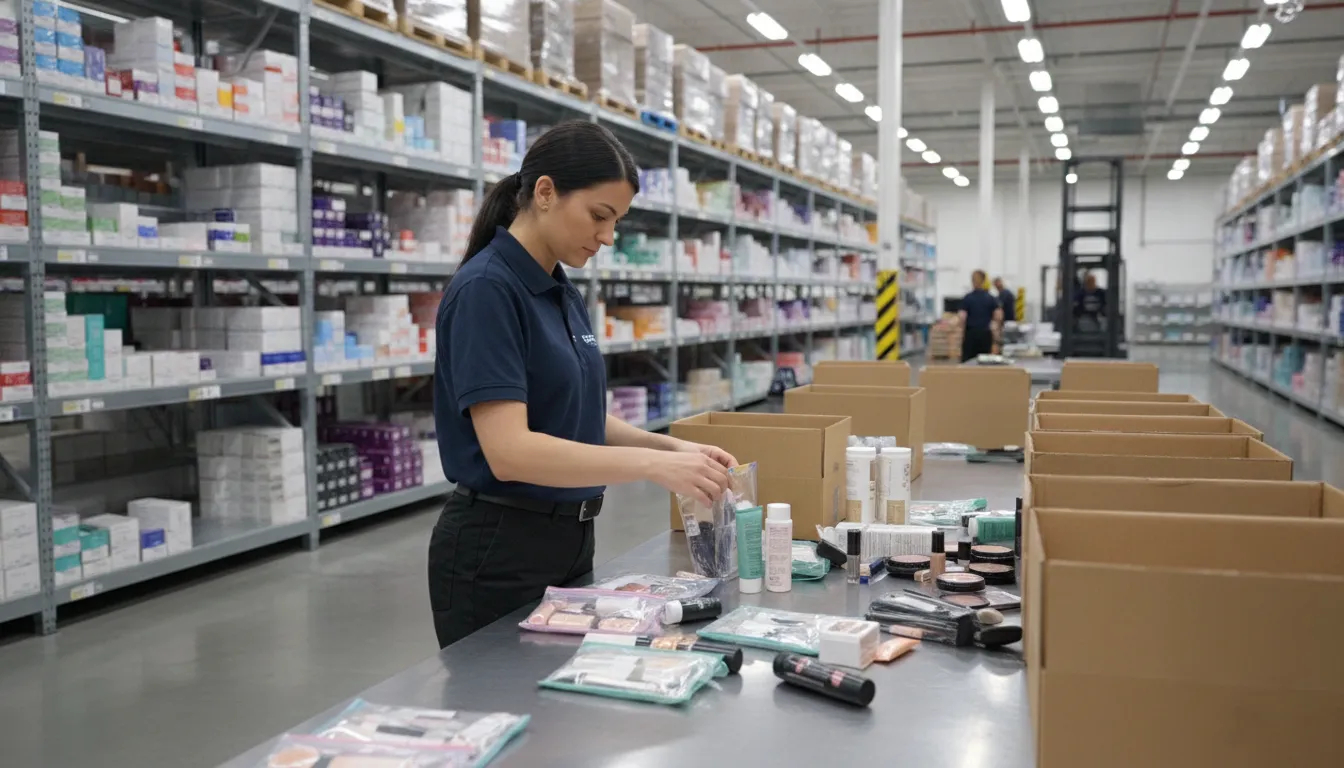

Hair product distribution becomes harder to manage when inventory, salon accounts, pricing, and fulfillment all depend on separate tools or manual workarounds. A practical system should help your team see what is available, who can buy it, which price applies, and what needs attention before an order is delayed.
A hair product distribution ERP brings those workflows together with tools for multi-channel inventory visibility, batch and lot tracking, professional versus retail pricing, stylist account management, and B2B ordering. QBC Systems designed BeautyServ for beauty supply wholesalers that need practical control across daily distribution operations, backed by a full-service approach to software, hardware, implementation, training, and support. Schedule a Demonstration to review how it could fit your operation.
The right approach starts by matching the system to the way beauty distributors actually sell, stock, and serve their customers. That means looking beyond a generic product list and examining the operational gaps a dedicated ERP is built to address.
Why Hair Product Distributors Need a Dedicated ERP
QBC Systems helps beauty supply wholesalers match their software to the practical demands of hair product distribution, from specialized products and customer accounts to fulfillment and support. A dedicated system gives warehouse and operations teams one place to manage the workflows that generic distribution software often treats as exceptions. BeautyServ is purpose-built for beauty supply wholesalers, with more than 190 documented features designed for this sector.
For distributors evaluating a hair product distribution ERP, the issue is not simply whether a platform can create purchase orders or print invoices. The issue is whether it reflects how beauty products are sold, priced, bundled, replenished, and delivered to salons, retailers, schools, and other professional buyers. QBC Systems has served distributors since 1978, giving its approach a long-term understanding of these operating conditions.
Generic vs. specialized distribution software
Generic distribution software may cover the basic transaction, but teams can end up relying on spreadsheets, manual workarounds, or disconnected add-ons for beauty-specific needs. That creates extra steps and makes it harder to see what is happening across the warehouse and customer base. The table below compares how the two approaches handle common beauty wholesale workflows.
| Workflow | Generic distribution system | Specialized beauty supply ERP |
|---|---|---|
| Hair care assortment management. | Treats every item as a flat SKU record. | Handles formulations, packaging, and salon vs. retail variants in one structure. |
| Professional vs. retail pricing. | Requires manual overrides and exception lists. | Applies account-level pricing matrices automatically. |
| Salon and stylist relationships. | Stores separate customer records with limited visibility. | Tracks stylists under a master account with full history. |
| Product bundles and kits. | Treats bundles as informal collections. | Defines kits as sellable units with component visibility. |
| Educator and school discounts. | Depends on one-off manual adjustments. | Enforces defined discount structures for qualified accounts. |
- Managing a wide assortment of hair care, styling, color, and salon products with different ordering patterns.
- Keeping professional and retail pricing rules consistent across customer accounts.
- Tracking salon relationships and the individual stylists connected to a master account.
- Handling product bundles and kits without losing visibility into their components.
- Supporting educator, school, and other specialized discount structures.
- Keeping inventory, orders, and customer records aligned as sales channels change.
These are not isolated features. They affect purchasing, picking, sales support, and the accuracy of customer conversations throughout the day. A vertical system brings those needs into the operating model instead of asking employees to adapt the business to a generic data structure.
More than software alone
QBC Systems also takes a full-service approach that includes ERP software, hardware, networking, and managed IT services. That matters for distributors that need dependable systems across offices, warehouses, sales counters, and connected operations but do not want to coordinate every technical layer on their own. Implementation and support are part of the business decision, not an afterthought.
To compare the capabilities that matter in this environment, review QBC Systems' beauty supply wholesale software guidance. The right ERP should reduce manual reconciliation, make daily decisions easier to verify, and give the team a practical foundation for growth without adding unnecessary complexity.
How Does an ERP Manage Hair Product Inventory and Multi-Channel Stock?
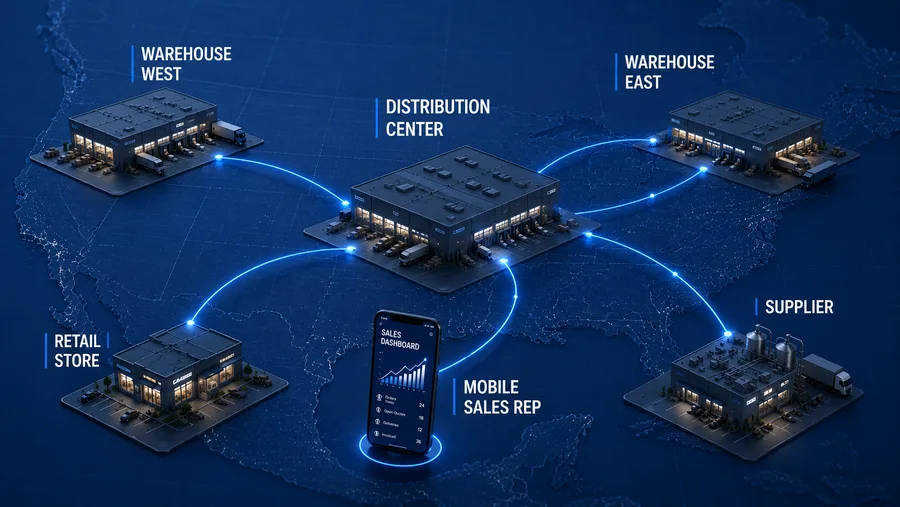
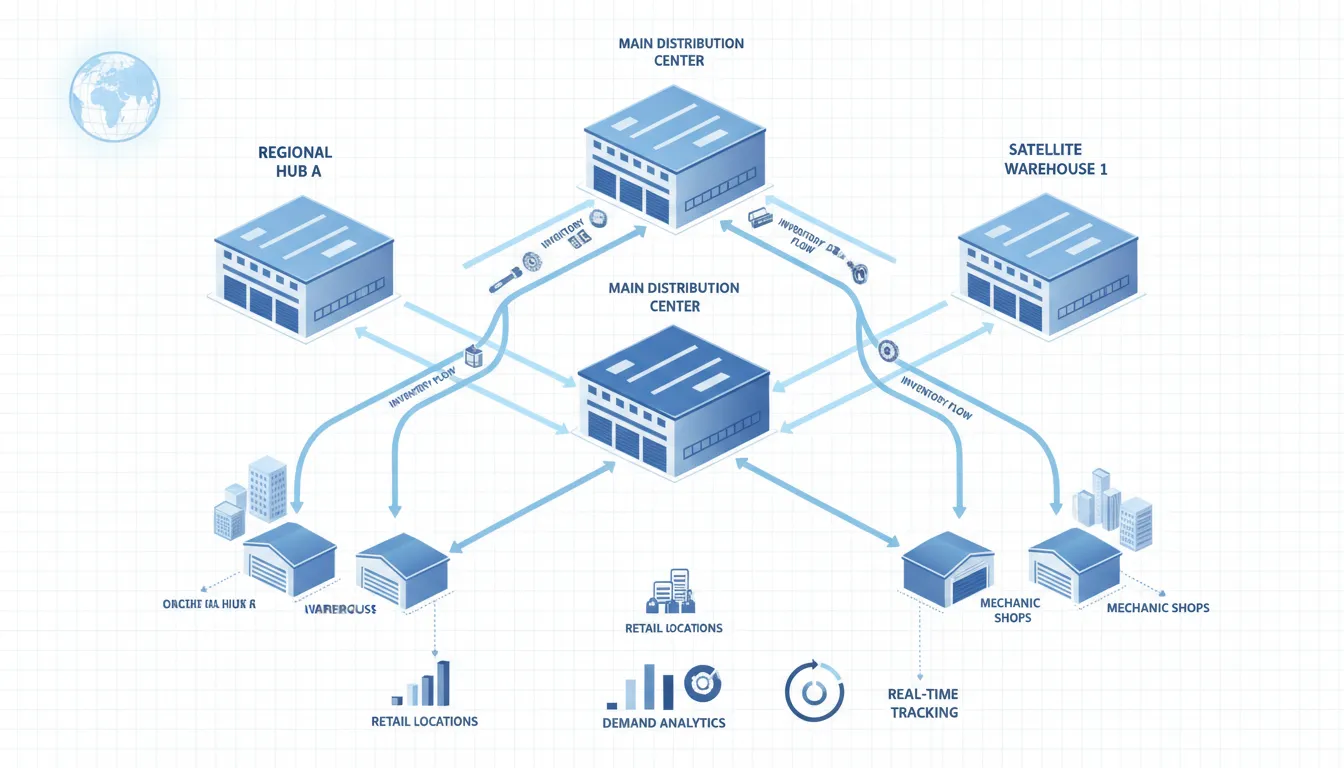
QBC Systems helps beauty supply distributors treat inventory as one connected operation instead of separate numbers maintained by sales, warehouse, and ecommerce teams. A specialized ERP keeps quantities synchronized across sales channels, records product history by batch or lot. And supports replenishment decisions that balance holding costs against the risk of stockouts. That gives managers a clearer view of what is available, where it is located, and what needs attention.
Real-time multi-channel synchronization is especially important when the same hair products are sold to professional accounts, retail customers, sales representatives, and online buyers. An order entered through one channel should immediately affect the available quantity everywhere else. Without that shared inventory position. A distributor can accept orders for stock that has already been allocated or hold excess product because separate systems do not show the full picture. QBC Systems identifies real-time multi-channel inventory syncing as a core beauty distribution ERP practice.
- Reduce overselling by sharing current available quantities across channels.
- Give warehouse staff and customer service the same inventory information.
- Make replenishment decisions using sales activity across the full business.
- Improve order allocation when stock is distributed across locations.
- Provide a clearer record of inventory movement from receiving through fulfillment.
How Do Expiration Dates and Lot Tracking Fit Into Inventory Control?
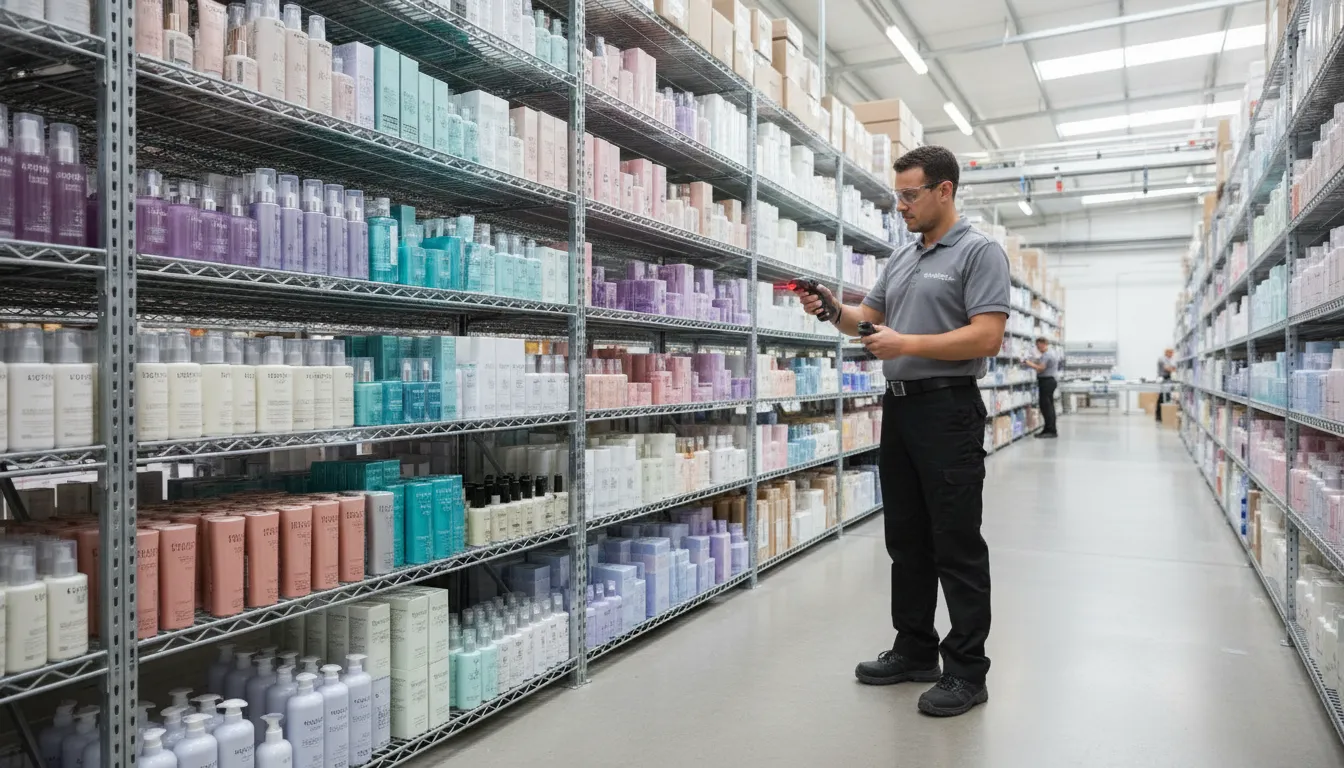
Hair products may have different shelf-life requirements, formulations, packaging, or supplier lots. Batch and lot tracking lets a distributor connect received units to a specific production or shipment record. The system can then support expiration-date monitoring, more disciplined warehouse rotation, and faster identification of affected units if a recall or quality issue occurs. These controls are part of sound beauty supply distribution practice, not an optional add-on.
Inventory decisions also require more than chasing the highest possible availability. Research on distributed inventory management describes the need to balance inventory cost with sufficient stock for fluctuating demand, while advanced replenishment policies can account for seasonal assortments and network complexity. An ERP gives managers a practical place to apply those policies using sales history, current allocations, lead times, and product-level rules. For a deeper look at the process, see this guide to distributor inventory control.
QBC Systems connects these workflows so teams can act on one operational view rather than reconcile disconnected spreadsheets after an order problem occurs.
Key Hair Product Distribution ERP Features to Evaluate
QBC Systems recommends evaluating a hair product distribution ERP by how well it handles the account, pricing, and ordering realities of beauty supply wholesale. The right system should give your team consistent rules for each customer type while making routine orders easier for salon buyers and internal staff.
In practical terms, look for pricing controls, account-level visibility, education discounts, and a customer-facing ordering portal that work from the same data. These features reduce manual decisions and help sales, warehouse, and customer service teams work from a shared view of each account.
Pricing matrices and account structure
Professional salons and retail customers do not always buy under the same terms. Specialized pricing matrices should let distributors distinguish professional pricing from retail pricing without forcing employees to calculate or remember exceptions for every order. The rules should be visible at the account level and easy to review when a customer changes status or purchasing needs.
A master account structure adds another layer of useful detail. For example, a salon may have a primary business account while individual stylists place orders or receive service support under that account. A system that tracks those relationships can preserve account history without treating every stylist as an unrelated customer. Learn more about beauty supply account management and the account details your team may need to maintain.
Education accounts also deserve their own controls. Educators and beauty schools may qualify for defined discount structures, so the ERP should manage those rules consistently rather than relying on handwritten notes or one-off overrides.
What should a B2B ordering portal provide?
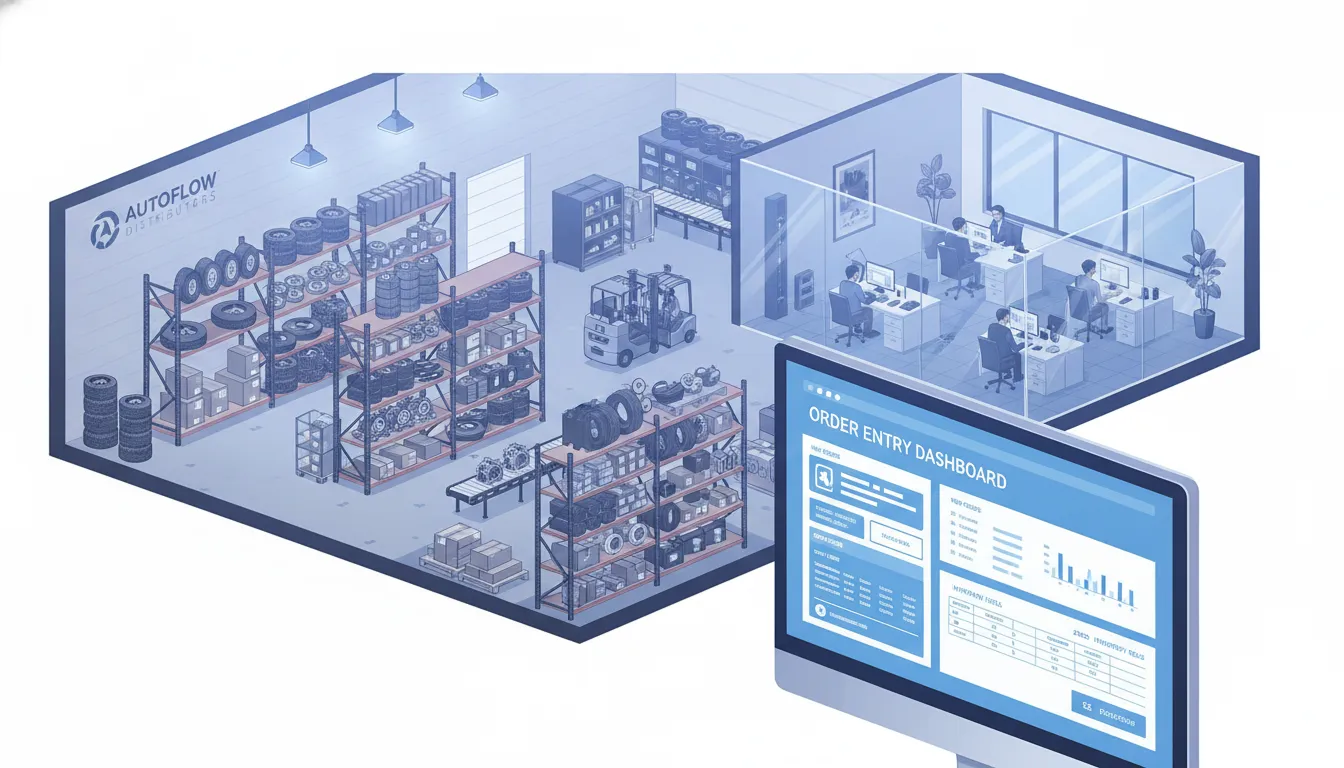
A B2B ordering portal should give salon customers a practical way to review products, place replenishment orders, and work within the pricing assigned to their account. When portal activity connects directly with the ERP, staff can spend less time rekeying orders and more time resolving exceptions, confirming availability, or supporting customers.
When comparing systems, ask whether the portal and back-office workflows support:
- Separate professional, retail, educator, and school pricing rules.
- Master account relationships that connect stylists to the correct salon.
- Account-specific product access and ordering permissions.
- Order status visibility for customers and internal teams.
- Consistent order records that support service and fulfillment follow-up.
Also review how the system supports distributor order tracking after a portal order is submitted. A portal is most useful when it connects the customer request to the same operational process your warehouse and service teams already use.
How Does a Specialized ERP Support Compliance and Anti-Diversion?
QBC Systems helps beauty supply distributors connect customer qualification, contract visibility, and inventory controls in one operating system. In hair product distribution, anti-diversion controls help prevent sales to non-qualified customers while giving staff a clearer view of which accounts can purchase specific products under specific agreements. These controls protect supplier relationships and make contract requirements easier to apply consistently.
Anti-diversion controls start with account visibility
Anti-diversion is not only a sales-policy issue. It depends on accurate customer records, account status, product eligibility, and order review. A specialized ERP can surface the relevant contract information when an order is entered, helping staff identify transactions that need attention before products leave the warehouse. This is especially useful when a distributor serves professional salons, educators, schools, retailers, and other customer types with different purchasing terms.
For a closer look at the platform's vertical capabilities, see BeautyServ ERP for beauty supply distributors.
Compliance capabilities to evaluate
QBC Systems recommends evaluating whether the ERP supports practical controls across the full order and inventory process. Useful capabilities include:
- Customer qualification rules that help prevent sales to non-qualified accounts.
- Contract visibility for product restrictions, account terms, and authorized purchasing relationships.
- Batch and lot tracking to identify affected inventory during a recall.
- Expiration-date tracking to support rotation and reduce the risk of shipping outdated products.
- Order and account records that give managers a traceable view of compliance decisions.
Batch and lot tracking is particularly important for beauty products with expiration considerations or recall exposure. When inventory records connect products to their batch or lot details, staff can locate affected units more precisely instead of relying on broad, disruptive product holds. The result is a more controlled response and better visibility from receiving through fulfillment.
For beauty and hair product distributors, a specialized ERP supports compliance by making rules visible at the point of sale and connecting them to inventory records. That practical visibility helps teams protect contracts, manage recalls, and serve qualified customers without adding disconnected manual checks.
Best Practices for Rolling Out a Hair Product Distribution ERP
QBC Systems recommends treating an ERP rollout as an operational change, not simply a software installation. The strongest implementation plans connect inventory, purchasing, sales, fulfillment, and customer-account workflows before the first user logs in. They also give warehouse staff a clear way to test everyday transactions, from receiving a shipment to assembling a salon order.
Summary: QBC Systems supports a practical rollout by combining specialized ERP guidance, integrated hardware and managed IT services, demand forecasting, and seasonal inventory planning.
Select the Right ERP Partner
Choose a partner that understands beauty supply distribution rather than asking your team to adapt generic settings to every product and customer type. QBC Systems provides an integrated model covering ERP software, hardware, networking, and managed IT services. That full-service approach gives a distributor one implementation partner to coordinate system access, warehouse equipment, connectivity, and ongoing technical support.
During evaluation, ask the partner to walk through your actual workflows. Can the system support professional and retail pricing, product bundles, account-specific ordering, and the way your warehouse handles replenishment? A relevant example is Beauty Supply Kit Management ERP, which shows why kit assembly and bundle tracking should be considered before configuration begins.
- Map the current process. Document how products are purchased, received, stored, picked, bundled, invoiced, and returned. Include the people and equipment involved at each step.
- Define clean starting data. Review product descriptions, units of measure, customer records, pricing rules, supplier details, and stock locations. Fix duplicate or incomplete records before migration.
- Test with representative orders. Use common hair product orders, professional account pricing, kits, backorders, and returns. Have warehouse and customer-service staff confirm that the screens and outputs match their work.
- Configure forecasting during rollout. Use historical demand and replenishment data to establish practical reorder guidance. Forecasting models can improve replenishment decisions, but staff should review exceptions rather than accept every recommendation automatically. Research on inventory policy optimization supports using demand forecasts to guide reorder decisions under demand uncertainty.
- Plan for seasonal demand. Identify assortments that change with promotions, events, school schedules, or other seasonal patterns. Build lead-time uncertainty from suppliers and distributed fulfillment into safety-stock and reorder discussions.
- Train by role and phase the launch. Give buyers, warehouse staff, sales teams, and managers focused training using their real tasks. Start with a controlled group or location, correct process issues, then expand the rollout.
- Measure after go-live. Review stockouts, overselling, order accuracy, receiving time, fulfillment delays, and forecast exceptions. Use those findings to refine workflows and staff training.
A rollout is complete when the system makes daily work more consistent, not merely when the data has been imported. A specialized partner can help connect the technology to the decisions your team makes every day.
Frequently Asked Questions
How can an ERP system optimize hair product wholesale operations?
An ERP connects purchasing, inventory, sales, order fulfillment, and customer accounts in one operating view. For a wholesaler, that means staff can check available stock, apply the correct account pricing, manage kits, and track orders without reconciling separate spreadsheets or systems. Real-time synchronization across sales channels also helps reduce overselling and avoid preventable stockouts, which is a core best practice for beauty supply distribution.
What ERP modules are essential for beauty supply distributors?
Start with inventory control, purchasing, order management, customer and account management, pricing, fulfillment, and reporting. Hair and beauty distributors should also look for batch and lot tracking, kit management, professional-versus-retail pricing matrices, and a B2B ordering portal. A master account structure can help organize individual stylists under a salon account, while educator and school discount tools support consistent special pricing.
How can an ERP help track product expiration in wholesale distribution?
Batch and lot tracking associates inventory with the information needed to monitor expiration dates and support accurate recalls. This lets warehouse teams identify affected units, prioritize older or sooner-to-expire stock, and make better allocation decisions before products become unsellable. The workflow should be connected to receiving, storage, picking, and reporting rather than maintained as a separate manual log.
Why is vertical-specific ERP software better for beauty supply distributors?
Beauty supply distribution has workflows that a generic system may not handle naturally, including salon account structures, professional pricing, product bundles, educator discounts, and anti-diversion controls. A vertical system is designed around those operating requirements, so the distributor spends less time building workarounds and training staff on unrelated features. The right choice should still be evaluated against your products, channels, warehouse processes, and implementation support.
Schedule a BeautyServ Demonstration
QBC Systems can help you evaluate how BeautyServ fits the inventory, ordering, pricing, and fulfillment needs of a beauty supply wholesale operation. A demonstration gives your team a practical way to discuss current workflows and identify where a specialized ERP could support day-to-day work. Schedule a demonstration of BeautyServ by calling QBC Systems to take the next step.