
.
Choosing an ERP for a beauty supply wholesaler is less about collecting the longest feature list. It is about testing whether the system fits the way your business sells, prices, and fulfills products. A practical evaluation should cover salon accounts, individual stylist activity, professional and retail price rules, kits, warehouse inventory, order entry, and requirements such as lot or expiry tracking.
The best ERP for a beauty supply wholesaler connects these workflows in one operational system, while giving your team a clear implementation path and the support needed to use it reliably. BeautyServ is designed for beauty supply distributors and wholesalers serving salons and stylists, backed by QBC Systems' experience serving distribution businesses since 1978.
The right shortlist starts by defining the day-to-day requirements behind your product catalog, customer relationships, and warehouse processes. From there, you can separate essential capabilities from convenient extras and ask vendors to demonstrate the workflows that matter most.
What Should a Beauty Supply Wholesaler Look for in ERP?
QBC Systems recommends evaluating an ERP against the operating realities of your distribution business, not a generic feature checklist. The right system should help your team manage product volume, different order patterns, pricing relationships, and warehouse structure without forcing those workflows into a one-size-fits-all model.
Start by documenting the scale and variety of your catalog. Beauty distributors may manage between 2,000 and 30,000 SKUs, which makes dependable item lookup, organized product data, and clear inventory visibility important evaluation points. Ask vendors to demonstrate how buyers and order-entry staff find products, review availability, and distinguish similar items during a normal customer call.
Your order mix matters just as much. A wholesaler may serve salons with recurring orders while also processing one-time purchases. Those transactions can involve different customers, order histories, fulfillment expectations, and follow-up needs. During a demonstration, use examples from both sides of your business. A system that handles a single standard order well may still be a poor fit if it makes repeat salon business or less frequent purchases difficult to manage.
Use your pricing structure as a test case
Professional and retail pricing should be part of the evaluation, especially when the business serves both trade customers and retail buyers. Ask how the ERP keeps pricing consistent by customer type and how staff verify the correct price before an order is completed. The goal is not simply to see a pricing field. It is to confirm that the system supports the decisions your team makes every day.
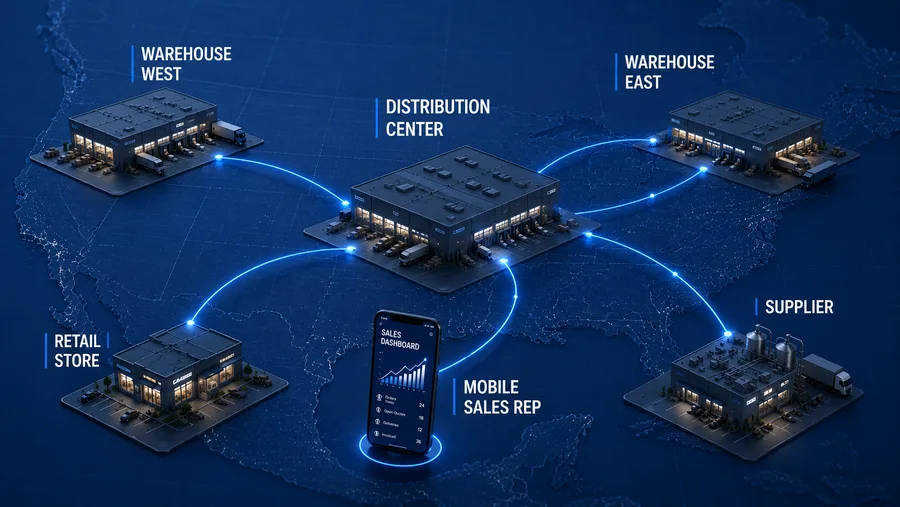
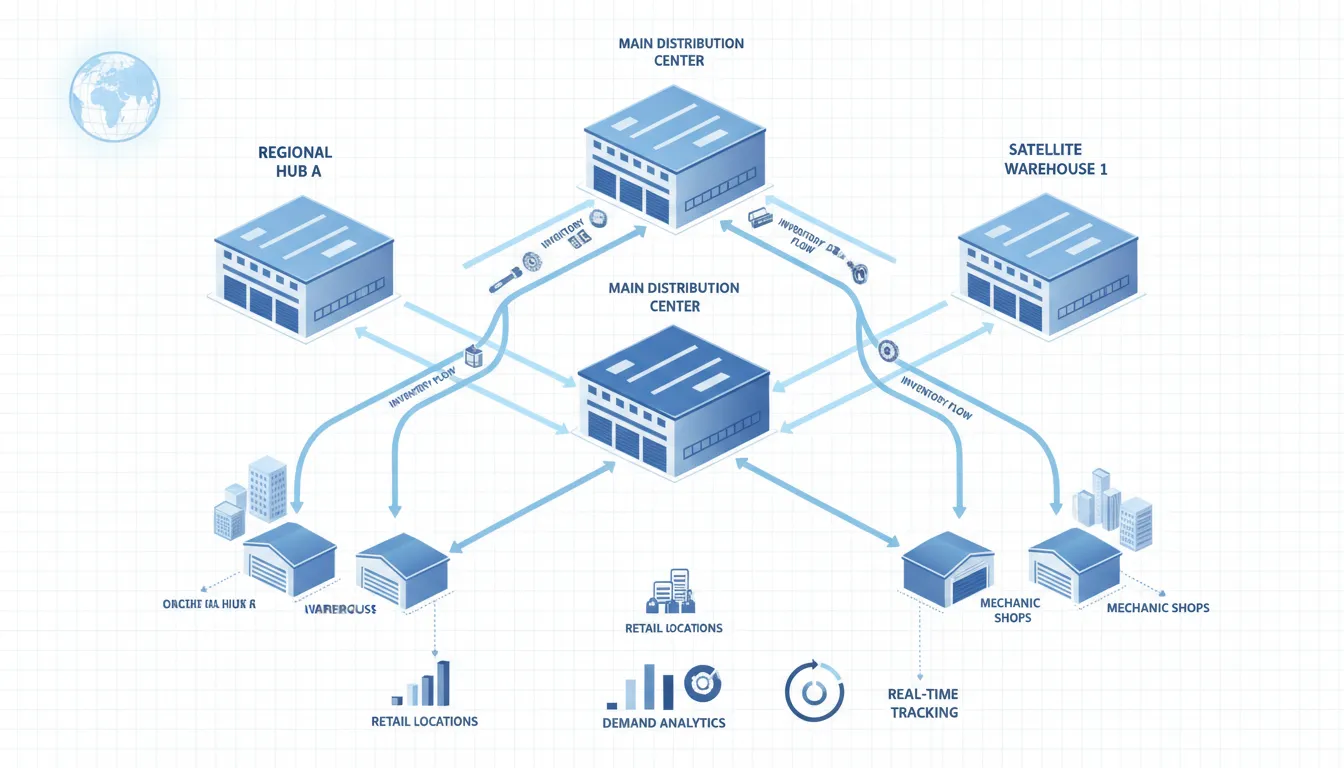
Finally, evaluate warehouse coverage. QBC's target profile includes businesses operating one to three warehouses, sometimes alongside retail stores. Your shortlist should account for how staff check stock, coordinate orders, and maintain visibility across locations as the operation changes.
- Can the system support a catalog of roughly 2,000 to 30,000 SKUs?
- Does the workflow fit both recurring salon orders and one-time purchases?
- Can staff manage professional and retail pricing clearly?
- Does the system reflect your one-to-three-warehouse operating model?
These questions create a practical baseline for comparing ERP options. They also help separate a system that merely lists features from one that fits the way your wholesale business actually operates.
How Does the Best ERP for a Beauty Supply Wholesaler Handle Stylists and Pricing?
A beauty supply wholesaler needs customer records that reflect how salons actually buy. A salon may be the master account, while individual stylists place orders, qualify for different programs, or need their own purchase history. The system should preserve the salon relationship while making each stylist visible to sales and customer service teams. BeautyServ lists a Master Account System, individual stylist tracking, and detailed customer histories for this purpose.
That structure helps staff answer practical questions without maintaining disconnected spreadsheets: Who placed the order? Which products does the stylist routinely purchase? What pricing should apply to this account or product line? The BeautyServ ERP capabilities page provides the verified feature details for evaluating that workflow.
Pricing should follow the customer and the product line
Beauty distribution pricing is rarely one universal list. A professional customer, retail buyer, educator, or school may require a different price treatment. BeautyServ lists automatic pro, retail, educator, and school pricing by customer and product line, along with product-line matrix pricing. During a demonstration, ask to see how those rules are applied during order entry and how staff can review the resulting customer or item price.
Also evaluate controls for negotiated and time-sensitive arrangements. BeautyServ documentation lists contract pricing with start and stop dates, customized customer price books, and customer and product-line pricing. Those controls can give sales teams a defined source for account-specific terms instead of relying on memory or manually checking multiple files.
Rebates belong in the transaction workflow
Vendor programs can affect margin and account profitability after a sale. BeautyServ lists vendor rebate tracking and says eligible rebates can be tracked as the sale is made. Ask how rebate eligibility is recorded, reviewed, and connected to the relevant customer or product line. A strong evaluation should cover both the front-end price the customer sees and the back-end information the distributor needs for financial follow-up.
For the best ERP for a beauty supply wholesaler, the test is not the number of pricing labels in a feature list. It is whether account relationships, stylist activity, price rules, contracts, price books, and rebates remain understandable in day-to-day work.
Which Inventory, Kit, and Order Controls Matter Most?
| Evaluation area | What to test |
|---|---|
| Customer and pricing | Salon accounts, stylist records, product-line pricing, and price books. |
| Inventory and kits | Warehouse visibility, replenishment, kit assembly, and component-level pricing. |
| Orders and fulfillment | Quotes, barcode lookup, substitutions, mobile entry, and quote-to-invoice flow. |
| Implementation | Data migration, testing, training, support, and confirmed integration scope. |
For a beauty supply wholesaler, inventory control has to support the way products are actually sold and fulfilled. That may include thousands of SKUs, multiple warehouses, recurring salon orders, one-time purchases, and a retail component. A useful ERP should help staff see available stock, plan replenishment, build kits, and move an order from quote to invoice without rekeying information.
Multi-warehouse visibility is a practical starting point. Staff should be able to understand where an item is available and make purchasing or fulfillment decisions with current information. BeautyServ lists multi-warehouse visibility and automated replenishment among its inventory capabilities. For distributors evaluating salon inventory management for distributors, the key question is whether the system reflects the warehouse decisions your team makes every day.
Kit handling should match the sale
Kits deserve more than a bundled-product label. Ask whether the system can manage assembled and pre-assembled kits, pack and unpack them, and apply pricing at the kit or component level. BeautyServ lists kit packing and unpacking, kit and assembly management, and both kit-level and component-level pricing. That distinction matters when a salon buys a defined package, while a warehouse needs visibility into the individual products that make it up. Review the details of this beauty supply kit management ERP workflow before assuming a generic inventory package will fit.
Order entry should preserve useful information
Sales staff may need to enter orders away from a desk. They may identify an item by barcode, check a customer or item price, and offer a substitute when the requested product is unavailable. BeautyServ lists mobile order entry, QicScan barcode lookup, customer and item price inquiry, and item availability with substitutes. It also lists point of sale and quoting, with saved quotes that can transfer to invoices, plus integrated POS.
- Confirm stock visibility across every warehouse involved in fulfillment.
- Test a kit from quote through picking, invoicing, and component-level inventory updates.
- Walk through mobile entry, barcode lookup, substitutions, and the quote-to-invoice path.
These controls should be tested with representative salon orders, not only demonstrated as isolated features. For a broader review of order workflows, see beauty distributor order tracking tools.
How Should You Evaluate Lot Tracking and Expiry Controls?
For a beauty supply wholesaler, lot and expiry controls may be a buying requirement rather than an optional warehouse feature. Products with batch concerns, expiration dates, or recall implications need more than a general quantity-on-hand number. Your team may need to identify which lots were received, where they were allocated, which customers received them, and what inventory remains available.
Start by mapping the workflow your operation actually needs. Ask prospective ERP vendors to demonstrate how the system handles:
- Recording lot or batch information during receiving.
- Allocating inventory according to your operating rules, including expiry considerations.
- Finding affected products and customer orders during a recall or quality investigation.
- Flagging approaching expiration dates before products become difficult to sell.
- Reporting on lot quantities, locations, order history, and disposition.
These questions are especially important if your business distributes products with different shelf lives or receives the same item in multiple batches. A polished inventory screen is not enough. Request a workflow demonstration using a realistic product, receipt, order, adjustment, and recall scenario. Confirm which steps are standard, which require configuration, and which depend on an integration or custom process.
Current QBC materials identify lot tracking and expiration dates as inventory complexities for this market, but they do not verify lot or expiration tracking as a BeautyServ capability. That distinction matters when comparing the best ERP for a beauty supply wholesaler. Treat the requirement as an open product-fit question, not as an assumed feature. QBC's hair product distribution ERP workflows resource may provide useful operational context, but it should not replace a direct demonstration and capability confirmation.
Document the vendor's answers in your evaluation matrix. A clear record of receiving, allocation, alerts, recall, and reporting support will help your team make a defensible decision before implementation.
What Makes ERP Implementation Practical for a Beauty Wholesaler?
Implementation is practical when the project reflects how your team actually sells, buys, receives, stores, and ships beauty products. A software demonstration is only one part of the evaluation. Ask how the provider will move current data into the new system, define responsibilities, test daily workflows, train end users, and support the business after launch.
QBC offers ERP implementation and end-user training as part of its software and technology services. However, its public materials do not disclose a standard implementation timeline or a specific training methodology. That makes it important to discuss the proposed approach directly instead of assuming that every wholesaler follows the same schedule or sequence.
- Review the data migration plan. Ask which customer, vendor, product, pricing, inventory, and open-order records can be moved. How duplicate or incomplete data will be handled, and who approves the converted data before use.
- Map roles and workflows. Walk through order entry, purchasing, receiving, warehouse activity, sales, accounting handoffs, and management reporting. Confirm which users need access to each workflow and where approvals belong.
- Define testing scenarios. Test representative transactions, including a recurring salon order, a one-time purchase, a price-book exception, a kit, a return, and an item that is unavailable. Testing should expose process gaps before users rely on the system.
- Plan training around real work. Ask how warehouse staff, customer service representatives, buyers, salespeople, and managers will learn the tasks they perform. Clarify what reference materials and help channels will be available after training.
- Validate integrations and ongoing support. List required connections, such as e-commerce, payment processing, or vendor EDI, as questions for the provider to confirm. Do not treat a named integration as included until its scope and support responsibilities are clear.
QBC's ERP solutions can be a starting point for that conversation. The strongest evaluation is not a promise of a fast rollout. It is a documented plan that connects your data, people, workflows, testing, training, and support expectations.
Frequently Asked Questions
What is the best software for a beauty supply wholesaler?
The best system is the one that fits your customer structure, pricing rules, inventory complexity, order flow, and implementation capacity. Evaluate how it handles salon accounts, individual stylists, professional and retail customers, product-line pricing, kits, warehouse operations, and repeat orders. A beauty-specific ERP is usually a stronger fit than a general POS when these workflows are central to the business.
Can an ERP track stylists and apply different pricing?
It should preserve the salon relationship while recording activity for individual stylists. BeautyServ lists a Master Account System for salons, individual stylist tracking, detailed customer histories, product-line matrix pricing, and professional, retail, educator, and school pricing. Ask to see these workflows using your own account and price-book examples before choosing a system.
Can the system handle lot numbers and expiration dates?
That depends on the specific product and workflow, so treat it as a validation requirement rather than an assumed feature. Ask the vendor to demonstrate receiving, batch or lot assignment, expiry visibility, allocation, alerts, and reporting for products where age or expiration affects sell-through. Current QBC materials do not verify lot or expiration tracking as a BeautyServ capability.
What does beauty supply ERP software cost?
Cost varies with the scope of software, users, locations, integrations, data work, implementation, training, and support. QBC does not publish standard pricing. Request a consultation-based assessment that separates recurring software costs from one-time services, then compare the total fit against the operational problems the system must solve.
How should we evaluate migration to a new ERP?
Start by inventorying customer, stylist, product, price, vendor, kit, open-order, and historical data. Confirm which records can be migrated, how duplicates and inactive items will be handled, who validates opening balances, and how testing will occur before launch. Include user training and post-launch support in the plan. QBC offers ERP implementation and end-user training, but the schedule and delivery method should be agreed during evaluation.
Schedule a Beauty ERP Demonstration
Seeing the right workflows in context can make it easier to compare ERP options against your beauty supply operation. From stylist records and pricing to inventory, kits, orders, and implementation planning, QBC Systems can discuss the workflows your team needs to evaluate.