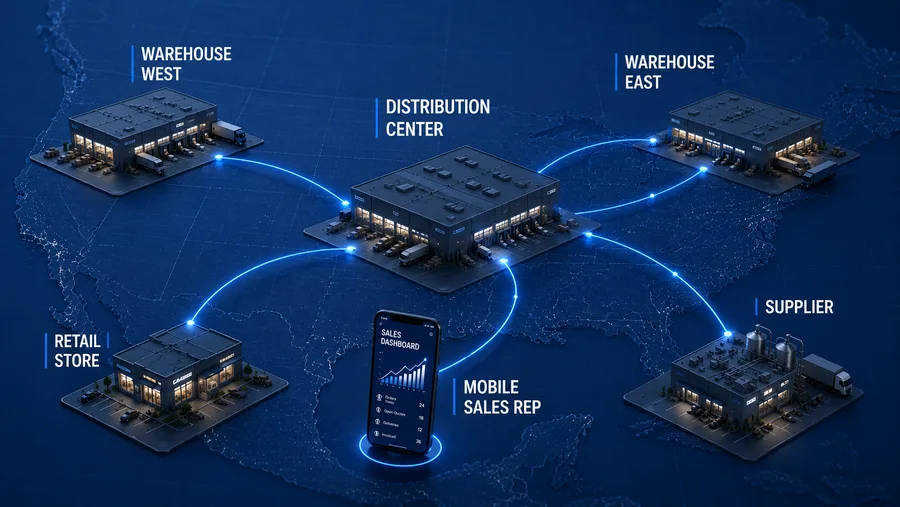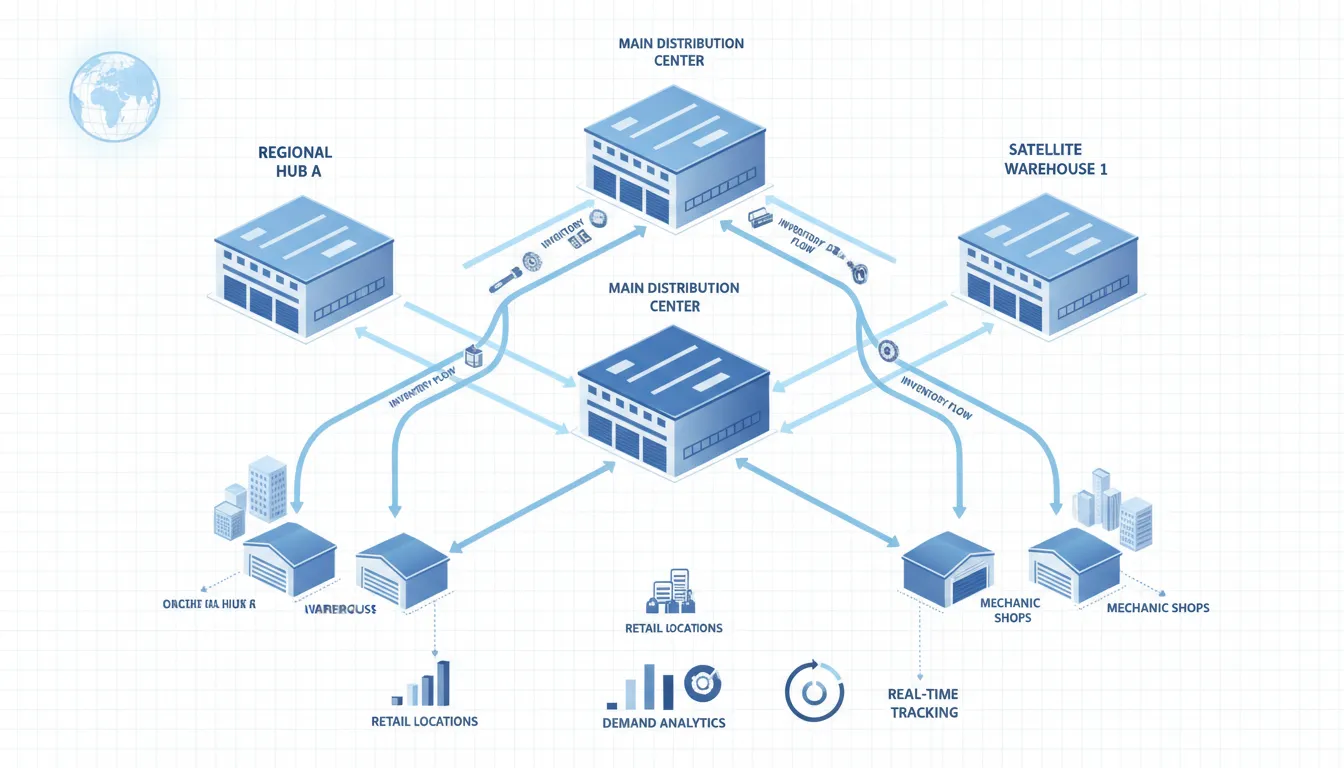

A beauty supply distribution business runs well when account-specific ordering, product availability, fulfillment, and financial records stay connected. The work is not simply moving cartons: wholesalers must serve salons, independent stylists, schools, and other trade customers while managing assortments, pricing, kits, and multiple ways to place orders.
Schedule a BeautyServ Demonstration
This guide lays out a practical operating model, from account setup through reporting, and explains what to look for in supporting software. QBC Systems has served the distribution industry since 1978, and its BeautyServ ERP for professional beauty supply distributors is designed for beauty supply wholesale workflows.
What Does It Take to Run a Professional Beauty Supply Distribution Business?
QBC Systems recommends viewing beauty distribution as a connected order-to-cash process, not as separate sales, warehouse, and bookkeeping tasks. A customer order affects available inventory, fulfillment work, the customer account, and ultimately the records used to understand the business. When information is re-entered in separate systems, staff can spend time reconciling details instead of resolving exceptions.
Start by mapping how a product moves through your operation. A typical path begins with purchasing and receiving, continues through storage and availability checks, and ends with picking, shipping or counter pickup, invoicing, payment, and reporting. Some wholesalers also accept orders through sales representatives, phone teams, retail counters, or a customer portal. The exact mix depends on the business, so document your real process rather than assuming every channel works the same way.
A useful first step is to identify the information each role needs at each handoff:
- Sales and order entry: customer identity, requested items, quantities, applicable pricing, promotions, and order status.
- Warehouse: item and location, quantity to pick, substitutions or shortages, and packing instructions.
- Purchasing: on-hand and committed quantities, supplier lead times, open purchase orders, and demand patterns.
- Finance and management: invoices, balances, credits, margins, sales activity, and dependable period reports.
Then decide who owns the underlying data. If product descriptions, pack sizes, customer terms, or account contacts differ from one system to another, employees may make different decisions using what appears to be the same information. Keep a clear process for adding and changing records, and review exceptions such as duplicate customer accounts or products with incomplete units of measure.
For a distributor with more than one warehouse or sales location, define how teams check stock and fulfill orders across sites. Make clear whether a location can promise inventory held elsewhere, how transfers are requested, and who resolves a short pick. A written process is useful even before choosing technology. For background on connecting core business workflows, see this guide to ERP software for distributors.
How Should You Manage Stylist and Salon Accounts at Scale?
QBC Systems helps beauty wholesalers think of account management as more than storing a business name and billing address. A salon may place orders for several stylists, and an individual stylist may have ordering preferences, account details, or purchase history that the wholesale team needs to find without confusing those records with the salon's overall account.
Set up a consistent account structure before order volume grows. Decide whether a salon is the main account with linked stylist records, or whether individual professionals order under separate accounts. Document who can place orders, who receives invoices, and how staff should handle a request when the caller or online user is not the usual contact. A well-defined structure helps the sales desk answer questions and gives management a clearer view of purchasing patterns.
Useful account information may include:
- Business and contact names, shipping and billing addresses, and preferred contact method.
- Approved users or stylists associated with a salon, where relevant to your account model.
- Payment terms and credit controls maintained according to the distributor's policies.
- Order history, product preferences, and notes that help staff respond consistently.
- Applicable customer-specific pricing, promotions, or rebate rules, with a clear owner for changes.
Pricing needs particular care. Professional and retail customers may have different price rules, while promotions or rebates can affect how an order is quoted and later reviewed. Make the rules understandable to the people entering orders, set approval boundaries for exceptions, and establish when temporary offers expire. Do not rely on a handwritten note or an employee's memory as the only source for a customer price.
For teams serving salons with multiple stylists, a master-account approach can make it easier to relate individual activity to the salon relationship. QBC's BeautyServ product materials describe a Master Account System for tracking individual stylists within salons, along with specialized pricing options. During evaluation, ask to see how the account hierarchy and price rules would work with your own examples, including a stylist who orders independently and a salon that consolidates purchases.
Agree on an order-entry checklist, too. Confirm the account and ordering contact, verify quantities and item variants, communicate availability, and capture the customer's requested delivery or pickup arrangement. If staff frequently answer “Where is my order?” calls, define which status updates should be recorded and who is responsible for them. This turns customer service from an informal search across inboxes into a repeatable workflow.
How Do Inventory, Lots, Kits, and Compliance Fit Together?
QBC Systems views dependable inventory as a shared operating record: purchasing, sales, and warehouse teams need to interpret the same product and quantity information. Beauty assortments can include many variations, product sizes, and bundled offerings. A mismatch between a product's description, unit, or storage location can lead to wrong picks, avoidable substitutions, and uncertainty about what is available to promise.
Establish item records with consistent identifiers, descriptions, units of measure, pack information, and any attributes your team uses to distinguish variants. Agree how to handle discontinued products, replacements, and product bundles. If employees use barcode or item lookup tools, test them against the identifiers and packaging actually found in your warehouse. BeautyServ includes QicScan item lookup by manufacturer and type; ask how that fits your catalog and receiving process rather than assuming every data source is already aligned.

Receiving is a good point to verify the record before stock becomes available to sell. Match incoming goods to the purchase order, check quantities and product identity, note discrepancies, and put items into known locations. Decide how the system and team distinguish on-hand stock from quantities already allocated to open orders. These practices make inventory counts more meaningful and help purchasing see where replenishment is needed.
Lot or date tracking may be important for some product categories and business policies. Before selecting a process, determine which items require tracking, what information must be retained, how the data is captured at receiving and picking, and how staff would find affected inventory later. Document the applicable requirements with qualified compliance guidance for your products and markets. Do not assume that a general inventory record automatically provides lot-level traceability.
Kits add another layer. A kit might combine several items for a school, class, promotion, or other customer need. Decide whether its contents are fixed or can change, how component availability is checked, and how substitutions are approved. Establish who maintains the component list and how changes affect stock counts and order entry. BeautyServ materials describe kit management; a demonstration should show a realistic kit setup and its effect on individual items.
For more detail on designing a bundle workflow, review this practical guide to beauty supply kit management. If your operation uses more than one stock location, compare your needs with these considerations for multi-warehouse inventory in cosmetics distribution.
A simple cycle-count routine can expose issues early. Choose which items or locations to count, record the count date and result, investigate meaningful differences, and document approved adjustments. The goal is not only to produce a corrected number. It is to find out whether an issue came from a receiving discrepancy, a unit conversion, a damaged item, an order that was not recorded correctly, or a location error.
Which Order and Warehouse Processes Should You Standardize?
QBC Systems encourages distributors to make order handoffs visible, especially when requests arrive through more than one channel. A consistent order record helps sales and warehouse staff see what was requested, what is available, and what remains to be done without depending on an individual employee's inbox or memory.
Write down the order path for phone and back-office entry, sales representatives, counter transactions, and online ordering if those channels apply. Decide how the team records changes after an order is entered, who approves substitutions, and how a partial shipment or backorder is communicated. Include a method for flagging special handling instructions so they reach the people picking and packing.
At the warehouse handoff, the order should provide a practical pick list: the right item, quantity, and location, with a way to record shortages or differences. At packing, check that the shipment matches what is being sent and make sure any remainder is visible to the order desk. If the operation has multiple locations, define when a transfer is preferable to a backorder and how the transfer is tracked. These steps reduce confusion even when demand is uneven or a product is temporarily unavailable.

A B2B customer portal can give trade customers another route to submit orders and review product information. It should fit the distributor's account and fulfillment rules, not create a parallel process that staff must manually reconcile. When assessing portal integration, ask how customer identities, pricing, product availability, order status, and incoming orders are handled. QBC's article on B2B ecommerce and ERP integration can help frame those questions.
For a useful baseline, measure operational exceptions rather than chasing a complicated dashboard. Teams can review unfilled order lines, order changes after entry, receiving discrepancies, inventory adjustments, and aging backorders. The point is to identify recurring causes and assign a practical next step, not to treat any one number as proof of overall performance.
What Should a Beauty Distributor's Software Support?
QBC Systems builds vertical-market ERP for distribution, where customer accounts, inventory, purchasing, orders, and financial records must work together. A useful system should reflect the actual handoffs in a wholesaler's operation, not just present a long feature list. Compare capabilities against your workflow and verify them in a demonstration using representative examples.
| Operational need | What to look for | Question to ask in an evaluation |
|---|---|---|
| Stylist and salon accounts | Clear account relationships, contact access, and order history | Can staff view a salon and its related stylist activity without mixing up billing ownership? |
| Pricing and promotions | Understandable customer pricing rules and controlled exceptions | How does an authorized employee review the price used on a specific order? |
| Inventory and purchasing | Item records, stock visibility, purchase activity, and warehouse context | How are committed quantities and stock at another site shown? |
| Orders and fulfillment | Visible order status, picking details, and a process for shortages | Can the team trace a partial fill or substitution from entry through shipment? |
| Kits and product lookup | Support for the bundles and identifiers the business uses | What happens to component inventory when a kit is ordered or changed? |
| Reporting and finance | Consistent operational and account information for review | Can managers examine sales and inventory questions using records staff maintain in daily work? |
Software selection also involves a delivery plan. Ask how the provider learns your workflows, maps and reviews data, configures the system, trains different roles, and supports the operation after launch. Identify who on your side can make decisions about account structure, item records, pricing rules, and warehouse processes. A realistic project plan includes time for staff to validate migrated information and practice common tasks.
QBC Systems has served distributors since 1978 and provides ERP software alongside implementation, training, and technical support. Its product family includes BeautyServ for beauty supply distributors. The QBC Systems company background provides more context on its distribution focus. Ask for a demonstration that follows an order from account selection through inventory review, fulfillment, and reporting, rather than relying on a generic presentation.
A good comparison also covers how the system fits existing tools and responsibilities. List the information that must move between accounting, ecommerce, payment, or shipping processes, then ask who maintains each connection and how exceptions are handled. Avoid assuming that a named integration covers every workflow. The team should understand which steps are automated, which require review, and where a person remains accountable.
How Can You Evaluate the Next Step Without Overcommitting?
QBC Systems suggests starting with the operational problem that has the clearest business impact and testing the proposed workflow against real examples. You do not need to evaluate every feature at once. A focused review can expose whether the software's account structure, inventory view, and order handling match the way your team works.
Prepare a short set of scenarios to walk through with a provider:
- A salon places an order that includes items for several stylists. Show how the account and order are recorded.
- An item is short at one warehouse but available at another. Show how staff see the situation and decide what to tell the customer.
- A kit's component changes or a requested product is unavailable. Show the approval and inventory steps.
- A manager needs to review backorders, order changes, or stock discrepancies. Show where the underlying information comes from.
After the demonstration, compare what you saw with your written process. Note what is supported directly, what requires configuration or a changed procedure, and what remains outside the system. Ask who will lead implementation and training, what information your team must prepare, and how questions are handled after launch. QBC's contact page is one way to discuss the operation and arrange a conversation.
Contact QBC Systems to Discuss Your Operation
Frequently Asked Questions
What does beauty supply distribution software help manage?
It can support connected workflows such as customer and stylist accounts, pricing, purchasing, inventory, order entry, fulfillment, and reporting. The exact capabilities depend on the product and setup, so ask a provider to demonstrate the specific tasks your team performs.
How should a wholesaler organize salon and stylist accounts?
Choose a clear account structure that identifies the salon relationship, individual ordering contacts, billing responsibility, and relevant purchase history. Define permissions and staff procedures so orders are attached to the right account and price rules are applied consistently.
Should a beauty distributor track lots or product dates?
That depends on the products handled, customer expectations, and applicable requirements. Identify which items need traceability, what information must be retained, and how receiving and picking will capture it; confirm regulatory questions with qualified guidance rather than assuming basic stock tracking is sufficient.
What should a software demonstration include?
Use a realistic order involving a salon or stylist account, an applicable price, an inventory check, and a fulfillment exception such as a shortage or kit change. Also ask to see how the resulting activity appears in management reports and how the system will be implemented and supported.
Managing a beauty supply distribution business is easier to reason about when account rules, inventory practices, and order handoffs are documented before software decisions are made. Use those workflows to guide a focused demonstration and choose a system and implementation approach that fit the operation you actually run.