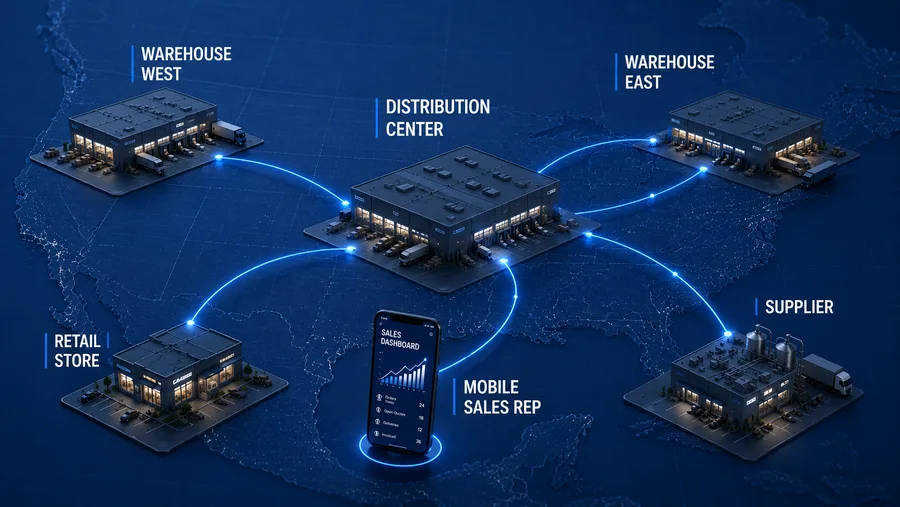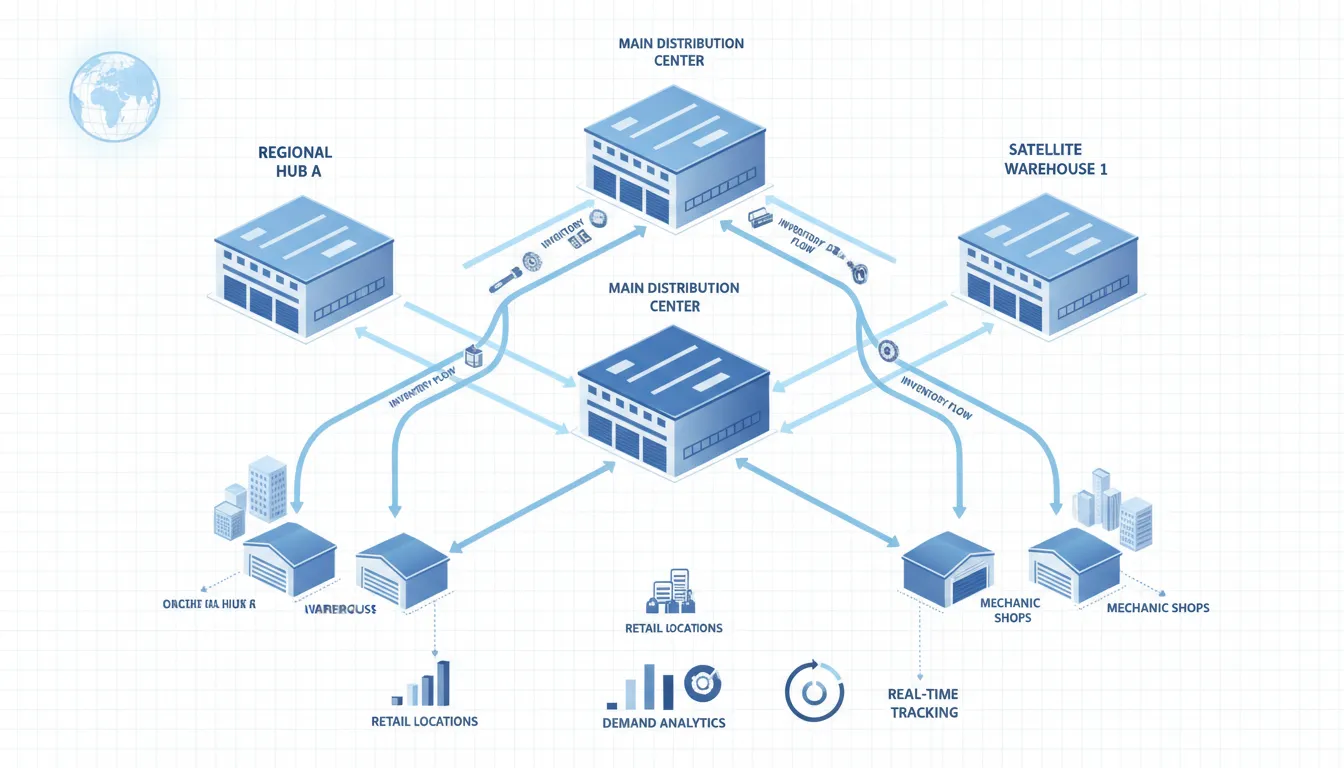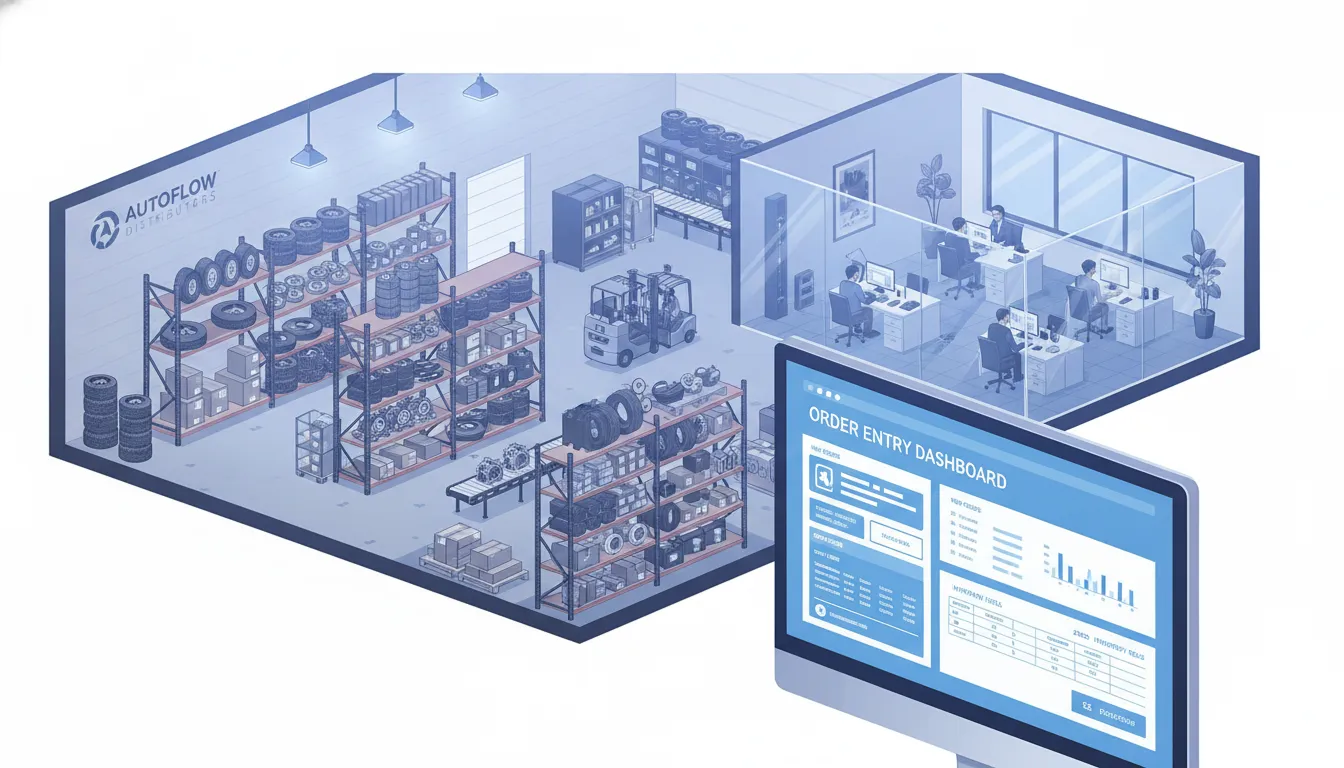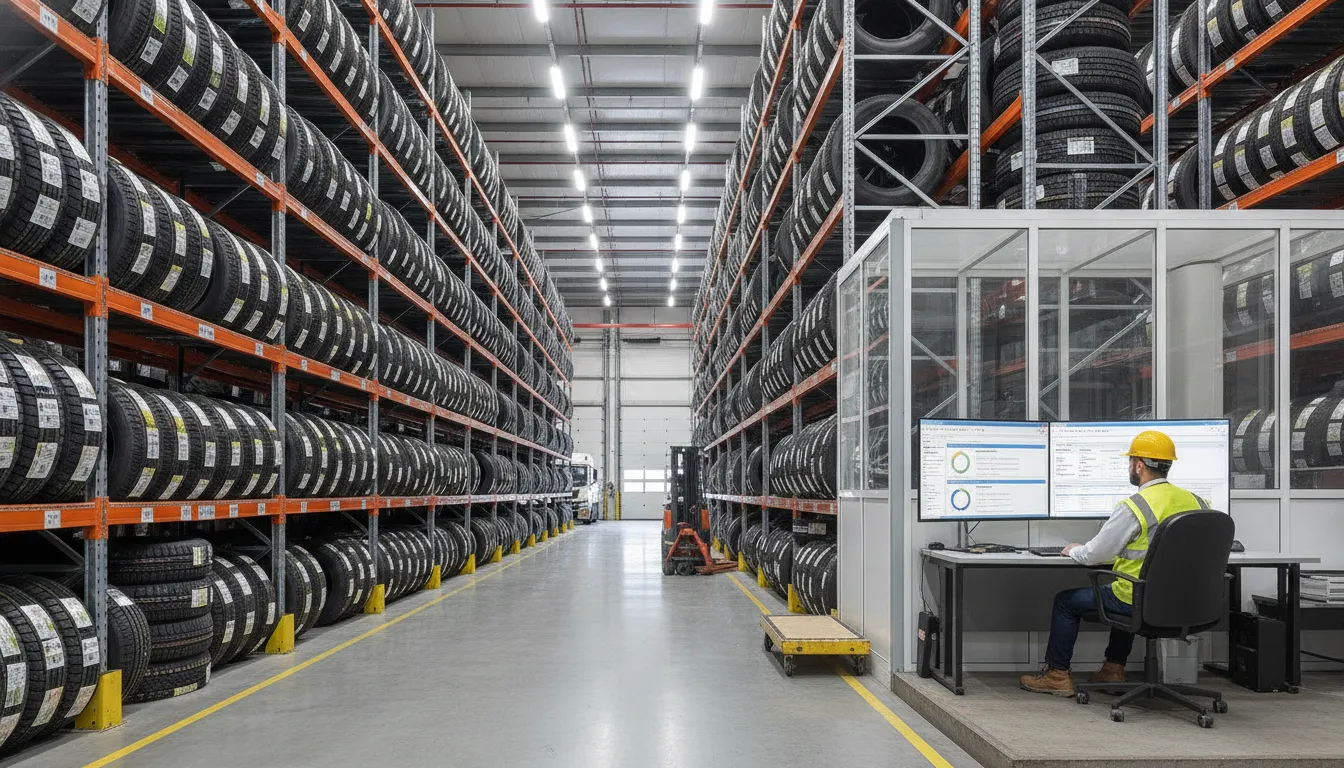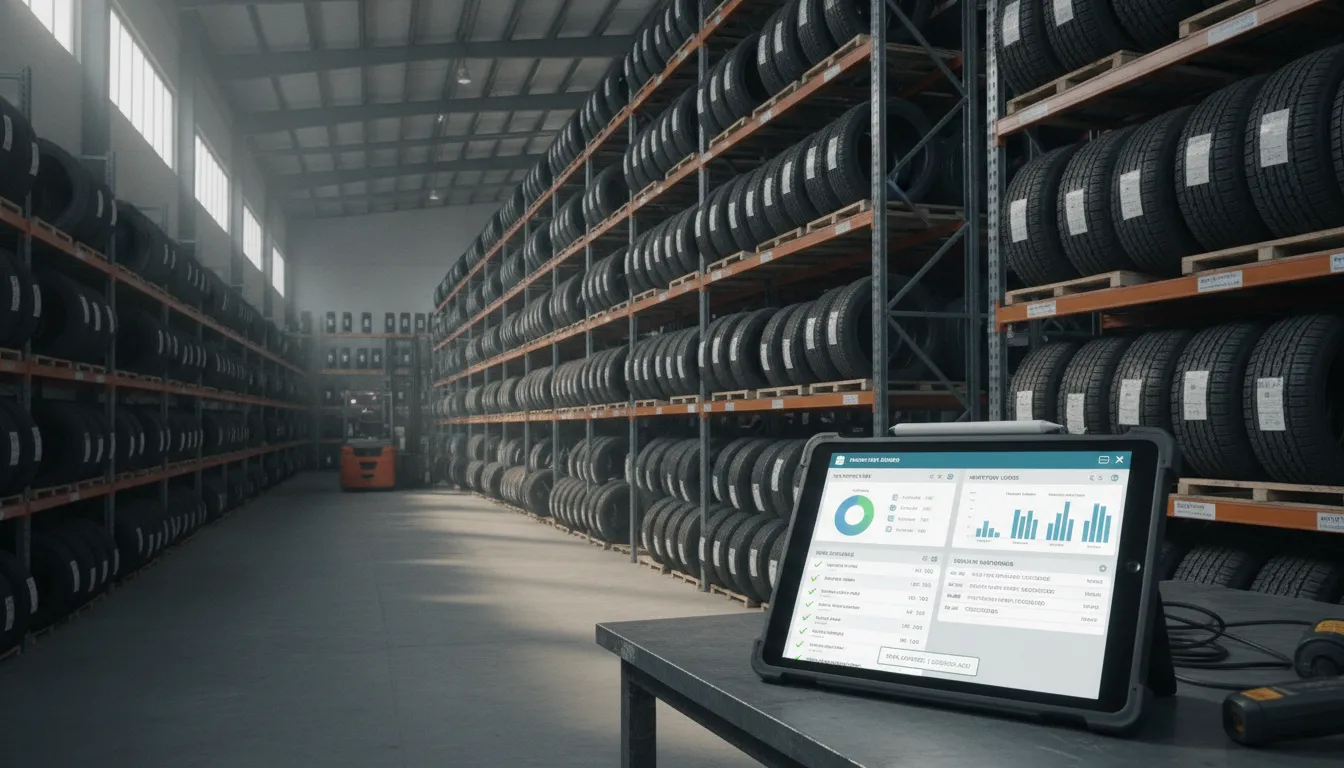

When inventory, purchasing, warehouse activity, and customer orders live in separate systems, small gaps become expensive. A buyer may not see the latest stock position, an order entry mistake can create a backorder, and staff may spend time reconciling information instead of serving customers.
QBC Systems uses tire distributor ERP software to connect the core workflows of wholesale tire and automotive supply distribution. These workflows include inventory by item and location, purchasing, customer pricing, order processing, warehouse operations, accounting handoffs, and B2B ordering. The goal is a shared operational view, not an auto repair shop system repurposed for wholesale distribution.
Schedule a Demonstration with QBC Systems
The right system should reflect how products move through your business, from supplier purchase and receiving to picking, delivery, and repeat customer orders. The first step is understanding what this type of ERP software actually covers and where it fits in a distributor's daily operation.
What Is Tire Distributor ERP Software?
Tire distributor ERP software is a business system built around the way wholesale tire and automotive supply distributors operate. It connects the records and workflows that determine whether a distributor can quote accurately, find the right stock, purchase with confidence, process orders, and keep customers informed. Instead of treating accounting, inventory, sales, and warehouse activity as separate tasks, an ERP gives those teams a shared operational view.
That distinction matters because wholesale distribution is not the same as running a repair shop. A distributor may manage a broad item master, multiple warehouse locations, supplier purchasing, customer-specific pricing, backorders, delivery or pickup requirements, and orders from business accounts. The system needs to support the movement of products from supplier to warehouse to customer. A repair-shop management platform is generally centered on vehicle service, appointments, labor, and the shop's own customer work. It is not automatically designed for wholesale inventory and account-based distribution.
For a broader introduction, QBC's guide to what ERP software does explains the purpose of enterprise resource planning. In a tire distribution setting, the practical test is whether the software connects the information people need at each stage of the order.
How is it different from generic accounting software?
Accounting software is important, but a general ledger alone does not provide the operational detail a warehouse or purchasing team needs. It may record financial transactions without giving staff a dependable way to manage stock by location. Staff also need to review product availability, maintain supplier information, and apply the right pricing for a specific customer. When those activities happen in spreadsheets, email, or separate systems, employees spend time reconciling information before they can act on it.
A disconnected point-of-sale system creates a similar problem. It may capture a sale at one counter or location, while purchasing and warehouse staff work from different records. Tire distributor ERP software is intended to connect the sale with inventory, customer data, purchasing, and accounting so the next decision is based on the same underlying information. That does not remove the need for controls or knowledgeable employees. It reduces avoidable handoffs between them.
What does TireServ cover?
TireServ ERP software is designed for tire and automotive supply distributors. QBC documents its scope across Point of Sale, inventory management, purchasing, the general ledger, and a B2B customer portal. Together, those areas reflect the core distribution workflow rather than a single isolated function.
For example, a sales or customer service employee can work with order information while inventory and purchasing teams use connected records to understand availability and supply needs. A B2B portal can give business customers an online ordering path without changing the fact that the distributor remains responsible for pricing, fulfillment, and account service. Distributors evaluating the system can review the features of tire distributor ERP software in more detail, then compare those documented workflows with their own day-to-day requirements.
How Does Tire Distributor ERP Software Keep Inventory Under Control?
QBC Systems helps wholesale distributors treat inventory as a live operational record, not a number that gets corrected after the fact. That matters when the same item may be received at one warehouse, transferred to another, allocated to an order, or placed on backorder before the next stock count.
Start with dependable item data
Inventory control begins with a clear item master. Each tire or automotive supply item needs a consistent description, identifying information, unit of measure, supplier relationship, and pricing context. When item records are duplicated or incomplete, purchasing and order entry teams can make different assumptions about the same product. A distributor-focused ERP gives staff one place to maintain the information used across purchasing, sales, warehouse activity, and reporting.
That shared foundation also makes availability easier to interpret. A customer service representative should be able to distinguish available stock from committed stock, incoming stock, and an item that needs to be sourced. The goal is not simply to display a quantity. It is to give the team enough context to make a reliable promise.
See stock by warehouse and movement
Multi-warehouse distributors need more than a company-wide total. They need stock visibility by location, including what has been received, picked, reserved, transferred, or held for a specific order. Receiving transactions should increase the appropriate warehouse balance. Transfers should reduce inventory at the shipping location and establish the corresponding quantity at the destination. Those movements create a traceable picture of where an item is and what can be sold.
This is where a perpetual inventory concept is useful. The NC State University Supply Chain Resource Cooperative defines a perpetual system as one in which the inventory record is updated immediately after each purchase and sale. In practice, the closer the system stays to current transactions, the less staff must rely on memory, spreadsheets, or a delayed physical count to answer basic availability questions. Physical counts still have a role, especially for investigating discrepancies, but they should not be the only source of truth.
Connect availability to replenishment and backorders
Inventory control should support decisions, not just record history. Purchasing staff can review current and committed demand, incoming shipments, and warehouse positions when deciding what to reorder. Customer service can see when an order is partially available, when a transfer may help, or when a backorder needs follow-up. These signals keep replenishment connected to actual order activity rather than isolated guesswork.
Wholesale tire distribution ERP guidance can help frame the broader workflow, while TireServ features and capabilities show how QBC positions its distributor-focused software. TireServ integrates inventory management with purchasing, point of sale, general ledger, and a B2B customer portal. This gives teams a connected way to manage stock and the orders that depend on it.
Which Purchasing and Pricing Workflows Does Tire Distributor ERP Software Connect?
Purchasing and pricing decisions are closely related in tire distribution. What a distributor buys affects what it can offer, when it can fulfill an order, and how confidently staff can quote a customer. When supplier records, inventory, customer accounts, sales orders, and accounting data live in separate places, each department has to reconcile information before acting.
A connected workflow gives managers one operational view without removing the judgment that experienced buyers and sales staff bring to the business. The system should help answer practical questions: What should we purchase, from which supplier, for which location, and under what customer pricing arrangement?
Start with purchasing and availability
Supplier purchasing should begin with dependable item and stock information. Buyers need to review what is on hand, what is already committed, what is expected, and what customers are asking for before placing an order. The software should preserve supplier details and purchasing history while connecting a purchase decision to the inventory records it will affect.
Availability matters just as much after a purchase order is created. Sales staff should be able to see whether an item is available, pending receipt, or subject to a backorder before promising a customer a delivery. A distributor may still need to approve an exception or contact a supplier. But the decision starts with shared data rather than a series of disconnected spreadsheets and phone calls.
Keep pricing, quotes, and orders together
Wholesale customers often have account-specific pricing, terms, or product expectations. A useful workflow carries the correct customer context into quotes and orders so staff can review the transaction before it is released. That does not mean every pricing decision should be automatic. Managers may need approval for an unusual discount, a special quote, or an order that falls outside normal margin expectations. The important point is that the requested price, customer, item, availability, and approval status remain visible together.
Margin visibility also depends on using consistent source data. Managers should be able to compare the intended selling price with the relevant purchasing information without building a separate calculation for every order. Avoid choosing a system based on a promise of a particular savings percentage. Instead, evaluate whether it gives authorized users the information needed to review pricing, protect account agreements, and identify exceptions before an order moves forward.
Make the accounting handoff part of the workflow
Once an order is completed, purchasing and sales activity should not end at the warehouse or sales desk. The accounting handoff needs the customer, item, transaction, and payment information required for accurate records and reporting. TireServ is documented as integrating Point of Sale, inventory management, purchasing, and the general ledger, along with a B2B customer portal. Review the TireServ features and capabilities to see how those functions fit the wholesale distribution model.
For a practical evaluation, trace one supplier purchase through receipt, customer pricing, quote or order approval, fulfillment, and accounting review. Any point where staff must export, rekey, or manually reconcile data deserves attention before rollout.
Discuss Your Wholesale Distribution Workflow with QBC Systems
Warehouse Operations Need More Than a Stock Count
A warehouse view is useful only when it reflects what is happening across the distribution process. Receiving, put-away, picking, exception handling, and order status all affect whether a customer receives the right tires at the expected time. The U.S. Bureau of Labor Statistics describes transportation, storage, and distribution managers as responsible for coordinating these activities according to established policies and procedures. That coordination is difficult when warehouse information sits apart from sales, operations, and accounting.

For a distributor evaluating tire distributor ERP software, start with a practical question: "How many units are on hand?" The next question is just as important. Can the system explain where those units are and which customer order depends on them?
Receiving and put-away need a connected record
Receiving starts the chain of accountability. Staff need to confirm what arrived, identify shortages or damage, and record items against the correct supplier order. Put-away then determines whether inventory is available where another employee expects to find it. If either step relies on disconnected notes or delayed spreadsheet updates, the quantity shown on screen may not match the physical warehouse.
A connected system gives warehouse and purchasing teams a shared record of incoming stock, locations, and availability. It also helps operations distinguish inventory that is received and ready to sell from inventory that is expected, held for inspection, or assigned to a specific order.
Picking accuracy depends on context
Picking is more than locating a product description. The warehouse employee may need to consider the customer, quantity, location, order priority, and special handling instructions. Clear order status shows whether an order is waiting for approval, being picked, partially filled, or ready for shipment. That visibility gives sales and customer service a more reliable answer than a general "in process" note.
Exceptions should be visible rather than buried in a separate process. A short shipment, backorder, incorrect location, damaged item, or inventory discrepancy can affect purchasing, customer commitments, invoicing, and follow-up. The right workflow routes the issue to the people who can resolve it and preserves the status for everyone who needs to act.
Multi-warehouse visibility supports better decisions
When a distributor operates more than one warehouse, a total company quantity can be misleading. Teams need to see stock by location, assess transfers, and avoid promising inventory unavailable for the customer's delivery area. That information supports purchasing, order allocation, and customer communication without requiring departments to reconcile separate files.
The same operational record should connect warehouse activity with sales and accounting. Sales needs dependable availability and order status. Warehouse staff need accurate order details. Operations needs to coordinate labor, storage, and distribution priorities. Accounting needs the transaction trail required for billing and reporting. This is where an ERP platform can provide value: not by replacing warehouse judgment, but by giving each department the same current information.
How Do B2B Ordering Portals Fit the Wholesale Model?
A B2B ordering portal should extend a distributor's wholesale process, not create a separate storefront that staff must reconcile later. It gives approved customers a practical way to view products, pricing, and availability relevant to their account, while the internal team retains control over fulfillment and exceptions. Customers may know the sizes and patterns they routinely buy, but the distributor still needs to confirm stock and manage the warehouse response.

The strongest portal workflows are built around the account relationship. A customer should see a catalog that reflects the products and purchasing rules established by the distributor. Custom catalogs support recurring purchases. QBC documents a workflow in which customers create catalogs, then reorder items and quantities in one click, reducing repeated searching. That is useful for dependable replenishment patterns, but it does not remove operational review.
Keep the customer view aligned with the wholesale account
Catalog control is more than an easier product search. It helps keep the customer-facing assortment consistent with what the distributor intends to sell to that account. The portal should present the right item information, customer-specific pricing, and available quantities from the same operational data used by staff. When those details come from disconnected systems, a customer may place an order based on stale availability or an outdated price. Staff then spend time correcting avoidable discrepancies instead of processing the order.
That connected approach is central to TireServ ERP software, designed for tire and automotive supply distributors with inventory management, purchasing, point of sale, general ledger integration, and a B2B customer portal. The value is keeping the portal within the same distribution model as inventory, customer records, and accounting handoffs.
Let the portal capture orders while staff manage exceptions
Portal ordering works best when it handles repeatable order capture and sends unusual situations into review. A customer can submit a routine replenishment order, while staff verify backorders, substitutions, warehouse availability, quantity concerns, or other account-specific requirements. This keeps the experience convenient without pretending every wholesale order follows an identical path.
It also gives customer service and warehouse teams a clearer order status. Instead of rekeying an email or phone order, staff can review the submission, confirm the next action, and continue through the normal fulfillment workflow. Managers responsible for transportation, storage, and distribution coordinate stock and customer order processing across departments, so portal data should support that work rather than sit outside it.
Connect ecommerce without losing operational control
An ecommerce connection can broaden ordering, but the integration needs clear ownership of product data, inventory availability, customer accounts, and order status. Before selecting a setup, distributors should map the authoritative system for each data type and how rejected, changed, or partially fulfilled orders return to staff. QBC's overview of tire wholesale ecommerce integration provides a starting point.
For distributors evaluating tire distributor erp software, the practical test is whether the portal makes routine buying easier while preserving accurate pricing, stock decisions, review steps, and fulfillment visibility. That makes it part of the wholesale operation, not another disconnected sales channel.
Tire Distributor ERP vs. Generic Business Software
Choosing software for a tire distribution business is not simply a decision between older and newer technology. It is a decision about whether the system reflects the way inventory, purchasing, pricing, warehouse work, and customer orders move through the business. A general system may handle one part of that process well while leaving staff to bridge the gaps manually.
The comparison below is a practical starting point. The right choice depends on your order volume, warehouse structure, product data, customer requirements, and willingness to manage disconnected processes.
| System approach | What it handles well | Where it falls short for a tire distributor | When it may fit |
|---|---|---|---|
| Generic accounting software | General ledger, basic customer records, invoicing, and financial reporting. | Operational inventory detail, purchasing signals, warehouse availability, customer-specific pricing, and order status may remain outside the accounting workflow. | A small operation with limited product complexity that needs financial controls first and has modest distribution requirements. |
| Disconnected point-of-sale systems | Capturing sales at a counter or through a focused order-entry interface. | Sales information may not stay aligned with purchasing, stock by location, accounts receivable, or broader B2B order activity. | A narrowly defined sales channel where another system reliably owns inventory, purchasing, and accounting. |
| Spreadsheets | Flexible lists, one-off analysis, and temporary tracking during a transition. | Multiple versions can obscure the current item, quantity, cost, location, backorder, or customer-pricing status. Access and accountability also become difficult as more people edit the files. | A temporary planning aid or small supplementary analysis, not the system of record for core distribution work. |
| Repair-shop software | Work orders, vehicle service details, technician activity, and shop-facing sales processes. | Its model is built around repairing vehicles, not distributing tires and automotive products across warehouses to business customers. | An auto repair business, but not a wholesale tire or automotive supply distributor. |
| Distribution ERP | Connected product, customer, purchasing, pricing, inventory, order, warehouse, and accounting workflows. | Implementation requires disciplined data review, process decisions, training, and ongoing ownership. A system still needs to be evaluated against the distributor's actual workflows. | A tire distributor that needs one operational view across departments, locations, and B2B customer activity. |
For distributors specifically, TireServ ERP software is built for tire and automotive supply distribution. QBC documents TireServ as integrating point of sale, inventory management, purchasing, the general ledger, and a B2B customer portal. That scope matters because the value is not just having more features. It is keeping related decisions connected, so a sale can be considered alongside availability, purchasing, pricing, and financial records.
Before replacing a generic system, map the handoffs that currently depend on rekeying, emailed files, or personal spreadsheet knowledge. Those handoffs show where a tire distributor ERP can provide the clearest operational improvement, and they give your team concrete questions to ask during a demonstration.
How Should a Distributor Evaluate and Roll Out ERP?
The right evaluation starts with your operating model, not a generic feature checklist. A distributor should be able to explain how an ERP will handle item data. Warehouse activity, purchasing, customer pricing, accounting, and B2B ordering from the first inquiry through fulfillment. The goal is to expose handoffs that create rework, not to collect the longest list of software functions.
Use the following process to make the decision practical and give employees a clear path into the new system. Include the people who work with orders and inventory every day. Their examples often reveal requirements that are invisible in an executive-level software demonstration.
- Map the workflows. Document how products are added, received, stored, transferred, sold, backordered, and returned. Include the roles of purchasing, order entry, warehouse staff, sales, customer service, and accounting. Ask where a customer order gets delayed or re-entered, and which steps depend on a spreadsheet or individual memory.
- Review the data. Establish who owns the item master, supplier records, customer accounts, units of measure, and historical transactions. Check whether the system can represent stock by warehouse or location, customer-specific pricing, purchasing information, and order status in a way your team can maintain. Ask how data is cleaned, imported, validated, backed up, and corrected when ownership changes.
- Run a focused pilot. Select one product line, warehouse workflow, or customer-order process that reflects real operating conditions. Test receiving, availability checks, pricing, picking, invoicing, accounting handoff, and B2B ordering with representative records. A focused pilot helps reveal missing requirements before the entire business is asked to change.
- Plan implementation and training together. Clarify who configures workflows, who approves migrated data, and who makes decisions about warehouse needs and customer pricing. Training should use the tasks employees actually perform, including exception handling and corrections. Ask what documentation is provided and how new employees will learn the process later.
- Define support before launch. Ask who handles questions during implementation, how issues are prioritized, and what support covers after go-live. For a small or midsize distributor, a full-service partner may also provide related hardware, networking, or technical support. Confirm the escalation path and the people responsible for resolving operational issues.
- Review results and expand carefully. After the pilot or first rollout, compare the documented workflow with what employees actually use. Review data quality, order status visibility, warehouse adoption, pricing accuracy, accounting coordination, and customer ordering feedback. Then decide which locations, product lines, or workflows are ready for expansion and which need more work.
For a tire and automotive supply distributor, TireServ features and capabilities can provide a useful reference point for evaluating distribution-specific requirements. QBC Systems also outlines its broader ERP software solutions for businesses comparing needs across wholesale operations. Use demonstrations to walk through your own data and workflows, rather than accepting a generic presentation.
Schedule a Demonstration with QBC Systems
Frequently Asked Questions
What is the best ERP software for tire distributors?
The best system fits the distributor's actual workflows, including stock by warehouse, purchasing, customer pricing, order processing, accounting handoffs, and service expectations. TireServ is designed for tire and automotive supply distributors, so evaluation should focus on distribution requirements rather than features built primarily for auto repair shops.
How does ERP software help with tire inventory management?
It connects item records, warehouse quantities, purchasing activity, receipts, transfers, and order availability in one operating system. That gives staff a clearer view of what is available, where it is located, and when a replenishment or backorder decision needs attention.
What features should a tire distributor look for in an ERP system?
Look for integrated inventory management, purchasing, point of sale, general ledger, customer-specific pricing, warehouse visibility, order status, and reporting. A B2B customer portal can also reduce manual order entry when customers need to review availability or reorder recurring items.
Can tire ERP software integrate with B2B customer portals?
Yes, a distribution-focused ERP can support a B2B portal that reflects the distributor's catalog, customer pricing, and ordering process. QBC offers B2B customer portals for online ordering, while distributor staff can retain control over exceptions, account requirements, and fulfillment review.
Talk With QBC Systems About Your Distribution Workflow
The right ERP conversation starts with the way your team manages inventory, purchasing, pricing, warehouse activity, and customer orders today. QBC Systems can help you discuss those workflows in the context of TireServ and determine which areas deserve the closest attention.