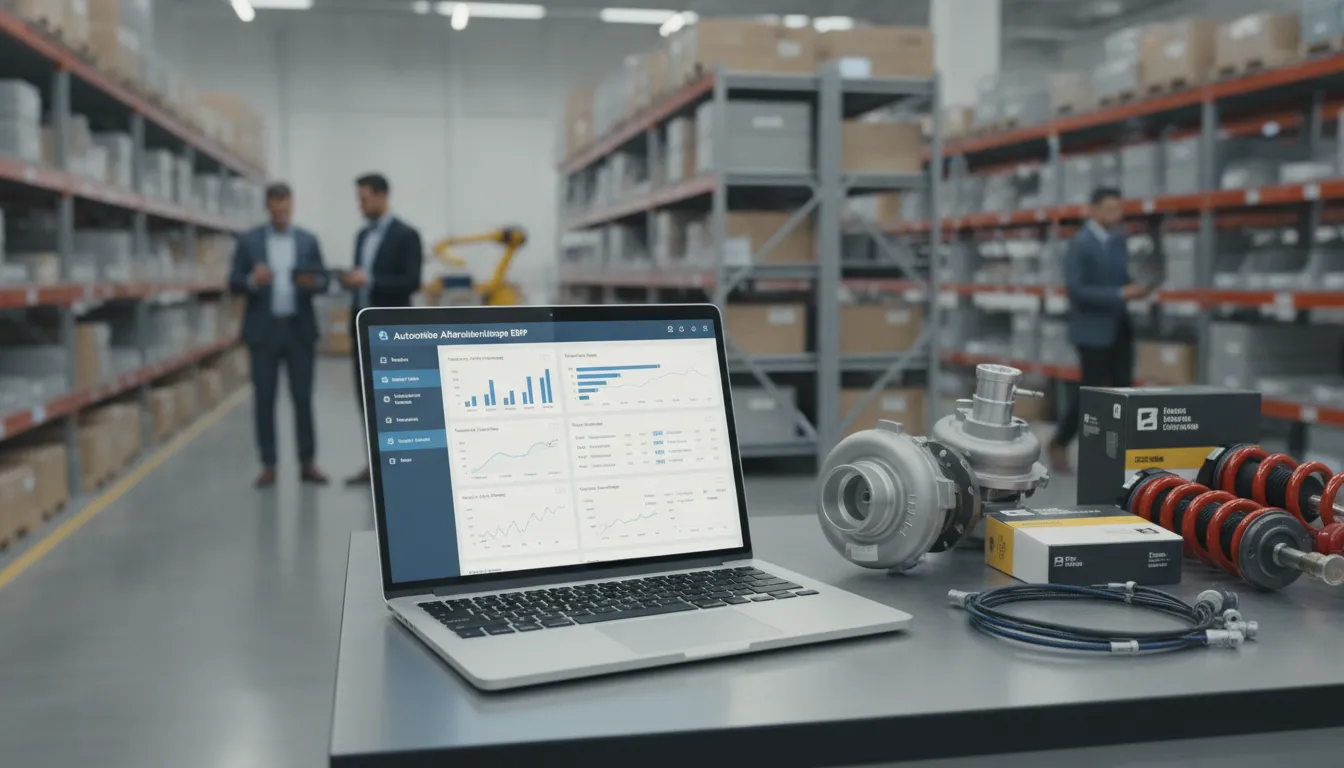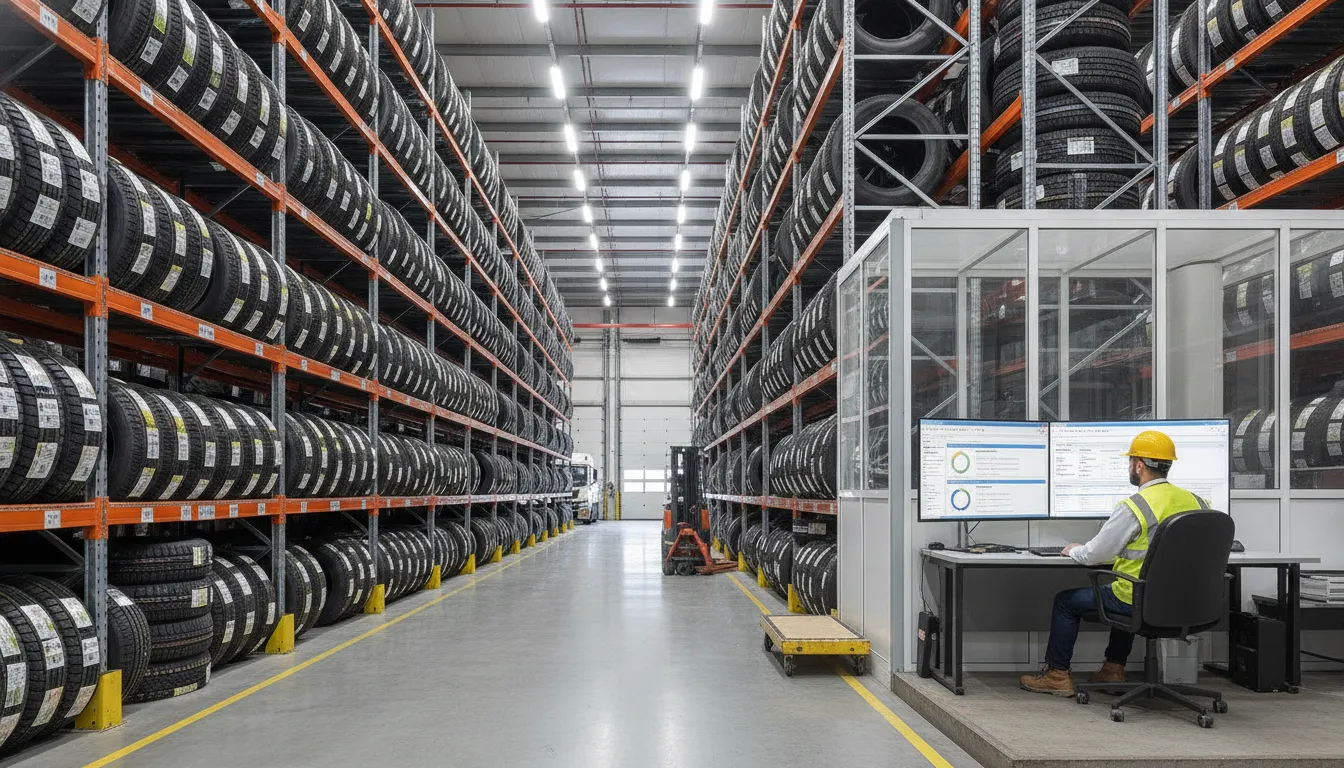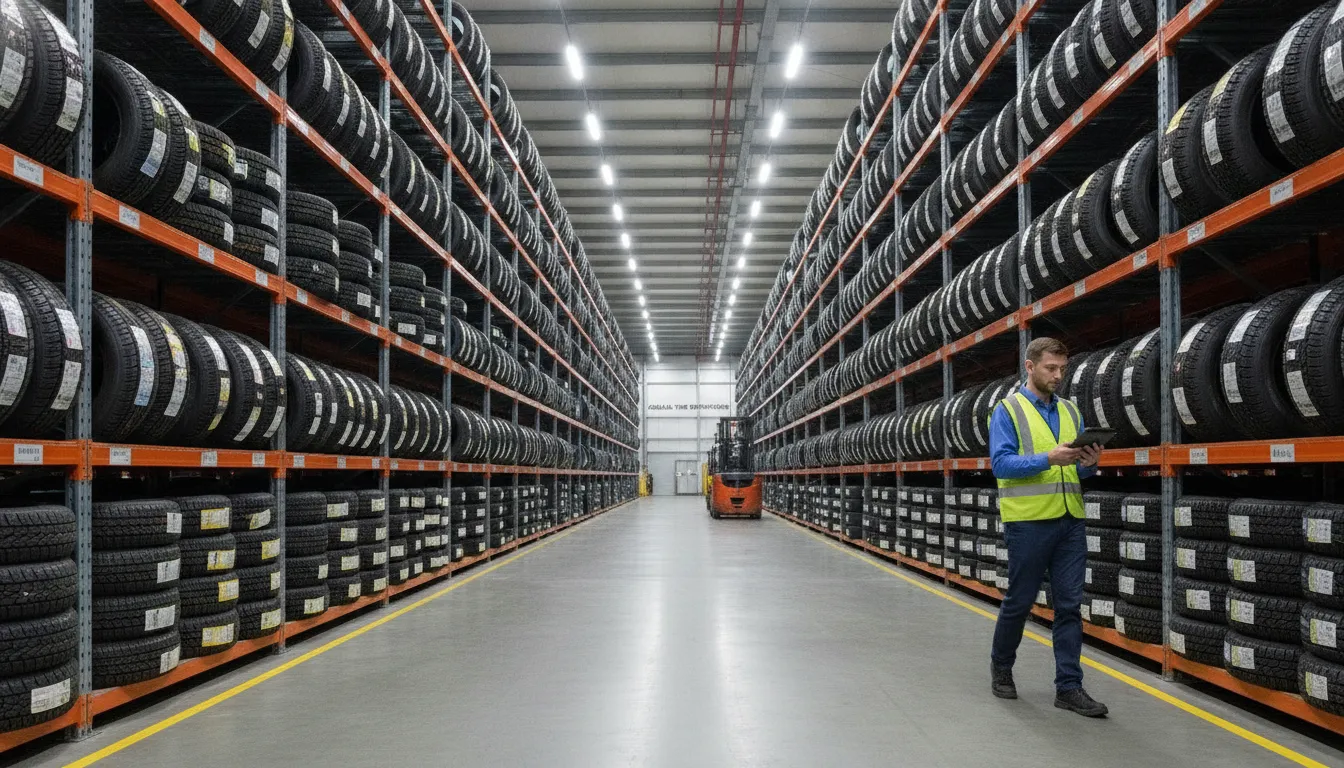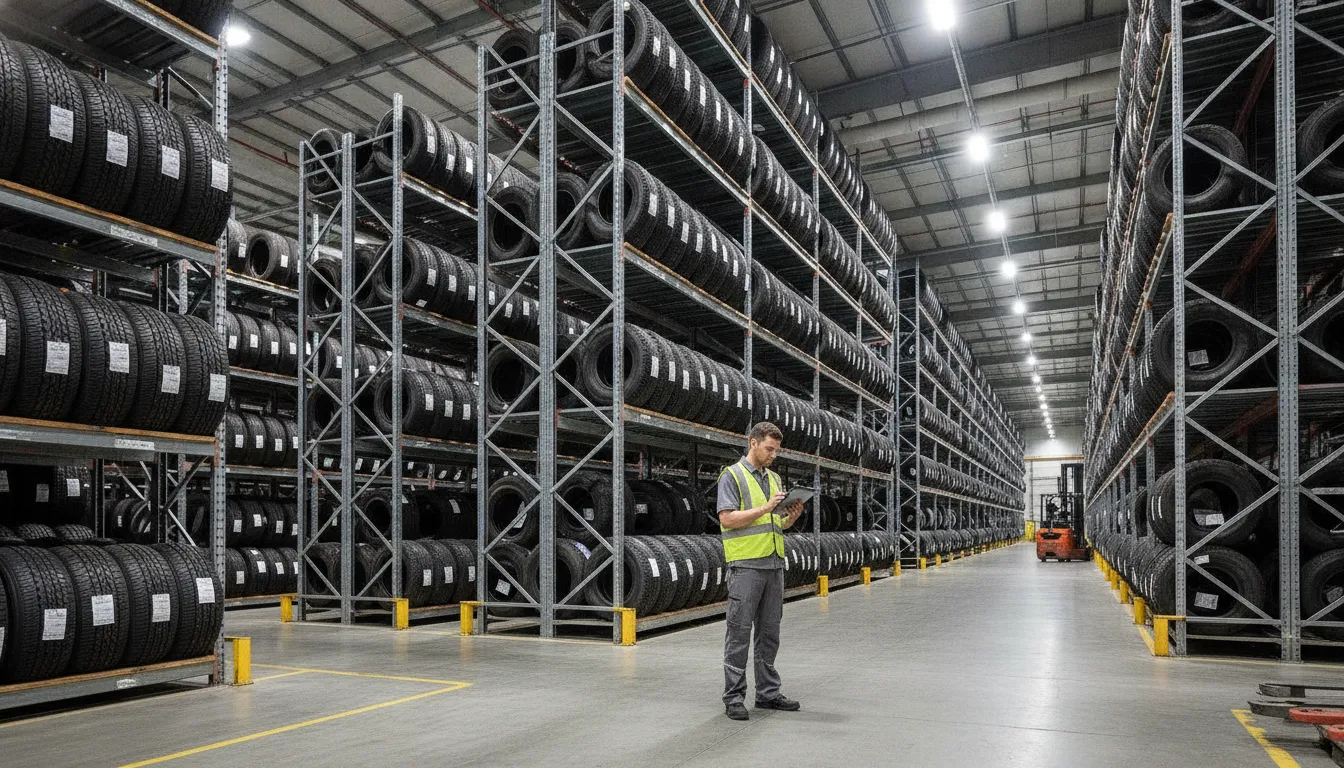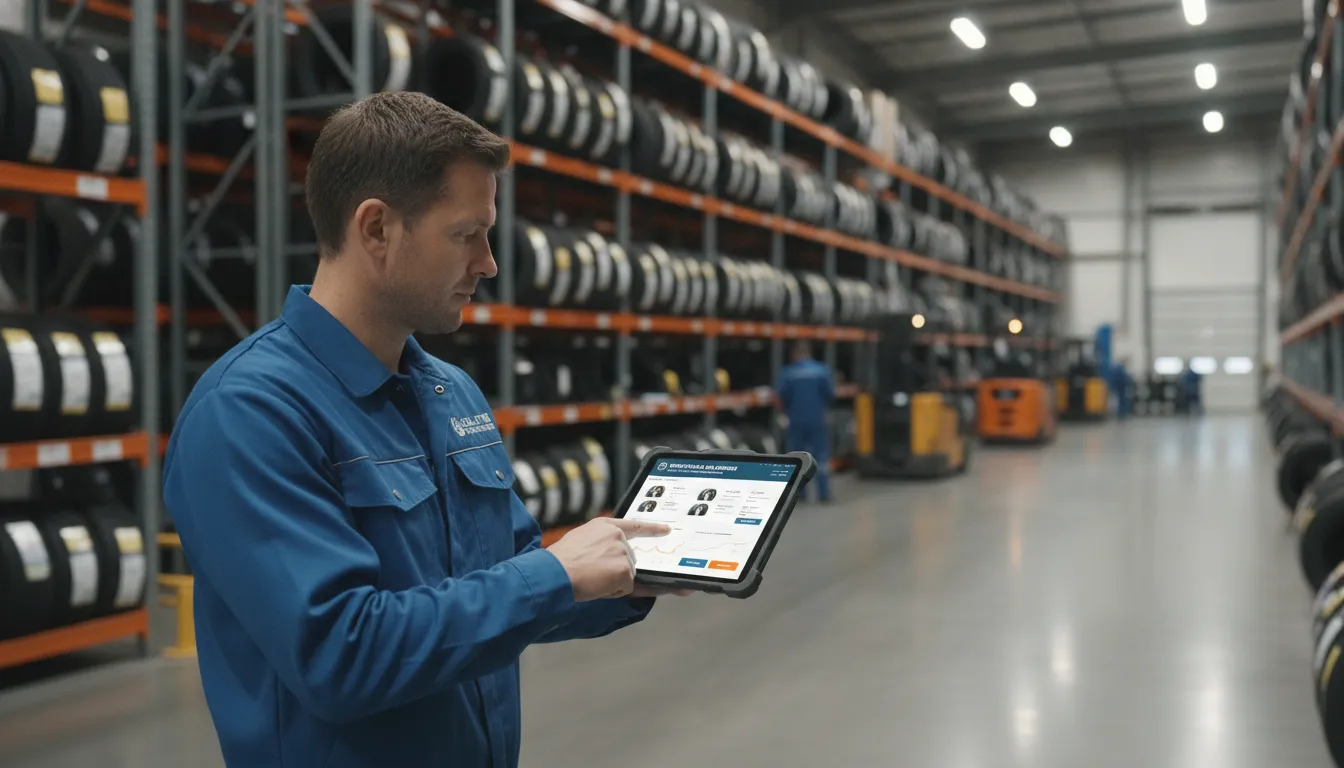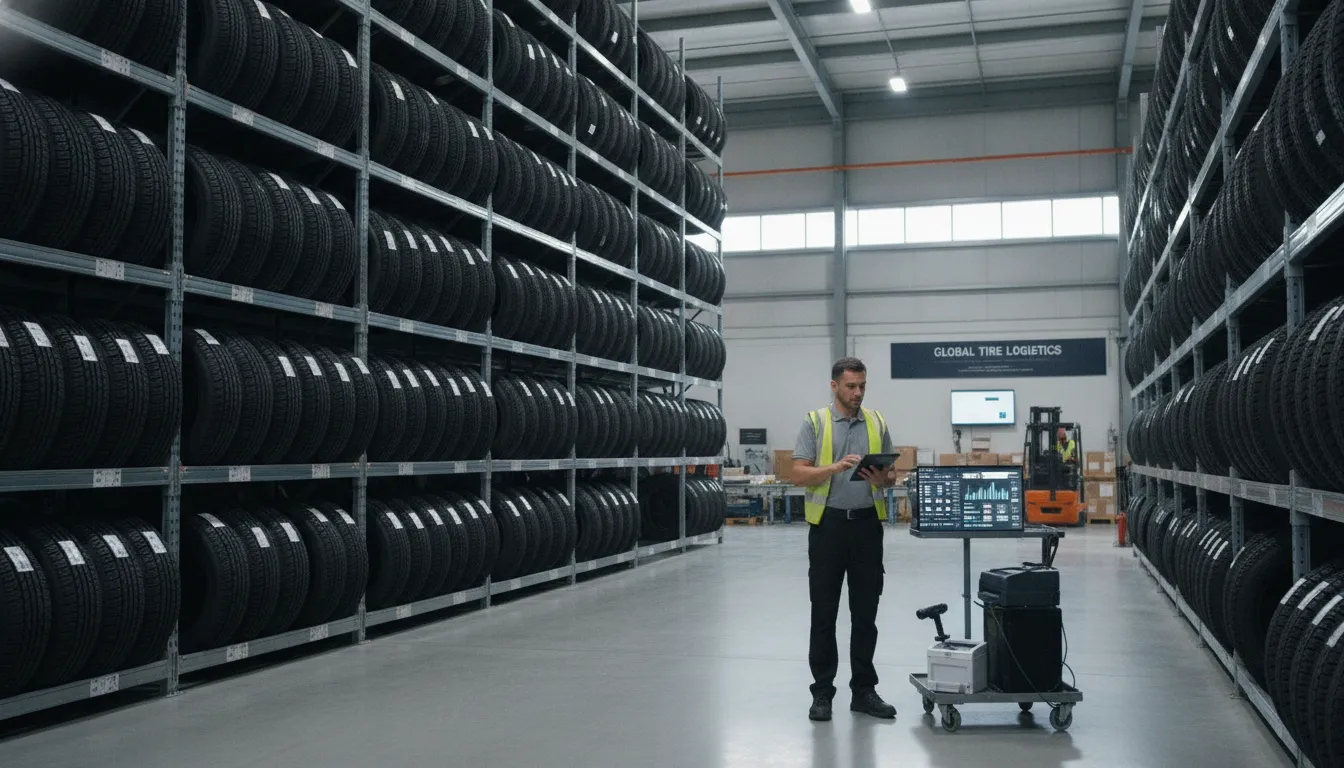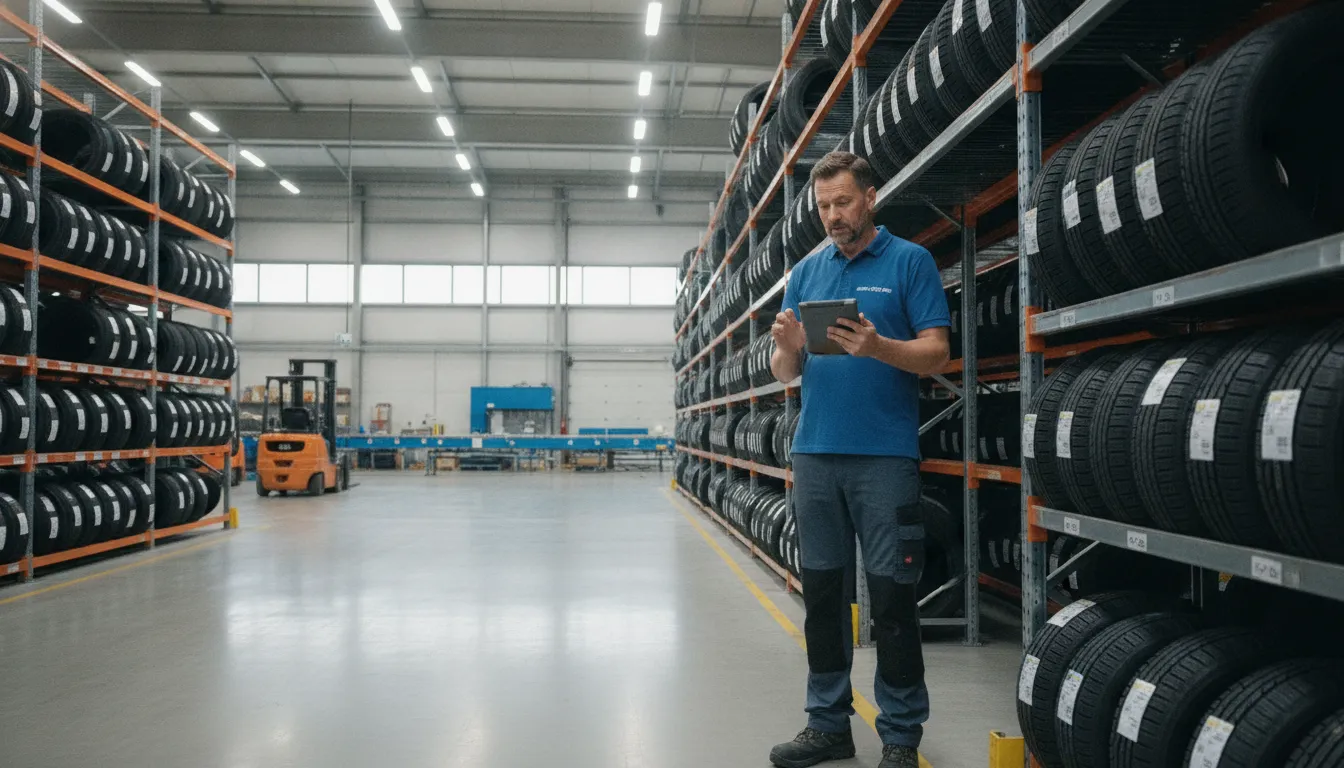

When an automotive distributor carries thousands of part numbers across one or more warehouses, inventory work is rarely just a matter of counting stock. Purchasing, supplier updates, customer pricing, order entry, replenishment, and location transfers all affect whether a sales team can answer three simple questions. What is available, where is it, and how quickly can it ship?
An auto parts distribution ERP connects those workflows so distributors can manage inventory, purchasing, vendor relationships, quotes, orders, pricing updates, and multi-warehouse information in one operating system. For automotive supply distributors, QBC's TireServ provides ERP for automotive distributors with support for inventory management, sales order processing, purchasing, and vendor management.
The right system should reflect distribution operations, not auto repair shop management. It should help teams move from disconnected records to a clearer view of products, suppliers, customer demand, and warehouse activity. That distinction becomes especially important as a high-SKU warehouse grows beyond the practical limits of generic inventory software.
Why High-SKU Auto Parts Warehouses Outgrow Generic Inventory Systems
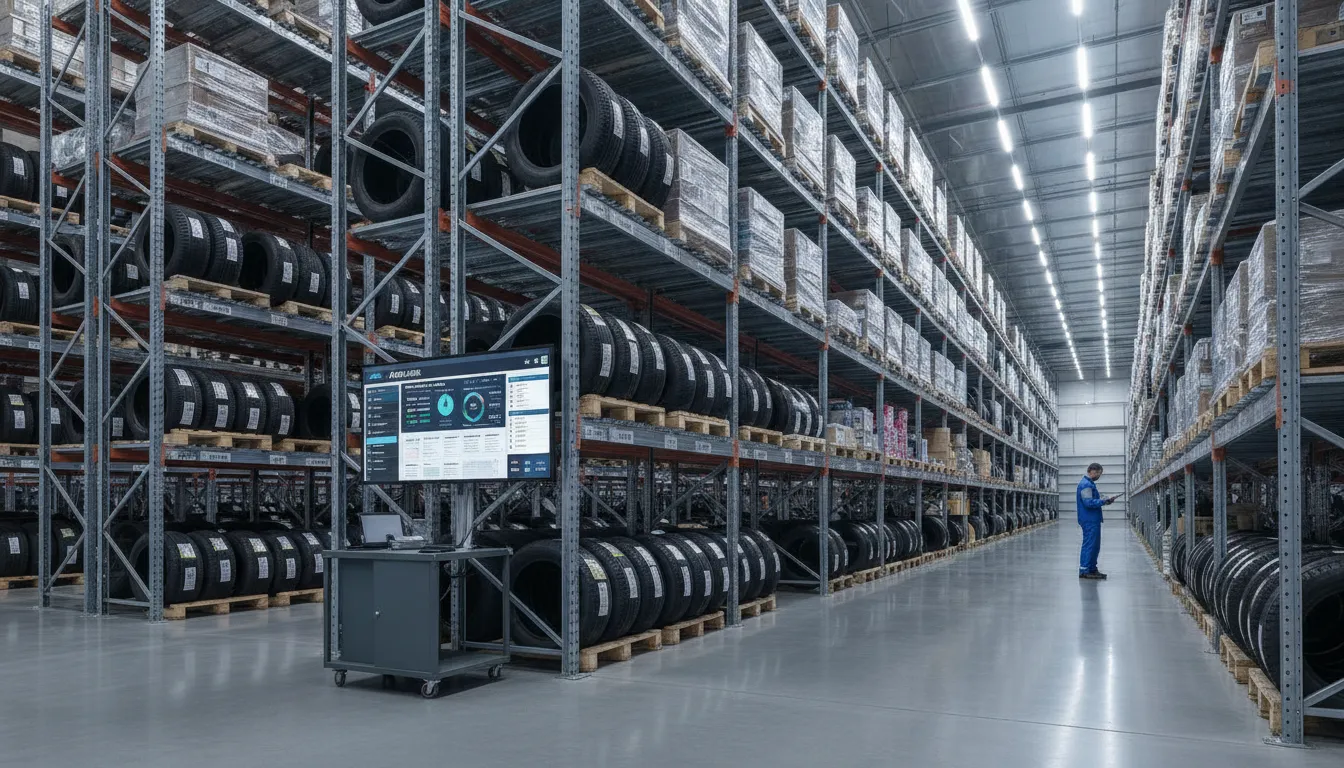
A warehouse can outgrow a generic inventory system before it outgrows its physical space. As the catalog expands, teams must manage more part numbers, supplier relationships, purchasing decisions, customer accounts, and order variations across one or more locations. Spreadsheets and entry-level systems may record quantities, but they often leave staff stitching together information from separate screens, files, or conversations.
Catalog complexity affects every transaction
Auto parts distribution depends on accurate product information and practical access to it. A sales representative or order-entry employee may need to confirm availability, prepare a quotation, and process an order while the warehouse team is receiving, picking, or transferring stock. When inventory, pricing, purchasing, and order records are disconnected, the cost is measured in interruptions and manual checks. Those delays also make it harder to give customers a clear answer when they ask what is available and when it can ship.
Disconnected locations create avoidable uncertainty
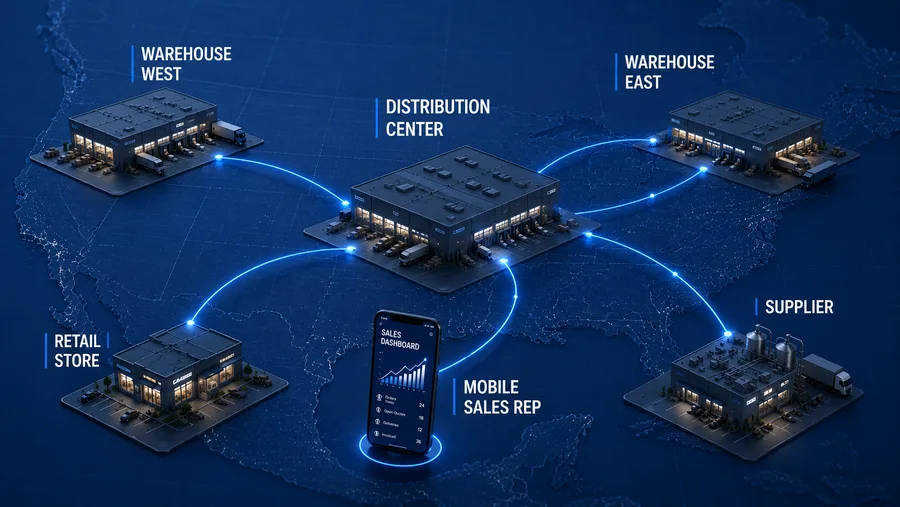
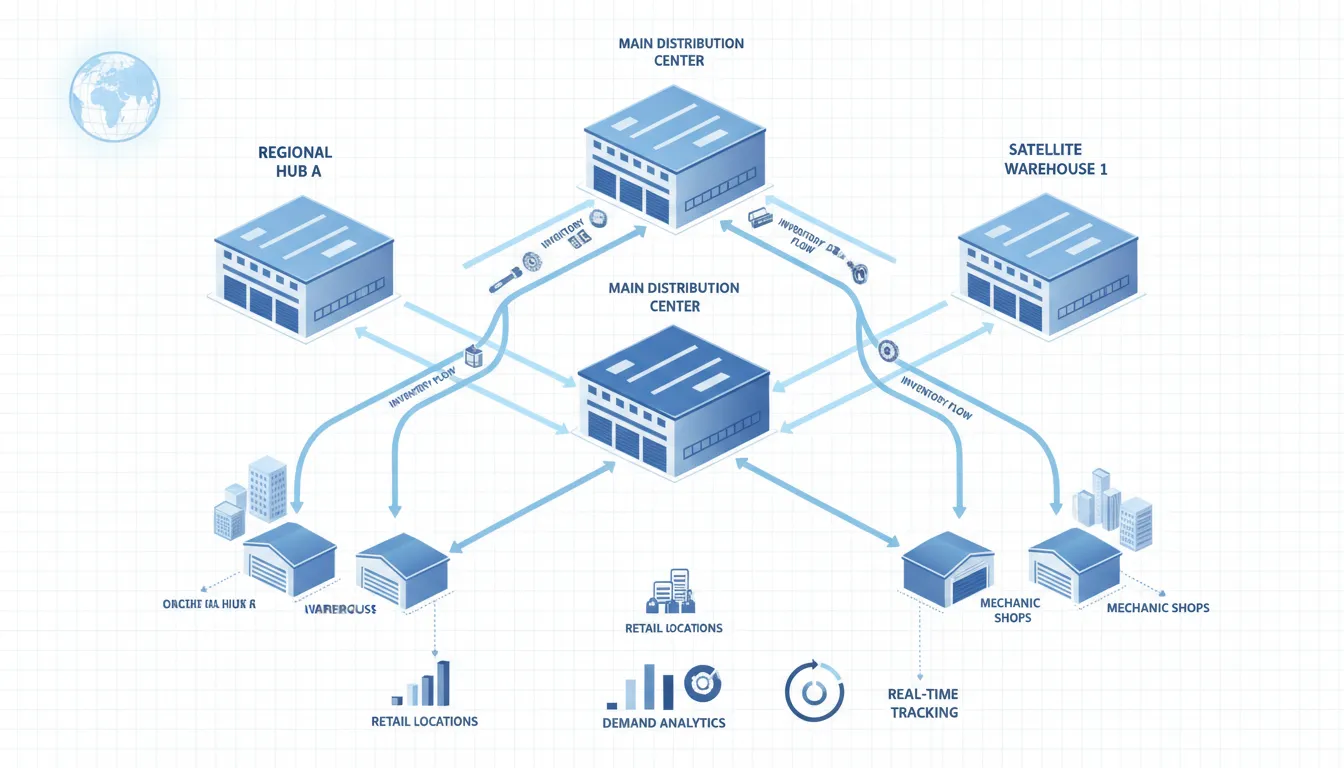
Multiple warehouses add another layer of operational pressure. A part that is unavailable at one location may be available elsewhere, but only if the system gives staff a usable view of inventory across locations. Without that visibility, teams can order stock unnecessarily, miss a transfer opportunity, or spend time calling another branch to verify quantities. Consolidated reporting, location-level inventory information, and defined requisition or transfer workflows help purchasing and operations make decisions from the same information.
Order entry and visibility need to work together
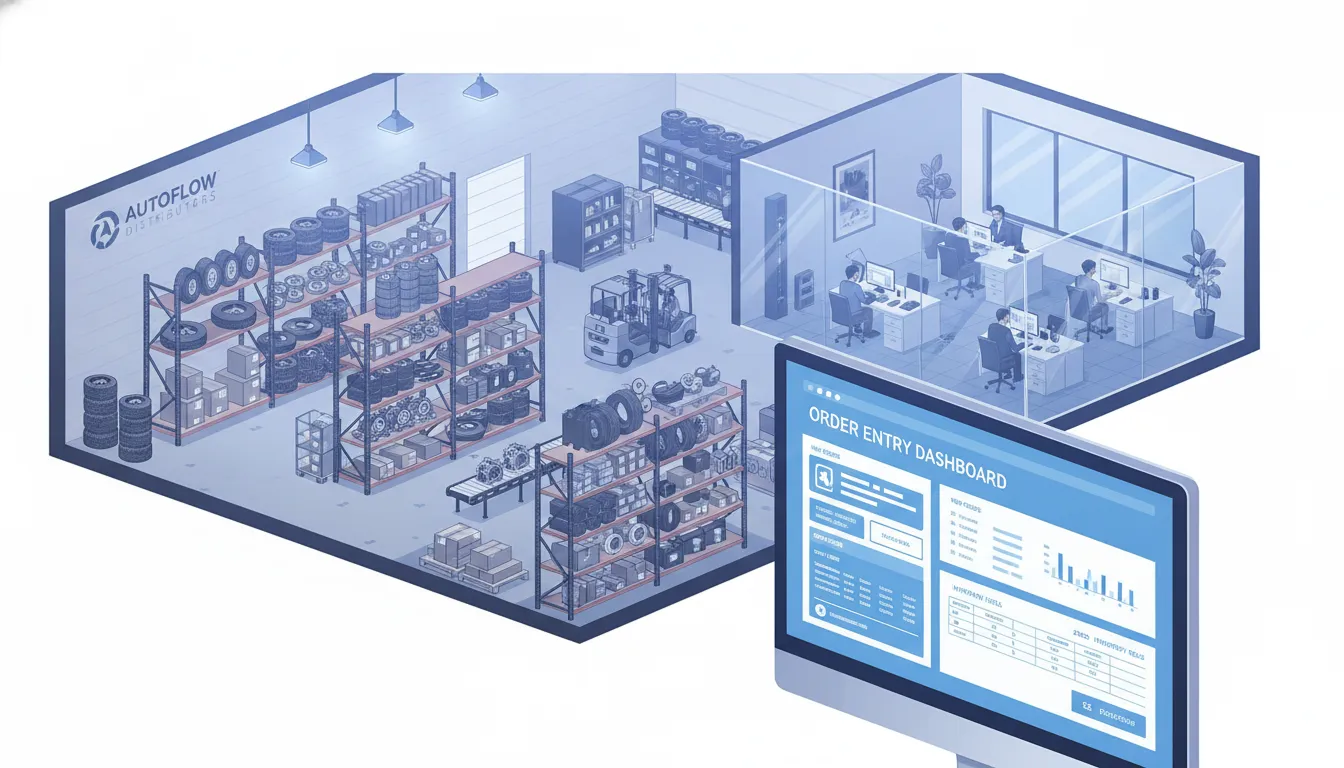
An auto parts distribution ERP should connect the questions customers ask with the actions employees take. TireServ is designed for tire and automotive supply distributors. It includes inventory management with multi-warehouse support, sales order processing with quoting, purchasing and vendor management, and reporting and inquiries. Its supported workflows include price and availability inquiries, formal quotations, order processing, and integrated web and online order entry.
These capabilities do not replace disciplined warehouse processes, but they can give operations, purchasing, sales, and management a shared system for working through them. Review the automotive ERP capabilities that matter to your warehouse, then ask whether a prospective system can demonstrate your actual catalog, locations, purchasing process, and order-entry scenarios.
How Auto Parts Distribution ERP Handles Part Numbers, Fitment, and Substitutions
Part numbers are rarely as simple as one SKU matched to one customer request. A distributor may need to recognize manufacturer numbers, supplier numbers, internal identifiers, suffixes, packaging units, and superseded numbers. The system should preserve the purchasing or sales history attached to each item. The system should also help staff distinguish a valid match from a similar-looking part before an order reaches the warehouse.
Start with a controlled parts master
When evaluating an auto parts distribution ERP, ask how the platform maintains the parts master and prevents duplicate or ambiguous records. Useful controls include consistent item identifiers, alternate search terms, unit-of-measure rules, manufacturer and supplier references, product categories, and a clear process for retiring or replacing old numbers. Ask whether changes preserve historical transactions and whether warehouse, purchasing, and sales teams see the same current record.
Fitment is a separate question. Do not assume that an ERP includes vehicle-application data, interchange logic, or a catalog subscription simply because it manages inventory. Ask the vendor to demonstrate the exact fitment workflow you use, including how a user searches by vehicle, confirms the application, and handles exceptions. If the ERP does not provide that data natively, clarify whether your team will maintain it, connect another source, or verify applications manually.
Make substitutions visible and deliberate
Substitutions should support a business decision, not quietly change what a customer ordered. A practical evaluation should cover how staff record approved alternatives and compare availability and pricing. It should flag brand or specification differences and obtain customer approval when the replacement is not equivalent. The workflow should leave a clear record for order entry and the warehouse, especially when a part number has been superseded or stock is split across locations.
TireServ is designed for tire and automotive supply distributors and supports inventory management with multi-warehouse functionality, price and availability inquiries, formal quotations, and order processing. Those capabilities can give a distributor a stronger operational foundation for confirming what is available and preparing an accurate order. Verify fitment and substitution requirements in a product demonstration. Review the documented automotive ERP capabilities and ask the vendor to walk through your own part-number examples, including a superseded item, an alternate supplier number, and a proposed substitution.
Purchasing, Replenishment, and Supplier Management for Parts Distributors
Purchasing decisions affect more than the cost of a part. They influence available inventory, customer service, warehouse space, and the margin on every order. For an automotive parts distributor, an ERP should connect supplier information with purchasing activity, inventory levels, and the pricing records used by sales and order-entry teams.
A practical purchasing workflow starts with a clear view of what is available, what has been committed, and what may need to be ordered. TireServ supports purchasing and vendor management for tire and automotive supply distributors, along with inventory management and multi-warehouse support. That gives purchasing teams a shared operational record instead of forcing them to reconcile separate spreadsheets, vendor notes, and warehouse updates. You can review the product's automotive ERP capabilities to see how these workflows fit together.
Keep cost and pricing information current
Supplier cost changes need to reach the people quoting and processing orders. TireServ supports cost and pricing updates, as well as price and availability inquiries. That helps a distributor use current information when a customer asks whether a part is available or requests a formal quotation. The system also supports promotions and rebate tracking, so purchasing and sales teams can account for approved programs without treating each promotion as an isolated manual adjustment.
- Maintain vendor and purchasing information alongside inventory records.
- Review current cost, selling-price, and availability information before quoting.
- Track promotions and rebates as part of the commercial workflow.
- Use replenishment logic to support decisions about what should be reordered.
Make replenishment decisions with warehouse context
Replenishment is not simply a matter of ordering more whenever a quantity falls. Teams need to consider demand, existing commitments, supplier availability, and the role of each warehouse or location. TireServ supports replenishment logic and order processing, giving distributors a structured way to connect inventory needs with purchasing activity. The exact rules a distributor uses should be reviewed during implementation, because reorder decisions depend on product mix, service expectations, and supplier practices.
This is different from software intended to manage an auto repair shop. A distribution-focused ERP must support the movement of products through warehouses, purchasing, sales orders, and customer accounts. For distributors comparing options, TireServ is designed for tire and automotive supply distribution, including wholesalers, retail stores, and warehouses.
Multi-Location Parts Inventory: Managing Stock Across Warehouses
When an automotive distributor operates more than one warehouse or branch, inventory accuracy depends on more than knowing the total quantity on hand. The team also needs to know where stock is located, which branch needs replenishment, and how an order should be fulfilled. A disconnected approach can leave purchasing staff, warehouse teams, and sales representatives working from different versions of the same inventory picture.
A multi-location inventory workflow should give each branch a defined way to request stock and move it between locations. TireServ materials describe branch purchase-order requisitions and transfers, along with support for multiple inventory locations. That structure can help a distributor document why stock is being requested, where it is going, and how the movement affects available inventory. It is a more controlled process than relying on email, spreadsheets, or informal phone calls between warehouses.
Centralized visibility also matters for purchasing and management. Consolidated reporting can bring location-level activity into a broader view, helping leaders review inventory positions and operating results across the business. At the same time, branch teams still need information relevant to their own warehouse. The goal is not to erase local accountability. It is to connect local activity to a shared operating record.
QBC describes online updates between locations as part of its multi-location capabilities. Because the exact workflow depends on the distributor's setup, an ERP evaluation should clarify which transactions update online, which users can complete transfers, and how exceptions are handled. Ask to see a demonstration using actual branch scenarios, such as a transfer from an overstocked warehouse. A purchase-order requisition for a fast-moving part, and an order that may be supplied from more than one location.
Customer access is another part of the inventory conversation. TireServ supports integrated web and online order entry, and QBC supports a customer-facing B2B portal for online ordering. These tools can give approved business customers a way to place orders while internal teams manage fulfillment through the distribution system. They should not be confused with auto repair shop management software. The relevant question is how well the system supports the distributor's warehouse, purchasing, order-entry, and customer-service workflows.
For a closer look at the operating issues involved, review QBC's multi-location inventory management guide. Distributors evaluating an ERP for automotive distributors can then compare those requirements with TireServ's documented multi-warehouse capabilities.
How Pricing and Order Entry Connect the Warehouse to Customers
For a distributor, a customer order is more than a request for a part. The sales team needs to answer whether the item is available, what the customer should pay, and how the order will be fulfilled. The warehouse then needs a clear record of what to pick, stage, hold, deliver, or ship. When these steps are disconnected, staff may recheck inventory, recreate quotes, or correct pricing before an order can move forward.
A practical auto parts distribution ERP should support the full conversation from inquiry to completed order. TireServ supports price and availability inquiries, formal quotations, order processing, and integrated web and online order entry. It also supports cost and pricing updates, promotions, rebate tracking, and replenishment logic, giving teams a structured way to maintain commercial and inventory information. See the full automotive ERP capabilities for the supported feature set.
Keep the customer promise connected to fulfillment
Customer-specific pricing is an important workflow consideration for wholesale distribution. Before selecting a system, clarify how account pricing, negotiated terms, promotions, rebates, and approval rules should be maintained and applied. The system should help staff distinguish a current price from a cost update or a temporary promotion without relying on disconnected spreadsheets. Any pricing rules should be confirmed during a product demonstration rather than assumed from a general ERP feature list.
Order entry also needs to reflect how customers actually receive parts. A distributor may prepare an order for will-call, route it for local delivery, or send it through a shipping process. Online ordering and a customer-facing B2B portal can give approved customers another way to submit orders, while the distribution team retains visibility into the order workflow. QBC describes its B2B portal as supporting online ordering and mobile access for field operations.
- Confirm price and availability before promising an item.
- Convert formal quotations into accurately documented orders.
- Match each order to will-call, local delivery, or shipping requirements.
- Verify how customer-specific pricing and promotions are maintained.
This is different from software designed to run an auto repair shop. The focus here is the distributor's warehouse, customer accounts, order processing, and fulfillment choices. A system such as TireServ is positioned for tire and automotive supply distributors, wholesalers, retail stores, and warehouses, so the evaluation should center on those distribution workflows.
What to Look for in ERP Software for Auto Parts Distribution
Choosing an auto parts distribution ERP requires more than checking whether a system has an inventory screen. The evaluation should follow the work your teams perform every day. That includes maintaining a large catalog, receiving stock, quoting customers, moving products between locations, and closing the books. It should also distinguish distribution operations from auto repair shop management. A distributor needs tools for warehouses, purchasing, order processing, supplier relationships, and customer accounts.
Use the checklist below to structure demonstrations and internal discussions. Ask each provider to show how the system handles your actual products, locations, order types, and reporting needs rather than relying on a general software tour.
| Capability | Questions to ask during evaluation | What to verify |
|---|---|---|
| Catalog and part master | Can staff search and update product information? Can sales, purchasing, and warehouse teams use the same record? | Confirm how the system supports your catalog structure, product details, availability inquiries, cost updates, and pricing updates. |
| Warehouse inventory | Can the system show inventory by warehouse and support the way products are received, stored, picked, and sold? | Look for multi-warehouse inventory management, usable inquiries, and processes that reduce manual inventory tracking. |
| Purchasing and vendors | Can purchasing teams manage suppliers, replenishment decisions, purchase orders, and changing costs? | Verify purchasing and vendor management, replenishment logic, promotions, and rebate tracking where those workflows apply. |
| Pricing and order entry | Can sales staff answer price and availability questions, prepare formal quotes, and process orders efficiently? | Test quoting, sales order processing, cost and pricing updates, and integrated web or online order entry. Ask how the system supports will-call, delivery, shipping, and other order workflows your business actually uses. |
| Multiple locations and reporting | Can managers see what is happening across warehouses and branches without manually combining separate files? | Check support for multiple inventory locations, branch purchase-order requisitions, transfers, consolidated reporting, and online updates between locations. |
| Financial modules | Will accounting work from the same operational records as sales, purchasing, and inventory? | Confirm the availability of accounts receivable, accounts payable, general ledger, banking management, and reports relevant to management decisions. |
| Implementation and support | Who will migrate data, train users, configure workflows, and support the business after launch? | Evaluate the implementation plan, training, technical support, and available hardware, networking, backup, disaster recovery, or managed IT services. |
For a tire or automotive supply distributor, TireServ is the QBC product positioned most directly around these requirements. Review its automotive ERP capabilities alongside your own process checklist. If your operation has broader wholesale or retail distribution needs beyond the automotive vertical, compare those requirements with QBC's wholesale distribution ERP offering.
The strongest evaluation ends with a demonstration using representative products, locations, vendors, customer orders, and reports. That gives operations, warehouse, purchasing, sales, accounting, and management teams a shared basis for deciding whether the system fits the business and whether the implementation support is practical.
Frequently Asked Questions
What is the best software for managing auto parts inventory?
The best system is one that matches the way your distribution business buys, stores, sells, and replenishes parts. Look for multi-warehouse inventory, searchable product and customer records, purchasing and vendor management, order processing, pricing updates, reporting, and a practical way to handle transfers between locations. TireServ is designed for tire and automotive supply distributors and includes inventory management with multi-warehouse support.
What is the best ERP system for distribution?
The right ERP depends on your distribution model, catalog complexity, warehouse structure, order volume, and accounting requirements. A strong fit should connect inventory, purchasing, sales orders, customer accounts, and financial workflows instead of leaving teams to reconcile separate systems. It should also include implementation, training, and ongoing support that match your operating needs. Evaluate the software with real purchasing, receiving, order-entry, and replenishment scenarios.
What ERP modules matter most for an auto parts distributor?
Start with inventory and warehouse management, purchasing and vendor management, sales order processing, pricing and availability, replenishment, reporting, and multi-location controls. Accounting modules such as accounts receivable, accounts payable, general ledger, and banking management can also reduce handoffs between operations and finance. If customers place orders online, integrated web order entry or a B2B portal may be important as well.
How is auto parts distribution ERP different from auto repair shop software?
Distribution ERP is built around wholesale inventory, suppliers, warehouses, pricing, purchasing, order entry, shipping, and customer accounts. Auto repair software generally centers on service appointments, repair orders, labor, and vehicle work performed at a shop. An automotive supply distributor should evaluate software against warehouse and wholesale workflows rather than assuming a repair-shop system will manage its distribution operation.
Schedule a Demonstration for Your Distribution Operation
If you are evaluating an auto parts distribution ERP, a focused conversation can help you compare warehouse. Purchasing, pricing, order-entry, and multi-location requirements against the way your team works today. Schedule a Demonstration to discuss ERP for auto parts and automotive supply distribution with QBC Systems.