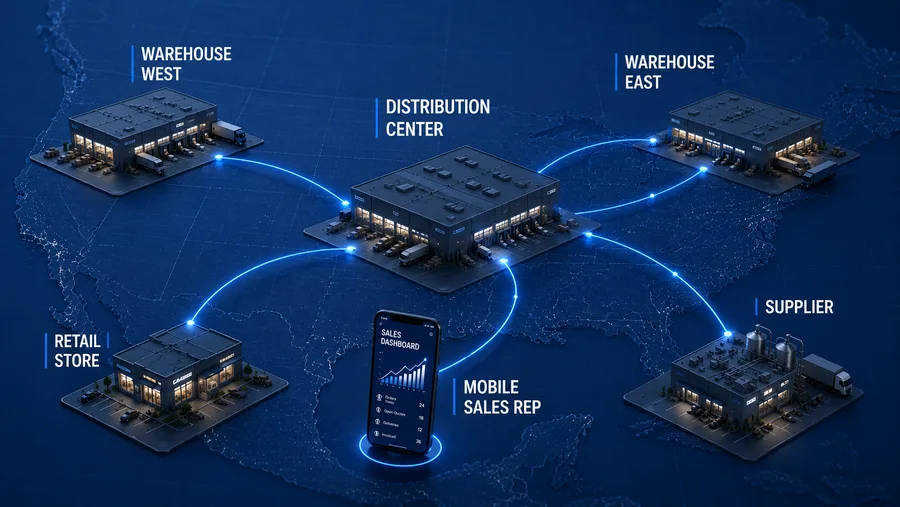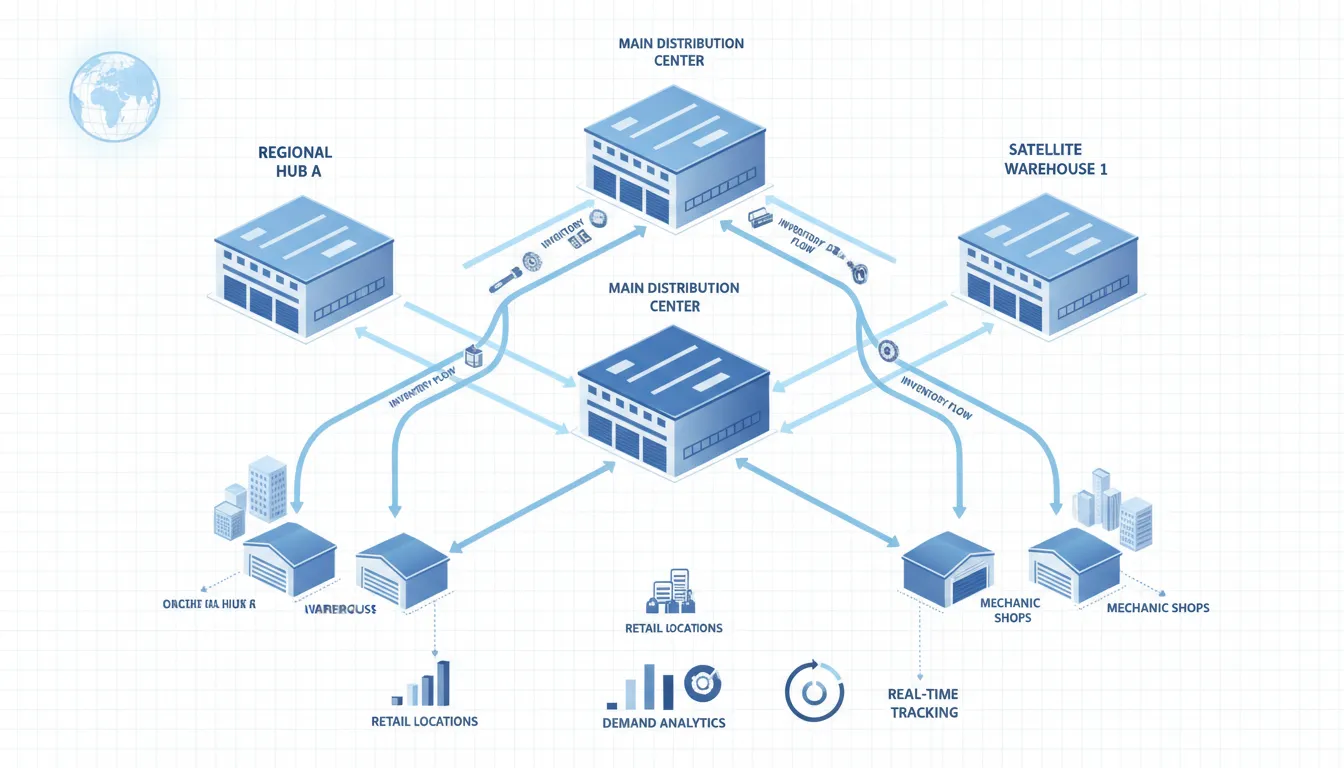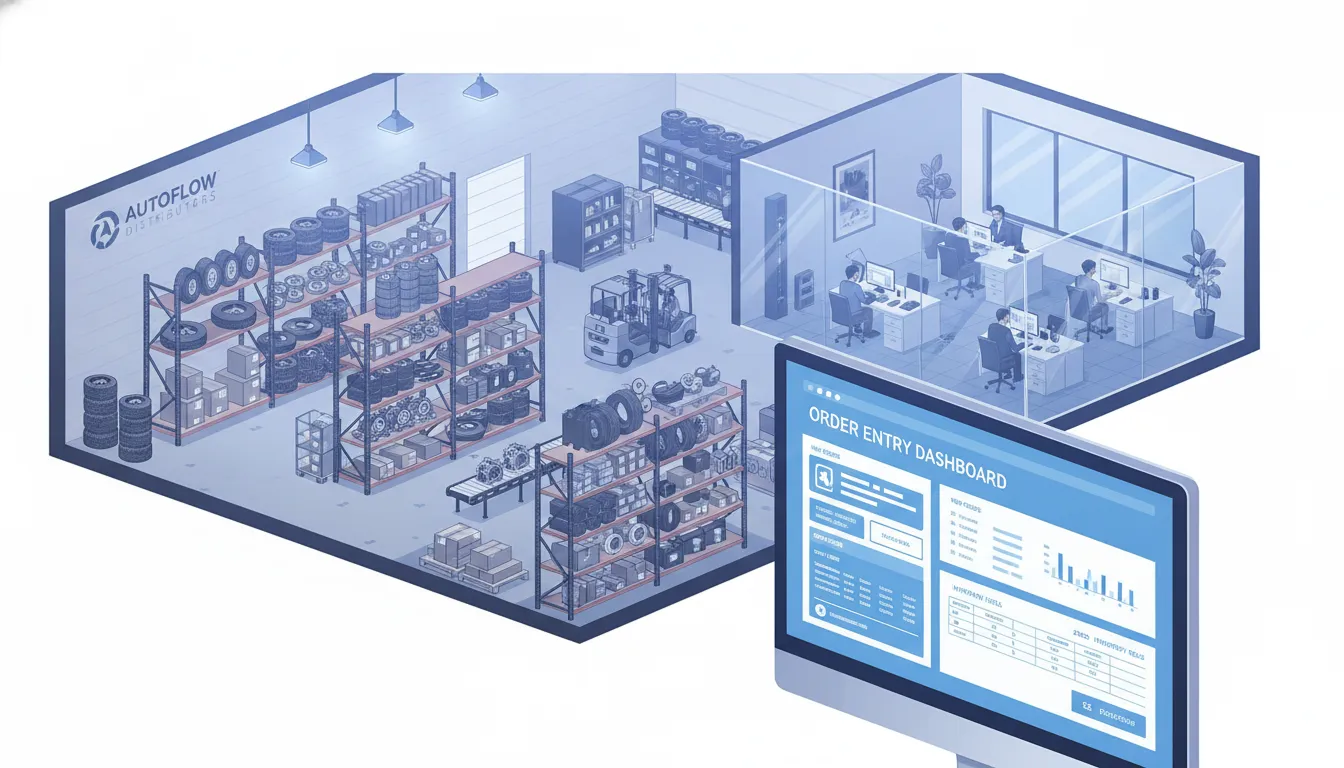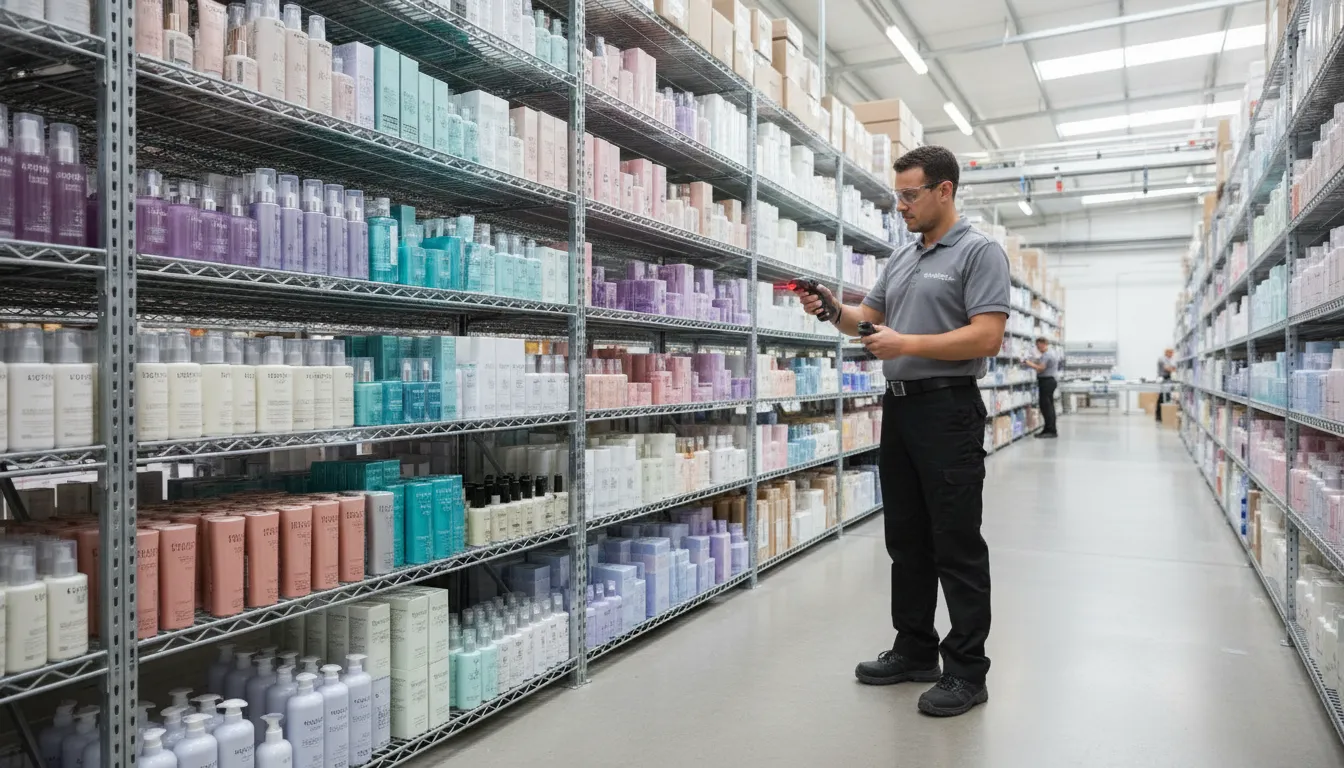

BeautyServ ERP is QBC Systems’ distribution software for beauty supply wholesalers that need workflows suited to professional beauty products and customer accounts. This review covers the product’s documented capabilities, what buyers should validate, and how to decide whether it fits your operation. Start with the BeautyServ ERP overview for professional beauty supply distributors if you want to see where the product fits in QBC’s offering.
Schedule a BeautyServ Demonstration
What Is BeautyServ ERP and Who Is It For?
QBC Systems describes BeautyServ as ERP software built for beauty supply distributors and wholesalers. It is intended for businesses that sell professional beauty products to trade customers, including salons and individual stylists. It is not simply a general accounting package with beauty terminology added: the product’s documented functions include tools shaped around beauty distribution, such as stylist account tracking, educator and school discounts, product kits, and specialized pricing for professional and retail customers.
That distinction matters when daily work crosses sales, inventory, purchasing, customer accounts, and order fulfillment. A distributor may take orders by phone, serve repeat salon accounts, sell through more than one channel, or manage stock across locations. The value of an ERP is its ability to connect the work rather than leave staff to reconcile separate records and spreadsheets. The precise fit depends on the distributor’s workflows, current systems, and required integrations, so those should be discussed directly rather than assumed from a feature list.
BeautyServ is one of QBC Systems’ industry-specific products. QBC has served distributors since 1978 and describes its approach as a combination of software, implementation, training, and ongoing technical support. Buyers comparing a specialized system with a broader platform can also review this guide to beauty supply wholesale software for distributors, which frames the operational requirements to assess.
Core Modules and Features: What Does BeautyServ Include?
QBC Systems documents more than 190 BeautyServ features, but a long feature count is only a starting point. The useful question is whether the software supports the steps your team performs, and whether information is available where staff need it. The following capabilities are specifically described for BeautyServ:
- Master Account System: Tracks individual stylists within salon accounts, a useful distinction when a distributor serves both a business and the professionals who order through it.
- Educator and school discounts: Supports discount arrangements for beauty educators and schools. Ask how the rules are represented and checked during your actual sales process.
- Kit management: Supports product bundles and kits. Confirm how your team creates, maintains, prices, and fulfills the kits it sells.
- QicScan item lookup: Provides item lookup by manufacturer and type. Demonstrate the search patterns employees use when a customer describes a product in different ways.
- Professional and retail pricing: QBC describes specialized pricing matrices for professional versus retail customers. Review examples from your own account types and pricing rules.
These functions point to the product’s beauty-distribution focus. They do not, by themselves, answer every operational question. A distributor should test common exceptions as well as the standard sale: a stylist ordering under a salon account, an educator discount combined with other terms, an incomplete kit, or a product that is temporarily unavailable. The demonstration should show how a user sees the relevant account and item information, not just that a feature name appears on a screen.
One practical way to review each feature is to describe its input, decision, and output. For a kit, for example, identify the component products, the way the selling price is determined, and what a picker should see when fulfilling the order. For an educator discount, show the qualifying account and the terms staff must apply. Then ask what happens when an item is missing, a customer asks for a substitution, or a rule needs an authorized exception. This turns a broad feature discussion into a testable workflow without assuming a capability that has not been confirmed.

Other important topics may include receiving, replenishment, order status, warehouse processes, reporting, and connections to online ordering. The available product facts do not establish the details of every workflow or integration, so treat these as demonstration questions. For a closer look at kit-specific considerations, see this guide to beauty supply kit management for distributors. It can help your team prepare realistic examples to validate with QBC.
How Does BeautyServ Handle Stylist Accounts, Lot Tracking, and Matrix Pricing?
QBC Systems’ documented Master Account System is designed to track individual stylists within salon accounts. For a distributor, this can be relevant when the salon is the main customer account but individual professionals place orders or need to be recognized in the sales process. During a demonstration, ask the presenter to show the account structure from both sides: what the sales or service team sees, and what information is retained for reporting and follow-up.
Lot tracking is a separate requirement that should be verified rather than inferred from a product’s industry focus. If your business needs to trace lots, monitor product age, or respond to a product issue, explain the exact receiving-to-shipping process you expect. Ask which lot details are recorded, when they are captured, how staff select or locate the relevant stock, and what reports can trace affected transactions. QBC’s product facts provided for this review do not confirm specific BeautyServ lot-tracking functions. Read the practical discussion of lot tracking for beauty products, then use your requirements to get a clear product answer.
BeautyServ is documented as supporting specialized pricing matrices for professional and retail customers. That can be relevant where different customer types have different selling terms, but a distributor should test its own rules. Bring examples that cover customer classification, discounts, promotions, educator or school terms, and any exceptions that staff must handle. Ask how users can see the applicable price before confirming an order, and how authorized changes are controlled. Do not assume every pricing rule is automatic or supported exactly as you use it without confirmation.
To make those discussions concrete, prepare a small account-and-order set rather than a vague feature checklist. Choose one salon with multiple stylists, one independent stylist account if you serve them, and one retail customer if that channel applies. For each, note the price terms, discount eligibility, ordering method, and information employees need to see. Then use the same sample items in each case. The comparison can reveal where customer classification affects the process and which details still need clarification.
A useful demonstration test is to follow one sample customer and order from beginning to end:
- Identify the salon account and the individual stylist placing the order.
- Find several products using the terms your staff commonly use.
- Review the relevant customer pricing and any discount rule.
- Add a kit or bundled offer, if those are part of your catalog.
- Check what the order and account history show after the transaction.
This scenario gives both sides a concrete basis for discussing usability and exceptions. For further preparation, the guide to beauty distributor order tracking covers the information wholesalers may want to follow across customer orders.

What Does the Implementation and Support Experience Look Like?
QBC Systems describes its ERP work as a high-touch process that includes implementation, data migration, training, and ongoing technical support. That matters because moving to ERP is not only a software selection. The distributor and provider need to agree on which data and workflows move, how the system is configured, who is responsible for each decision, and how users will learn their part of the process.
QBC Systems has served distribution businesses since 1978. Its stated approach is consultation and guided deployment rather than self-service setup. Before committing, ask for a clear discussion of the project stages and the responsibilities on both sides. The details will depend on your business, so avoid relying on generic timelines or assumptions that every implementation follows the same path.
- Scope and readiness: Identify locations, user groups, sales channels, and the workflows that must be addressed at the start.
- Data: Discuss which customer, supplier, product, pricing, and transaction records are in scope, how they will be prepared, and how the results will be checked.
- Process decisions: Agree which current practices should carry forward and which need review before configuration.
- Training: Ask how role-specific training will cover order entry, inventory tasks, account management, and administration relevant to your team.
- Support: Clarify how users raise questions after launch and what support arrangements apply to your organization.
Ask who will coordinate questions, how unresolved decisions are documented, and how your staff can test common transactions before relying on the new process. If the business also wants to review hardware or network responsibilities alongside ERP, QBC presents these as part of its broader technology services; see its hardware, data center, and managed IT services page. Keep software scope and infrastructure scope clear so the project responsibilities are understood.
Data preparation deserves particular attention because records often reflect years of operating choices. Before a project discussion, note where product codes, descriptions, customer accounts, and pricing terms currently live. Identify duplicate accounts, discontinued items, and fields that staff rely on but may not be consistently maintained. Ask what the migration process expects from your team, how representative records will be checked, and who signs off that the information is ready for use. These questions help distinguish data cleanup from software configuration and make ownership clearer.
Training plans also benefit from role-based examples. A customer service representative may need to look up a stylist and enter an order, while a warehouse employee may need to interpret a pick instruction and report a shortage. A manager may need to review account activity or confirm a pricing change. Ask how the training approach covers these distinct tasks, what practice environment or sample transactions are available, and how questions are handled after users begin working with live processes. The goal is to prepare people for the work they actually perform, not simply introduce menus.
Distributors evaluating ERP for the first time may also find it useful to review what ERP software means for a distributor. For a broader selection framework, see how to choose an ERP software provider. These resources can help the team agree on evaluation criteria before comparing implementation proposals.
Who Should Consider BeautyServ for a Beauty Supply Distribution Business?
QBC Systems positions BeautyServ for beauty supply distributors and wholesalers whose operations benefit from workflows specific to professional beauty products and accounts. It may be worth evaluating if your team serves salons, tracks individual stylists within salon accounts, manages educator or school discounts, sells product kits, or needs to distinguish professional and retail pricing.
It may be less compelling to a buyer who only needs basic bookkeeping, or whose most important requirements depend on capabilities that have not yet been demonstrated. A product fit should be judged against your processes, not a list of broad ERP terms. If a function is essential—such as a particular lot traceability process, an external system connection, a reporting format, or a warehouse procedure—write it down and ask for a direct demonstration or a clear explanation of how it is handled.
It can help to rank requirements before comparing systems. Separate the list into three groups: essential day-one workflows, important improvements, and items that would be useful but are not deal-breakers. For example, a distributor may treat accurate customer-specific pricing and order entry as essential, while a preferred report layout is a later refinement. For each essential item, define a simple acceptance test: what user completes the task, what information must be visible, and what result confirms it worked. That makes a demonstration easier to assess and reduces the risk of choosing based on presentation rather than process fit.
| Business requirement | What is documented | What to validate with QBC |
|---|---|---|
| Salon and stylist accounts | Master Account System tracks individual stylists within salon accounts. | How account relationships, order history, and staff workflows match your structure. |
| Customer-specific selling terms | Specialized pricing matrices for professional versus retail customers. | How your actual customer groups, exceptions, and discounts appear at order entry. |
| Product bundles | Kit management for product bundles. | How your kits are set up, priced, changed, and fulfilled. |
| Beauty product lookup | QicScan item lookup by manufacturer and type. | Whether search works with the terms and product data your staff use. |
| Lot-level traceability | Specific BeautyServ lot-tracking details are not confirmed in the information reviewed here. | Show the required lot capture, lookup, reporting, and transaction traceability process. |
| Implementation and training | QBC describes implementation, migration, training, and ongoing support. | Project stages, responsibilities, data checks, user training, and support arrangements. |
Bring a short list of must-haves and a few representative examples to a demonstration. Include the normal order, a pricing exception, a kit, and any tracking requirement that would create risk if missed. Ask how the work is handled today, what should change, and what evidence would show that the new workflow is ready. You can explore the BeautyServ product information and QBC’s company background and distribution experience before speaking with the team.
After the demonstration, compare what you saw against the requirements list while the details are still clear. Mark each item as demonstrated, explained but not shown, or unresolved, and record who will answer any open questions. If two requirements depend on the same information—for example, account classification and discount eligibility—check that the workflow handles them together rather than in separate, idealized examples. A short written recap gives owners and operational staff a shared basis for deciding whether to continue evaluation.
Schedule a BeautyServ Demonstration
QBC Systems positions BeautyServ as a specialized ERP option for beauty supply distributors evaluating salon accounts, stylist tracking, kits, and professional-versus-retail selling. The decision should still depend on a fit review of your data, processes, and requirements—including questions that the published product information does not answer.
Contact QBC Systems to Discuss BeautyServ
Frequently Asked Questions
QBC Systems describes BeautyServ as ERP for beauty supply distributors, with documented features such as stylist account tracking and product kits; these answers clarify what buyers should verify.
Is BeautyServ designed for beauty supply distributors or salons?
BeautyServ is QBC Systems’ ERP product for beauty supply distributors and wholesalers. Its Master Account System is described as tracking individual stylists within salon accounts, but the product is not presented as software for running a salon’s own business.
Does BeautyServ include stylist account tracking?
QBC documents a Master Account System for tracking individual stylists within salon accounts. In a demonstration, ask to see how the account structure, orders, and relevant reporting work for your specific customer relationships.
Does BeautyServ support beauty product lot tracking?
The product information reviewed for this article does not confirm specific BeautyServ lot-tracking capabilities. If lot-level traceability is important, give QBC your required process and ask for a direct explanation or demonstration.
What should I prepare before a BeautyServ demonstration?
Prepare a few real examples: a salon account with individual stylists, a normal order, the pricing differences you need to apply, and any kits or lot-tracking requirements. Also list current systems and the data or workflows that would need to be considered in implementation.
A careful evaluation should leave your team with clear answers about verified capabilities, open questions, and the work involved in implementation. Use your own transactions and requirements to decide whether BeautyServ is a suitable next step.