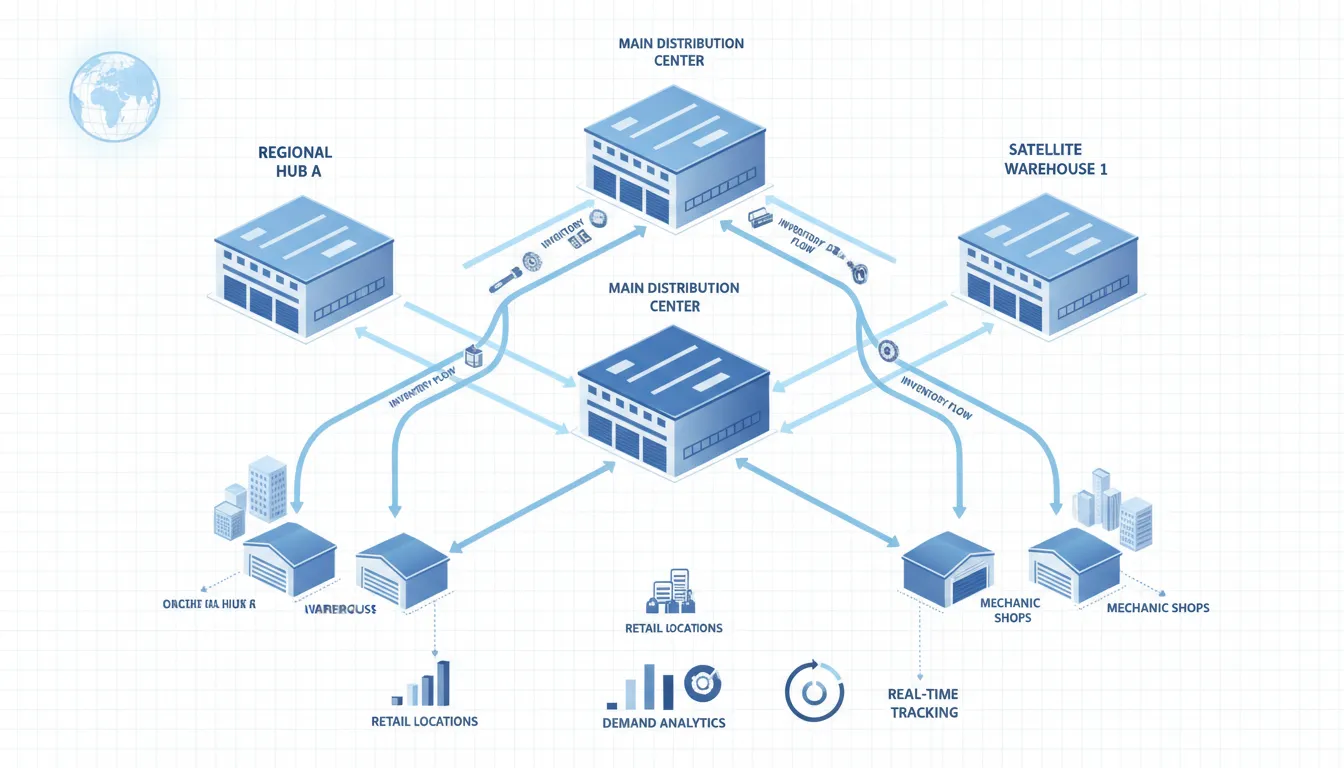

Tire distributor backorder management works best when every unavailable item has a clear status, owner, customer update, and next review date. A consistent process helps purchasing, sales, and warehouse teams work from the same facts instead of making separate promises. This buyer framework explains how to build that process and what to verify when evaluating distribution software.
What should a tire distributor backorder process accomplish?
QBC Systems has served distributors since 1978, and a useful backorder process starts with operational clarity rather than a software label. The team should be able to answer four questions for every open item: what is unavailable, what is the latest credible supply information, what does the customer want to do, and who will take the next action?
A backorder is not simply a line marked “out of stock.” It is an unresolved commitment. One order may include available tires ready to ship and another size or brand that cannot be filled yet. If the status is vague, a customer may expect the complete order, while a warehouse prepares a partial shipment and purchasing assumes sales will handle the update.
Set a small number of explicit statuses that match your operation. For example, a team might distinguish an item awaiting supplier confirmation from one with a supplier-reported date, one approved for partial shipment, or one the customer has asked to cancel. The labels should be understandable to staff and should describe the current condition, not promise a result.
- Visibility: Staff can identify open backorder lines and their latest notes without relying on one person’s inbox.
- Ownership: Each line has a named role or person responsible for the next check or customer contact.
- Choice: The customer can confirm whether to wait, accept an agreed substitute, split the shipment, or remove the line.
- Review: Old or changed commitments surface for follow-up instead of remaining open unnoticed.
These are process goals, not assumptions about a particular software feature. A distributor evaluating tire distributor ERP software should test the complete backorder scenario in a demonstration, including the information staff can see and the steps they must take.
Make the boundaries of the process clear, too. A supplier’s estimate is information to review, not a delivery promise from the distributor. A stock balance is not necessarily available for a particular order if another commitment, location, or operational constraint affects it. These distinctions help staff give customers useful choices without speaking beyond what the business can confirm.
How should staff record and confirm an unavailable tire?
QBC Systems recommends treating the first status update as a fact-checking step: record what is known, identify what is not known, and avoid turning an estimate into a commitment. A disciplined record gives the next employee enough context to continue the work without reconstructing the conversation.
- Confirm the order line. Check the requested tire details, quantity, customer, ship-to location, and requested timing against the order. Resolve any mismatch before changing the line’s status.
- Check the relevant inventory picture. Review the locations and quantities your business considers available, including stock that may already be allocated or committed. Do not treat a system quantity as available-to-promise until your team has established what it means.
- Ask purchasing or the supplier for an update. Record the source and time of the information. If there is no confirmed date, mark that plainly rather than inserting a guessed arrival date.
- Record the customer’s preference. Note whether the customer wants to wait, take an approved alternative, receive available items first, or cancel the affected line. Confirm the decision before changing the order.
- Assign the next action and review date. A supplier follow-up, customer update, or inventory recheck needs an owner and a date. Update the record when new information arrives.
Keep the record concise but useful. Capture the requested item, outstanding quantity, known supplier status, latest date information and its source, customer instruction, owner, and next follow-up. Make changes visible to the people who handle order entry, purchasing, customer service, and warehouse work.
Use a concrete example when setting expectations with the team. Suppose an order requests 20 tires, 12 are ready at the assigned warehouse, and the supplier has given an unconfirmed estimate for the remaining eight. The record should separate the quantity ready now from the delayed balance, identify the estimate as such, and note whether the customer has approved a split shipment. If the customer has not yet decided, the order should not imply that either a partial shipment or a substitute is authorized.
Agree on what counts as a meaningful update. A note that says “called supplier” does not tell the next person whether anything changed. Better notes identify the contact or source, the date of the check, the answer received, and the next planned action. When the supplier’s estimate changes, preserve the fact that it changed and update the customer-facing information; overwriting the old date without context can leave colleagues unable to explain earlier communication.

For distributors managing stock across facilities, the process should specify which location is being checked and whether a transfer is a realistic option. A guide to multi-location tire inventory and a separate look at warehouse-to-warehouse tire transfers can help frame those operational questions. A transfer should not be presented to a customer as confirmed until the distributor has checked the stock and its ability to move it.
How should a distributor prioritize open backorders?
QBC Systems advises distributors to use visible, consistently applied rules rather than letting the loudest request determine the sequence. Prioritization should respect customer commitments, order facts, and the limits of available stock. The exact rules belong to each distributor; document them so staff make similar decisions across shifts and branches.
Possible factors include the age of the open line, the customer’s requested timing, whether the rest of the order is waiting on it, the quantity available to allocate, and any existing allocation or service commitments. If the business uses account-specific terms or other priority rules, staff should follow the approved policy and have a route to resolve exceptions.
| Situation | Useful next step | What to communicate or record |
|---|---|---|
| No confirmed supply date | Request an update from the appropriate purchasing contact and set a follow-up date. | State that timing is unconfirmed; record who will check again and when. |
| Supplier has provided an estimate | Verify when the estimate was received and whether it has changed before relying on it. | Label it as an estimate, note its source, and avoid presenting it as a guarantee. |
| Some lines are ready, one line is delayed | Ask whether the customer prefers a partial shipment or to wait for a combined order. | Record the customer’s choice and any operational decision about shipment handling. |
| A possible substitute is available | Check that the proposed alternative is appropriate and obtain customer approval. | Record the exact approved item and quantity; do not substitute silently. |
| Open line is aging without progress | Escalate for a fresh supplier check and contact the customer with current options. | Log the escalation, updated facts, and next decision point. |
These are decision prompts, not universal priority rules. For example, an old line is a reason to review it, but not necessarily a reason to allocate scarce stock ahead of every other order. A distributor should define who can approve exceptions and how allocation decisions are recorded.
It also helps to separate the trigger for review from the decision to allocate. An aging order might trigger a new supplier inquiry or a customer check-in, while allocation still follows the distributor’s documented rules. If only part of a replenishment arrives, staff need to know whether the business allocates by order date, customer commitment, line quantity, or another approved consideration. The chosen policy should be understandable to the people applying it and consistently recorded when an exception is made.
Review exceptions with enough context to learn from them. If a line repeatedly misses its follow-up date, ask whether ownership is unclear, supplier updates are difficult to obtain, or the review interval does not fit the purchasing cycle. If customers often decline partial shipments, consider whether the team is asking the preference early enough. The purpose is not to impose one rule on every order; it is to make the reason for each decision visible.
How can teams communicate delays without overpromising?
QBC Systems encourages plain, timely communication that separates confirmed facts from estimates. A customer update should explain what is affected, what is currently known, which choices are available, and when the distributor will check again.
Use a repeatable message structure. Identify the order line and quantity; say whether an arrival date is confirmed, estimated, or unknown; offer only options the operation can support; and ask the customer to confirm a preference when needed. Then record the update and any response where colleagues handling the order can find it.
A concise update might say: “The requested quantity of this tire is not available for the order. We do not yet have a confirmed replenishment date. Would you prefer to wait while we check again on [date], discuss an alternative, or ship the available lines separately?” The bracketed date should be set by the team based on its follow-up plan, not copied as a promise.
Match the channel and detail to the customer relationship, but keep the essential facts consistent. A phone conversation may settle a preference quickly; the order record should still capture the decision and the time of the call. If another employee later sends a written update, that record helps prevent a different option or date from being presented as agreed. For customers who need to decide with colleagues, give them the current facts and a practical point for the next update rather than implying that an estimate is certain.
For orders entered through a customer portal or handled by sales staff, ensure that internal notes and customer-facing status do not contradict each other. A B2B tire wholesale ordering process should be evaluated with this handoff in mind: what can customers see, what requires staff confirmation, and how does the distributor keep the order record current?

What should buyers test in distribution software?
QBC Systems builds vertical-market ERP solutions for distribution, including TireServ for tire and automotive supply distributors. A buyer should verify backorder handling against actual orders and staff roles, rather than infer a capability from a product category or feature list. QBC’s TireServ overview is a starting point for understanding its tire distribution focus; the questions below help structure a product conversation.
- Can staff find open order lines by status, customer, location, or follow-up date in the way your team needs?
- Can users distinguish confirmed supply information from estimates and see when information was last updated?
- How does the system show inventory across the locations relevant to the order, and how are commitments or allocations represented?
- What steps are available for partial fulfillment, customer-approved substitutions, cancellations, and later order updates?
- Can purchasing, order entry, customer service, and warehouse staff see the notes and actions they need while respecting their roles?
- What customer-facing information appears in a B2B portal, and what remains subject to staff confirmation?
- Which reports or inquiries help managers review aging backorders, and can the team act on the resulting list?
Use a realistic test order: several lines, one unavailable size, a supplier estimate that later changes, a customer requesting a partial shipment, and stock at another location that may or may not be transferable. Ask the vendor to demonstrate each change and show how the revised facts reach the staff involved. QBC product materials describe TireServ capabilities that include inventory, purchasing, orders, reporting, and a B2B customer portal; the specific backorder scenarios above should still be confirmed directly during evaluation.
Go beyond the ideal path. Ask the vendor to show what happens when a supplier date is withdrawn, a customer changes a decision, a partial quantity arrives, or a staff member discovers stock is committed elsewhere. Look for the actual steps users take, the information they can retrieve afterward, and what must be handled outside the system. A clear answer may include a manual approval or follow-up step; the important thing is to identify it and decide whether it fits the operation.
Also examine adjacent workflow needs. A distributor may want to understand its tire distributor order and point-of-sale workflow, how warehouse order management connects with order status, or how its wider wholesale distribution ERP requirements fit together. Keep the evaluation focused: test the steps that matter to your own operation, not an assumed feature checklist.
How can you put this framework to work?
QBC Systems recommends beginning with a sample of real, recently delayed order lines and tracing each from the first stock check to its resolution. Note where information lives, how long an update takes, which handoffs fail, and what customers are told. Then agree on status definitions, ownership, follow-up timing, and the authority needed for substitutions or allocation exceptions.
Use the review to create a simple workflow map, not a large policy document that staff will not consult. For each point in the order’s path, write down the current status, the responsible role, the information that must be recorded, and the next decision or check. Walk through one resolved order and one still-open order with purchasing, customer service, and warehouse colleagues. Their differences often reveal where a label or handoff is unclear.
Use the findings to compare the current process with the one you want. If evaluating a system, bring the workflow map and sample orders to a demonstration. QBC Systems has supported distribution businesses since 1978; its company background and ERP guide for distributors provide additional context for a conversation about fit and implementation.
Contact QBC Systems to discuss your workflow
Frequently asked questions
QBC Systems offers distribution-focused ERP solutions, but each distributor should confirm how a proposed process fits its own operating rules and software configuration.
Should a distributor promise a supplier’s estimated arrival date?
No. Make clear whether the date is confirmed or estimated, record its source and when it was received, and update the customer if it changes. If the supplier has not provided a reliable date, say that it remains unknown and give the customer a date for the next update instead.
Should available lines ship before the backordered tire arrives?
There is no single answer for every order. Ask the customer whether a partial shipment is useful, check that the distributor can support it, and record the agreed approach before changing fulfillment plans.
Can a tire distributor substitute another size or product automatically?
A distributor should not assume that a substitute is acceptable. Confirm that the alternative is appropriate under the business’s process, obtain the customer’s approval, and record the exact item and quantity authorized.
What is the first software test for backorder handling?
Start with one realistic order containing available and unavailable lines. Test how staff record the supplier status, follow up, communicate choices, capture the customer’s decision, and keep related teams informed. Verify specific functionality with the vendor rather than assuming it from a general inventory or ERP description.
A backorder is easier to manage when its facts, owner, customer decision, and next review are visible in one repeatable workflow.