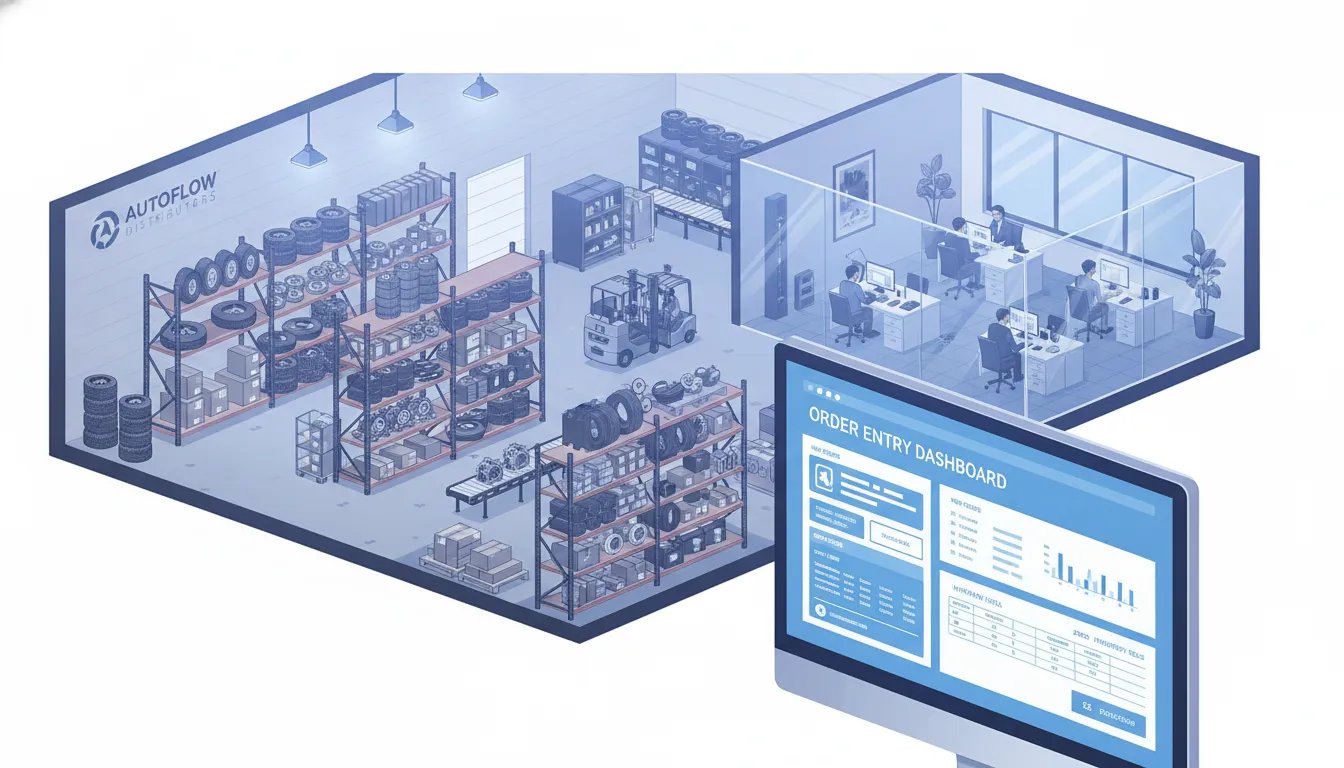
The average car on the road today is over twelve years old and requires more repairs than ever. This trend puts pressure on auto parts distributors to fulfill orders faster without making costly shipping errors. Efficient sales workflows are now a necessity in this market.
Auto distributor order entry is the process of taking customer parts requests and turning them into warehouse picking tasks. This workflow must be fast to handle a growing number of parts. According to a 2025 report from KPMG, the U.S. auto parts market is set to reach 325 billion dollars by 2029. This growth means your team will manage more parts and higher sales soon.
Top distributors use specific ERP software to run these steps. This software links inventory, pricing, and shipping into one system. This helps your staff avoid the mistakes that happen with manual logs. By using a digital system, you ensure that every part reaches the customer on time and every sale remains profitable for your business. Schedule a Demonstration with QBC Systems today.
Relying on manual speed often leads to costly errors and frustrated customers. Acknowledging these risks is the first step toward building a more profitable warehouse for your team. You can start this journey by learning Why Order Entry Efficiency Matters for Auto Distributors.
Why Order Entry Efficiency Matters for Auto Distributors
The US automotive aftermarket is growing fast. A KPMG 2025 report shows the market will grow from $232.7 billion in 2024 to $324.7 billion by 2029. This is a 7.3% yearly growth rate. For an auto distributor, this growth brings both more sales and more work. If your auto distributor order entry process is slow, you might miss out on these new sales. Old ways like phone calls and paper forms cannot keep up with this pace.
Rising vehicle age and parts demand
People are keeping their cars for a longer time. The average age of a vehicle in the US rose from 12.1 years in 2021 to 12.6 years in 2024. Experts think this will hit 15.4 years by 2030. Older cars need more repair parts and more upkeep. This trend keeps the demand high for aftermarket parts. According to the KPMG 2025 report, this aging fleet is a big driver for market growth. Distributors must handle more parts for more car models than ever before.
The cost of manual order errors
Manual order entry is hard for auto parts teams. They deal with high SKU counts and complex fitment data. When a team types in orders by hand, they make more mistakes. These errors lead to wrong parts being sent and more returns. For a wholesale business, a return costs much more than the first sale. Using a wholesale distribution platform helps stop these errors. It links your sales team to your stock and fitment data.
SKU complexity and core tracking
Auto parts are not simple items. Distributors must track cores for rebuilt parts and handle many unique part numbers. Labor gaps make this work even harder. If you do not have a smart system, your team will spend too much time on simple tasks. Big firms like Advance Auto Parts move to single systems to stay fast. Modern tools help you manage hardware and managed IT services that keep your data safe and your orders moving.
What Makes Auto Distributor Order Entry Unique
Automotive parts distribution moves at a different pace than most other fields. While a general firm might track basic stock counts, an auto parts distributor must manage deep technical data for every item. The complexity of auto distributor order entry stems from the need to match the right part to the right car on the first try. Standard software often fails to handle these niche needs, which leads to high return rates and lost sales.
Managing Fitment and High SKU Counts
The primary challenge in auto parts sales is fitment data. A single brake pad might fit many vehicle models across several years. It might also only fit a specific trim level. Distributors deal with thousands of SKUs that need year, make, and model lookups to stay exact. This complex data makes parts expertise a key role in the workforce. Systems must handle these high volumes across many sites to give real-time stock levels for every place.
Core Tracking and Remanufactured Parts
Unlike simple goods, many auto parts use a core charge. When a client buys a rebuilt part, like a starter, they must return the old unit to get a credit. Managing these returns needs a system that can track cores through the full sales cycle. Order entry tools must link the core fee to the sale. They must also check the status of the return to keep the books clean. Without this link, firms risk losing money on cores or giving poor service to their buyers.
Tiered Pricing and Customer Visibility
Pricing in the auto market is rarely a single fixed number. Distributors often use tiered pricing models based on shop type or local market needs. Good order entry software lets staff see specific price levels right away during a quote. This level of detail is also vital for the ShadowERP wholesale distribution platform and tools that manage B2B links. Giving buyers real-time looks at their own prices through a portal helps save time and speeds up the shipping cycle.
Key Features to Look for in Order Entry Software
Auto parts sellers deal with high SKU counts and complex data every day. To stay ahead, you need a tool that does more than just record sales. The right software links your whole shop to one source of truth. You should look for specific parts that help your team work fast and cut down on data errors. A strong system will handle everything from fitment data to core tracking without missing a beat. This ensures that every order is accurate from the start.
Real-time view and database sync
Modern tools use one database to link your stock, prices, and books. This TireServ ERP method stops your staff from typing in the same data twice. When someone enters a sale, your stock levels update across all locations right away.
You should also look for shortcuts that suggest add-ons or other parts during the sale. Smart tools can even track lead times and past use to help you stay ahead of low stock. These shortcuts help your team handle high volumes of orders with fewer clicks. By linking stock and pricing, you ensure that every salesperson gives the right quote every time.
Self-serve tools and field mobility
Field sales teams need to stay in touch with the home office at all times. A good mobile app lets them check stock and enter quotes directly from their phones or tablets. This keeps your data fresh and helps the back office work in sync with the road team.
You can also give your dealers 24/7 access with a B2B web portal. One study from Tireweb showed that these portals can cut dealer phone calls by 42% in just 90 days. This lets your team focus on closing big deals instead of answering simple stock questions. Dealers like the ability to check their own specific pricing and stock levels at any time of day.
Multi-warehouse and pricing control
If you have more than one site, you need strong multi-warehouse support. The software must track stock at each place and handle price changes for all sites at once. Look for tools that manage rebates and special tiered pricing for different dealer groups. This helps you keep your profit margins safe even as your business grows.
Linked systems also help with automatic purchase order creation when stock gets low. A system that grows with you will save you time and money as your needs change. This level of control is vital for managing the complex needs of a growing auto parts business.
Detailed reporting and error reduction
Accurate data is the key to a smooth order process. Look for software that offers a wide range of reports to track your sales trends and stock levels. With over 150 standard reports, focused systems help you see which parts move the fastest and which ones sit on the shelf. This data lets you adjust your buying habits to save money and space.
Automated checks during order entry also help catch mistakes before they ever hit the warehouse floor. By catching these errors early, you reduce the high cost of shipping the wrong parts. This leads to much happier customers and a more efficient team overall.
| Factor | Manual order entry | Automated order entry |
|---|---|---|
| Data entry speed | Minutes per order with rekeying | Seconds with one-click processing |
| Error rate | High due to manual typing and phone orders | Low with automated system checks and validation |
| Inventory visibility | Delayed updates across spreadsheets | Real-time across all warehouses |
| Customer pricing | Manual lookup of price sheets or tiers | Automatic application of tiered pricing rules |
| Order-to-fulfillment time | Hours to days with manual handoffs | Minutes with integrated warehouse flow |
How TireServ Streamlines Order Entry for Tire and Auto Distributors
Auto parts sales need tools that handle high part counts and complex data. TireServ ERP is built just for tire and auto supply distributors. It swaps slow manual work for a fast digital flow. The system uses one database to link your sales, stock, and book teams in real time.
Fast sales order tools
The heart of the system is a strong sales tool that tracks quotes and orders in one place. It uses a top-tier search method to help staff find parts and check fitment fast. When a buyer is ready, staff can turn a quote into a live order with one click. This saves time and stops mistakes from typing the same data twice.
- A customer requests a part via phone, web portal, or mobile app.
- Staff use TireServ’s inquiry method to search fitment by year, make, and model.
- The system displays real-time stock levels across all warehouses with the customer’s tiered pricing.
- The sales rep creates a quote or converts the search into a live sales order.
- Order data flows directly to warehouse picking lists and updates inventory, AR, and GL in one step.
The software also tracks deals and rebates as you work. This keeps every price right for every buyer. You can set price tiers based on how much a client buys or their past sales. These tools help staff close deals fast while keeping profits safe. Auto checks verify that parts are in stock before you finish the order.
Multi warehouse stock and new orders
Most auto firms run more than one site. TireServ tracks stock across many sites at once. If a part is not at one shop, the system finds it at another. This full view helps you fill orders you might have missed. It also tracks the cost to move parts between shops to keep your profit data clear.
Smart tools help you keep the right stock levels to meet need. The system uses past sales and lead times to show what to buy next. This keeps you from running out of top parts or buying too many slow parts. Good systems cut errors by linking stock to the order screen. As noted by the National Institute of Standards and Technology, a strong supply chain needs live data to cut costs.
Web and mobile orders
Your buyers want to order parts at any time. TireServ has a web portal that stays open all day and night. Clients can log in to see their own prices and live stock. They can place orders from their shop without a phone call. This lets your sales team focus on new leads and big accounts.
For sales reps in the field, a mobile app gives full access to the main system. It works on phones and tablets so reps can check stock and enter orders while at a client site. This live link means orders reach the warehouse right away. With over 150 reports, you can track sales and stock from any device. These tools ensure your hardware and managed IT services support a fast flow for every user.
Reducing Order Errors with Integrated Data
Manual order entry often leads to mistakes that cost time and money. When an auto distributor uses separate systems, data must move by hand. A clerk might copy facts from a phone call to a sheet and then to a bill. This path creates many spots where errors can happen. Using one system on a single database removes these gaps. It ensures that every part of your firm sees the same facts at the same time.
Real Time Inventory and Price Sync
One common error for auto parts firms is selling items that are not in stock. This happens when the sales tool does not talk to the warehouse right away. Modern ERP tools provide a single database where stock counts update the moment a sale occurs. This sync stops you from selling what you do not have. It also ensures that TireServ ERP for tire and automotive supply distributors puts the right price on every quote.
Price mistakes often come from old lists or manual deals. Integrated systems use set rules to apply the right rates for each buyer. This includes tracking sales and rebates so that every deal is correct. When pricing is set by the system, your sales staff can focus on the buyer. They no longer need to check old sheets for the latest price changes.
Removing Manual Data Tasks
Shared data links sales, buying, and books into one flow. In a split setup, a clerk might type the same order facts three times. Each time they type, the risk of a typo or a wrong part code grows. As noted in industry research from the National Institute of Standards and Technology, firms in the automotive supply chain use integrated systems to fix slow, manual steps. A linked system pulls data from the first order right into the books and the warehouse pick lists.
This flow also helps with buying new stock. When your stock runs low, the system can use your sales facts to create new buy orders. This stops gaps in your supply chain without the need for hand counts. By keeping your books and sales facts in one place, you make sure that every bill matches the goods sent.
Support for Data Accuracy
A good system needs more than just software. It needs a firm base to keep data moving. Slow networks or server trips can lead to lost data. Using hardware and managed IT services ensures your system stays online. When your team has the right tools, they can handle many parts with fewer errors and more speed.
Mobile and B2B Portal Capabilities for 24/7 Ordering
Most tire and auto parts shops do not keep nine-to-five hours. To keep sales moving, you need to offer 24/7 ways to buy. Modern auto distributor order entry tools let your customers check stock and buy parts at any time. This shift helps your team spend less time on the phone. By using a B2B portal, some firms see a drop in phone orders of about 42% in just 90 days. This gives your staff more time for other big tasks.
Self-service with B2B portals
A B2B web portal acts as a storefront for your wholesale firm. Your customers can log in to see their own pricing and check live stock levels. They can place orders without waiting for a sales rep to pick up the phone. This link between the portal and your back office keeps stock levels right. It also stops people from having to type in data twice. This helps to end simple errors that can ruin a sale.
Good portals do more than just help with a sale. They let shops see past orders and track their items. TireServ’s mobile order entry capabilities include a web tool that connects to your main database. This means a customer sees the same price on the portal that they would get over the phone. This clear view builds trust. It also makes it much easier for shops to do business with you at any hour.
Mobile tools for field sales
Sales reps who visit shops need live data too. A mobile app for field sales lets them make quotes and enter orders while at a shop. They can use tablets or phones to check stock across many sites. If one warehouse is out of a part, they can see if a near site has it. This helps them close a deal right then and there. It keeps the customer happy and ensures you do not miss a sale.
These mobile tools sync with the back office fast. When a rep sends an order from the field, it goes right into your system to be packed. This speed is a must in the auto parts trade. These apps use strong data safety rules to keep your facts secure. They give your team the power to work from anywhere. This level of access helps your team sell more when they are on the road.
Measuring Order Entry Performance with Reporting
Tracking the right data is the only way to improve how your business handles sales. For an auto distributor, order entry speed and accuracy directly affect your cash flow. If you do not measure your current output, you cannot find the spots that slow down your team.
Using standard reports to find gaps
You need a system that gives you a clear view of every deal. TireServ includes more than 150 standard reports and inquiries to help you watch your shop. These tools let you see which orders take too long to fill or where errors happen most often. Having this data in one place helps you make better choices about your warehouse staff and stock levels.
The scale of the tire market shows why good data matters so much. Top industry players like ASA Auto serve over 3,200 dealers and hold a large market share. To compete at this level, you must use reporting to track how fast you fill orders. Cutting the time it takes to move an order from the phone to the loading dock is key to staying ahead.
Key metrics for distribution growth
Focus on a few main goals to see the best results. You should track your order accuracy rate and your ratio of phone orders to web sales. Moving more customers to a web site can cut down on typing errors. The US automotive aftermarket is expected to grow by about 7.3 percent through 2029 according to market data from KPMG. This growth means you will likely handle more parts and higher volumes each year.
Better reporting also helps you manage stock across many warehouses. You can use reports to track deals and rebates at different spots. This ensures your sales team always gives the right price to every customer. When you have full service hardware and managed IT services to back up your ERP, your reports will always be ready when you need them.
Frequently Asked Questions
How does automated order entry help auto parts distributors?
Automated order entry cuts down on manual mistakes and speeds up your work. It links sales orders directly to your inventory and accounting systems. This stops the need to type the same data into multiple screens or spreadsheets. According to KPMG, the US auto aftermarket is growing fast. Using software to manage orders helps you keep up with this growth. You can ship parts faster and keep your customers happy without adding more office staff.
What features are best for auto distributor order entry software?
You should look for real-time inventory views across all your warehouses. Good software like TireServ ERP offers customer-specific pricing and mobile tools for field sales. A B2B web portal is also vital so your customers can place orders any time of day. Other key tools include automated purchase orders and core tracking for parts. These features help you manage high volumes of parts and complex data without losing track of your stock or your profits.
Can order entry tools work with my current accounting system?
Modern ERP systems for distributors often have order entry and accounting built into one database. This means you do not have to link two separate systems. When you take an order, it updates your general ledger and accounts receivable right away. Using a single platform like ShadowERP ensures your data is always accurate. You save time because you do not have to fix errors between different programs. This makes your whole business run more smoothly.
Why is vehicle age important for auto parts distributors?
The age of cars on the road directly affects how many parts you sell. Data from KPMG shows the average vehicle age in the US has reached 12.6 years. Older cars need more repairs and replacement parts. This trend creates a big chance for distributors to grow. Efficient order entry software helps you handle the higher volume of requests for these parts. You can quickly find the right fitment and get the parts to your customers when they need them most.
Ready to optimize your order entry process?
Slow order entry does more than just stress your team. It creates a block that limits how much your business can grow each year. If your staff spends hours on hand data entry and fixing small errors, they cannot focus on building better bonds with your accounts.
Every minute lost to a poor system is a minute your team is not selling or helping a client move their stock. The longer you wait to fix these gaps, the more your business falls behind others who use new tools to move much faster.
Starting now means you can stop the cycle of errors and start seeing real results in your warehouse in just a few weeks. A small shift in how you handle orders today will lead to much larger gains in the long run for your whole company.
Ready to take the next step? Schedule a free consultation to see how we can help you thrive.
