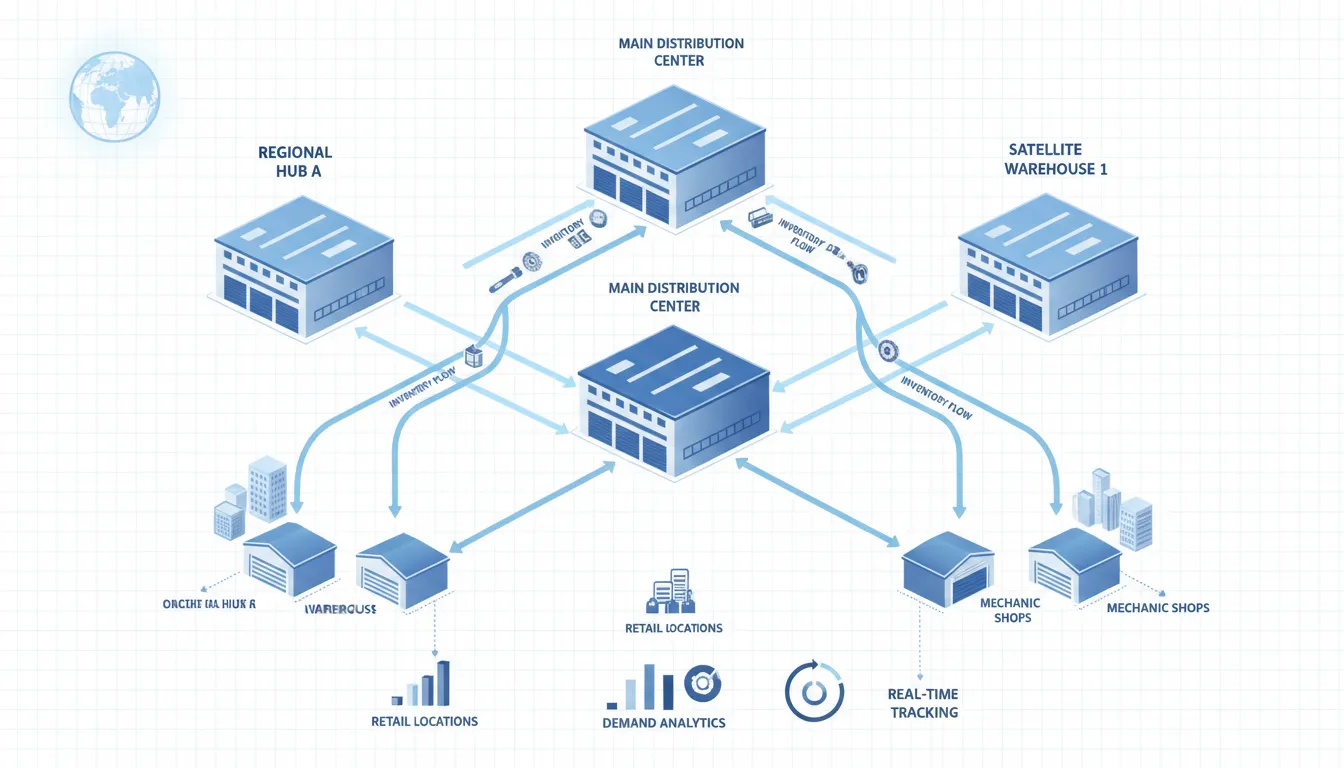
Auto parts distributors lose thousands in sales every year because they cannot see stock across their own branch hubs. Those blind spots slow down your team and frustrate customers waiting for parts.
Auto distributor inventory software syncs stock levels across every branch, warehouse, and region in real time. It stops overstocks and shortages by giving each site the right parts at the right moment. Ready to fix your inventory? Contact QBC Systems for a free consultation
Understanding how these tools eliminate blind spots is the first step to building a stronger tire wholesale and distribution ERP network. Here is how the right system tracks and moves your inventory across every location.
What Is Auto Distributor Inventory Software?
Auto distributor inventory software is a purpose-built platform that tracks auto parts and stock across multiple branch sites. It gives teams one unified view of their inventory so they can fill orders faster and with fewer errors. Unlike generic inventory tools, these systems manage the high volume of part numbers and fitment data unique to the automotive aftermarket.
To see how a tailored system can help your operation, schedule a demo today.
Beyond Basic Stock Tracking
Generic stock trackers are not built for the complexity of an auto parts distributor with multiple locations. Auto distributor inventory software handles multi-step order fulfillment across branch sites and regional hubs. It tracks part numbers, fitment data, supplier lead times, and core charges so warehouse teams always know what is on hand and where it sits.
A proper system handles tasks that basic spreadsheets cannot:
- Real-time stock counts across multiple states or regions.
- Tracking of core charges and warranty returns for auto parts.
- Automated reorder points based on each branch’s local sales history.
Many distributors pair their inventory software with a tire wholesale and distribution ERP to connect the sales desk with the warehouse floor. That link ensures sales reps never promise parts that are committed elsewhere, creating a seamless flow from order entry to the loading dock.
Closing Visibility Gaps
Visibility gaps are the root cause of stockouts and excess inventory at multi-location firms. When teams work from spreadsheets or disconnected systems, they either run out of fast-moving parts or carry too much slow-moving stock. Research from MIT’s Center for Transportation and Logistics shows that inventory software helps firms optimize stock levels across multiple warehouses to reduce carrying costs. Real-time visibility gives managers the data they need to make informed allocation decisions.
Clear inventory data also supports site-specific stocking strategies. One branch may sell more brake rotors, while another moves more batteries. The software identifies those trends and helps each location carry the right mix without manual analysis. Closing these gaps improves fill rates, keeps customers satisfied, and reduces expensive last-minute supplier orders for tire and automotive supply distributors.
The Role of Cloud Scalability
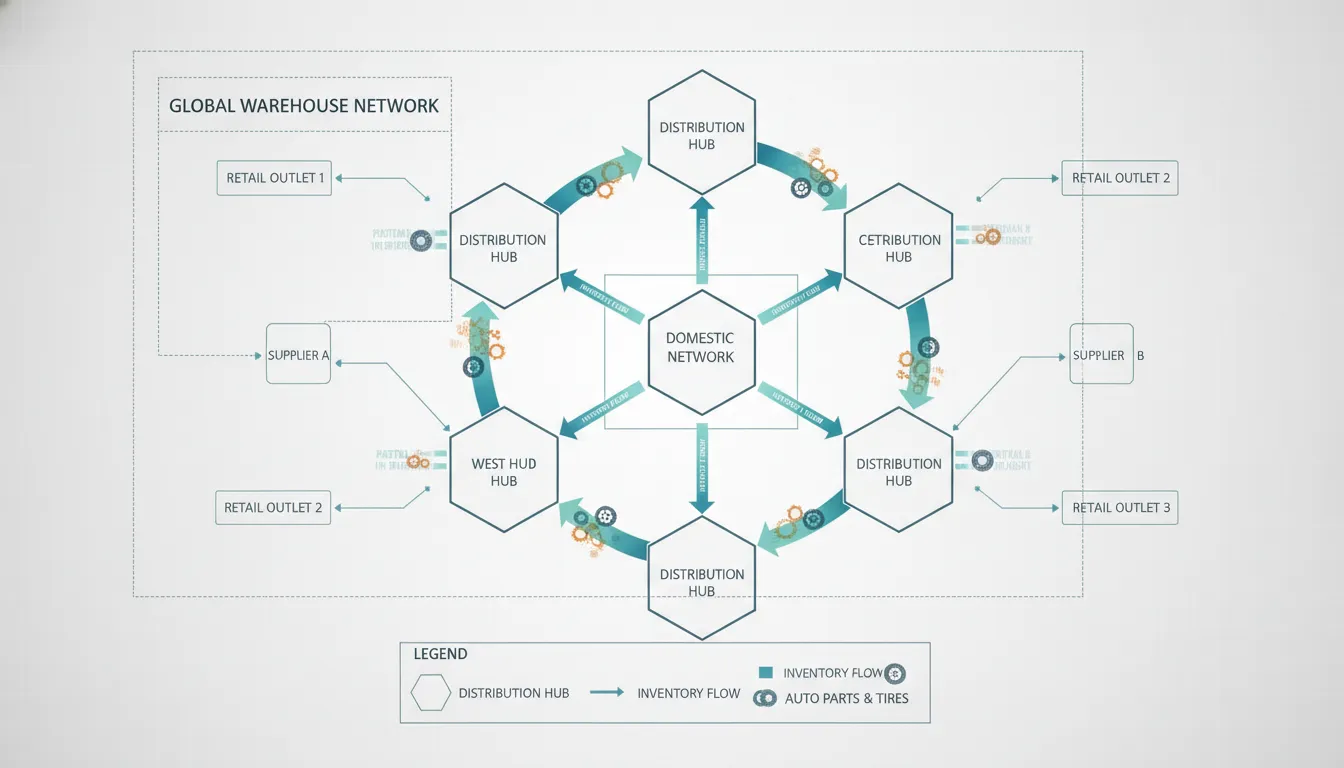
Cloud-based inventory platforms give multi-location distributors better flexibility than on-premise legacy systems. They let warehouse staff sync stock data from the floor directly to the central office, removing manual keypunch errors and stale spreadsheets. Cloud systems also scale naturally as you acquire new branches or expand into new regions. A cloud foundation lets ShadowERP for multi-warehouse operations give you a single source of truth for inventory, purchasing, and fulfillment. Since 1978, QBC Systems has helped distributors deploy the right technology stack to stay competitive without requiring large IT overhauls at each new location.
Why Multi-Location Inventory Management Matters for Auto Distributors
Managing parts across a dozen branch locations is one of the hardest operational challenges auto distributors face. You must know what you have and where it is at all times or risk losing sales to faster competitors. Industry surveys highlight this urgency: Deloitte reports that 86% of manufacturers are investing in digital tools to improve supply chain visibility and de-risk their operations. For automotive parts distributors, that means connecting every warehouse to one trusted source of truth. Schedule a consultation today to see how we link your warehouses into a single system.
How can you stop overstocks and shortages?
A connected inventory system lets you transfer stock proactively between locations. If one branch is overloaded with a specific part while another is running low, you can rebalance without placing a new purchase order. That transfer preserves working capital and reduces the cost of carrying excess inventory. Using a platform such as ShadowERP for multi-warehouse operations, you can see and execute those transfers in real time.
A centralized view also supports demand planning. By tracking sell-through rates at each branch, you can set optimal min and max levels per location. Simulators from MIT’s supply chain lab help firms identify the safety stock levels that prevent stockouts without tying up cash. The same principle applies across every auto parts branch in your network.
How does real-time sync prevent overselling?
If you sell through an online storefront, over-the-counter retail, and wholesale channels simultaneously, your inventory data must be synchronized in real time. Without live sync, you risk promising parts that just left on a delivery truck or are committed to another customer. Modern auto distributor inventory software updates stock counts the instant a transaction occurs, regardless of which channel triggered the sale.
This real-time accuracy protects your brand. When customers receive the exact parts they ordered on time, they trust you with repeat business. QBC’s automotive supply chain software provides the synchronization layer that keeps every sales channel aligned with actual warehouse inventory.
Key Features of Auto Distributor Inventory Software
Not all inventory systems cover the same ground. Here are the features that matter most for auto distributors with multiple locations.
Real-Time Stock Visibility
A live dashboard showing stock levels at every branch is the foundational feature. Without it, you operate on guesswork. The best systems provide drill-down views so you can see total quantity across the company, stock by region, or available units at a specific location. This visibility lets warehouse managers rebalance inventory before a problem reaches a customer. Talk to a QBC specialist about real-time visibility for your branches.
Automated Reordering
Manual purchase orders are slow and error-prone for a distributor managing thousands of SKUs. Automated reorder rules, based on each location’s historical demand and lead times, generate purchase suggestions or direct orders when stock dips below a configurable threshold. The system accounts for each branch’s unique velocity so high-turn items like oil filters are replenished faster than slow-moving specialty parts. SimplyDepo notes that field teams using manual processes face significant hurdles in maintaining accurate fill rates across different sites.
Integration with ERP Systems
Inventory software on its own solves the stock-tracking problem, but integration with a full ERP unlocks purchasing, accounting, and order management in one workflow. QBC’s ShadowERP platform connects inventory data with your general ledger, accounts payable, and customer order history. That integration means a stock receipt automatically updates the balance sheet, and a customer invoice decrements the correct branch’s inventory count without manual intervention. The same integration extends to BeautyServ for beauty supply distributors and TireServ for tire and automotive supply operations.

How to Choose the Right Auto Distributor Inventory Software for Your Business
Selecting an inventory platform is a capital decision that affects your entire supply chain. Here is what to evaluate before you commit.
What should you look for in a vendor?
Start with industry fit. A vendor that understands automotive part numbering, core charges, and fitment data will save you months of configuration. Look for a partner with a track record serving wholesale distributors, not just general retailers. Ask about implementation timelines, training, and ongoing support. QBC Systems brings over four decades of experience helping auto parts distributors deploy the right technology, from hardware and networking to full ERP installations.
- Industry-specific features: part-number management, core charge handling, and multi-site transfer logic.
- Cloud infrastructure: real-time sync, automatic updates, and no on-site server maintenance.
- Integration breadth: does the system connect to your accounting software, e-commerce platform, and supplier portals?
- Scalability: can the system support 5 locations today and 20 next year without a platform migration?
How much does auto distributor inventory software cost?
Pricing varies widely based on location count, SKU volume, and deployment model. Cloud-based systems typically charge a monthly subscription per location or per user, while on-premise options involve upfront licensing and hardware costs. Implementation fees depend on data migration complexity and training needs. Rather than comparing sticker prices alone, evaluate total cost of ownership including support, upgrades, and the productivity gains from eliminated stockouts. For a detailed pricing discussion tailored to your operation, request a free consultation.
Auto Distributor Inventory Software Best Practices for Multi-Location Success
Adopting the technology is only half the battle. These operational practices ensure you get full ROI from your investment.
Standardize Your Data Entry
Part numbers, descriptions, and unit-of-measure conventions must be consistent across every branch. When one location enters “brake-pad-set” and another uses “brake pads set,” your system treats them as separate items. Define a data standard at rollout, train every location on it, and audit compliance quarterly. This discipline prevents the data-quality issues that undermine inventory accuracy.
Set up Role-Based Access
Not every employee needs to see company-wide stock levels or adjust reorder points. Assign view-only permissions to counter staff and warehouse pickers. Reserve edit access for location managers and buyers. Role-based access reduces the risk of accidental changes and provides an audit trail for inventory adjustments across your network.
Conduct Regular Cycle Counts
Even the best software depends on accurate physical counts. Schedule cycle counts at each location on a rotating basis rather than one annual wall-to-wall inventory. High-velocity items should be counted monthly; slow-movers quarterly. The system flags variances so you can investigate root causes, whether they are receiving errors, theft, or data-entry mistakes. Cycle counts keep your inventory database reliable enough for automated reordering and demand forecasting. Contact us to learn how QBC helps distributors implement inventory best practices.
Frequently Asked Questions About Auto Distributor Inventory Software
What is the difference between auto distributor inventory software and a basic ERP?
Basic ERP systems track orders and accounting but may lack the part-number depth, core charge handling, and multi-site transfer logic that auto distributors need. Dedicated auto distributor inventory software specializes in fitment data, serialized returns, and real-time stock synchronization across branch locations. Many firms use both: an ERP for financials and a specialized inventory layer for warehouse operations.
How long does it take to implement auto distributor inventory software across multiple locations?
Implementation timelines depend on location count, data migration complexity, and staff training. A single-site rollout can take 4-8 weeks, while a multi-location deployment across 10+ branches typically spans 3-6 months. Cloud-based platforms tend to deploy faster than on-premise systems because there is no hardware to install at each site. QBC Systems provides phased implementation plans that minimize disruption to daily operations.
Can auto distributor inventory software integrate with existing accounting and e-commerce systems?
Most modern platforms offer APIs and pre-built connectors for major accounting packages, e-commerce engines, and supplier portals. The key is verifying integration depth before purchasing. Surface-level integration may sync inventory counts but fail to handle purchase order matching or core charge tracking. QBC’s tire wholesale and distribution ERP provides deep integration with inventory management, accounting, and order processing in a single platform.
How does auto distributor inventory software handle returns and core charges?
Returns and core charges are common in the automotive aftermarket and must be tracked separately from standard inventory. Good software flags returned items by condition (new, rebuilt, core) and manages the financial flow of core deposits and refunds. This feature prevents core returns from being accidentally restocked as sellable inventory, protecting both your balance sheet and your customers.
Ready to Streamline Your Multi-Location Inventory?
Managing inventory across multiple branches does not have to mean managing chaos. The right auto distributor inventory software gives you visibility into every location, automates reorder decisions, and keeps your team focused on serving customers instead of chasing stock. QBC Systems has helped distributors since 1978 build the technology infrastructure they need to grow. Schedule a free consultation today to discuss your multi-location inventory challenges.
