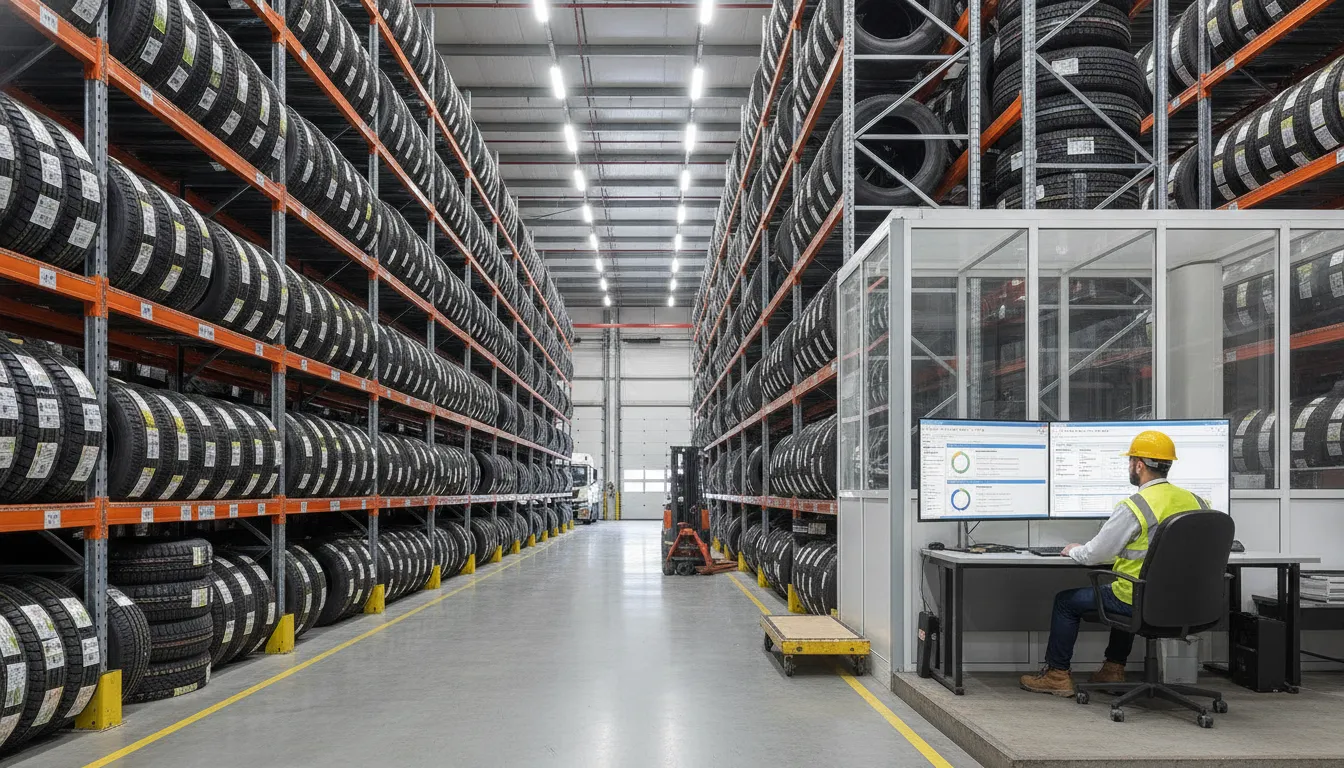
Wholesale tire distributors need special tools to manage complex stock and high volume orders. Your warehouse cannot grow if your team spends hours each day hunting for missing parts. Modern systems fix these gaps and help you scale safely.
The best tire erp software provides a complete platform to manage sales, warehouse stock, and customer data in one place. Research from Liberty University shows these tools are the main way distribution centers stay strong. QBC Systems has served the industry since 1978 and offers the TireServ ERP solution to help your business grow. This full-service approach includes the software along with tech support, hardware, and training. By using a modern system with a MySQL database, you avoid getting locked into old tools. Schedule a demo to see our tools. Choosing the right partner ensures your team has the mobile apps they need to process orders fast every day.
Every warehouse runs differently, so you need to know exactly what to look for. What Is Tire ERP Software and Why Do Distributors Need It? lays the groundwork for choosing the right system.
Best Tire Erp Software: What Is Tire ERP Software and Why Do Distributors Need It?
Tire ERP software is a tool that helps wholesale firms manage their whole business. It links sales, stock, and shipping into one system. For tire distributors, this software handles the unique needs of selling tires, wheels, and parts at scale. Having the tire wholesale ERP solutions in place allows a firm to grow without losing track of their parts.
Custom tools for tire sales
Tire sales are not like selling other goods. A single shop might stock thousands of unique items. You must track tires by brand, size, tread, and ply. A standard system often struggles with this many data points. Specific ERP software is built to handle these deep lists of parts easily. It lets your team find the right tire for a client in seconds.
Most distributors also run more than one warehouse. You need to know exactly where each tire sits. The software tracks stock across all your sites in real time. This stops you from selling a part that is not in the bin. It also helps you move stock between buildings to meet local demand.
A few key needs for tire stock tracking include:
- Tracking by size and brand.
- Managing tread and ply counts.
- Seeing stock at all sites.
- Moving parts between bins.
This level of control is a key part of cloud ERP benefits for modern firms.
Shortcomings of standard systems
A basic business system may work for simple goods. But tire wholesalers face B2B ordering needs that standard tools cannot meet. Your clients need to see their own prices and past orders. They want to buy through a web portal at any time of day. A tire ERP includes these features out of the box. It links your back office directly to your customer’s screen.
Tire sales also involve core tracking and warranties. Standard systems do not have built-in ways to manage these tasks. If you use a basic tool, your staff will have to do this work by hand. This leads to slow service and more errors. A custom tool automates these steps so your team can focus on sales.
Staying ahead in a tough market
Distribution centers use ERP systems as a primary tool to stay ahead in the market. Research from Liberty University shows that these systems are vital for a firm’s edge. Without a strong digital spine, a distributor cannot keep up with faster rivals. The best tire ERP software gives you the data you need to make smart choices.
QBC Systems has worked with the distribution trade since 1978. We know how much the industry has changed over the years. Modern tools must do more than just count boxes. They must provide a full view of your business health. Using a system built for your specific niche ensures you have the right tools to lead your market.
Essential Features Every Tire Distribution ERP Should Include
Choosing the best tire erp software starts with knowing which tools will help your team move more product. A full system should manage your work from the moment a tire enters the hub until it reaches the buyer. Distributors often need a unified setup that handles stock, sales, and client data in one place to reduce time spent looking for answers.
Advanced inventory and warehouse management
Real-time view of your stock is a must for any hub. Since tire distributors handle unique data like tire sizes and tread life, your software must track these facts across many spots. Using a system that allows for comprehensive ERP utilization helps you improve your supply chain and act faster when demand shifts.
Automatic updates to your stock levels help you avoid both low stock and overstock. This keeps your cash where it belongs and ensures you always have the right parts ready for your clients. Many teams use automotive supply chain software to link their buying and sales teams, making sure everyone sees the same numbers.
Mobile tools for field teams
Your sales and service techs need to work from any spot, not just from a desk. Specialized mobile apps allow your field team to check stock and place orders while they visit a client site. This direct access helps your team work better and makes them more helpful to the shops they serve. Having these tools on hand helps your firm keep its lead in a fast market.
Integrated B2B ordering portals
Modern tire distributors benefit from web portals that let wholesale partners place their own orders. These B2B ordering solutions make it easy for your clients to see what you have and buy what they need without a phone call. A portal also gives your buyers a place to track their claims and warranties, which builds trust and cuts down on office work.
- Point-of-Sale (POS) tools for quick counter sales.
- CRM tools to manage shop and maker relationships.
- Open-source database options to avoid software lock-in.
- Custom reports to track sales and worker output.
How Tire Distributor ERP Differs from Retail Tire Shop Software
A common mistake is thinking all tire business software is the same. While a retail shop manages service bays and single-store sales, a tire distributor has far more complex needs. Tire distribution centers rely on advanced ERP systems to stay competitive in a global market. These systems must handle high-volume wholesale orders and multi-location logistics that retail tools simply cannot touch.
Focus on wholesale and B2B commerce
Retail tire software focuses on the individual driver. It tracks vehicle history, manages bay schedules, and processes small payments. In contrast, TireServ ERP is built for the wholesale world. It manages bulk orders, customer-specific pricing, and B2B web portals where dealers place their own orders. A distributor needs to see how a price change affects a client who buys 500 tires a month, not just one person buying four.
Distributors also need tools that manage shipping routes and freight costs. While a shop just needs to know if a tire is in the back room, a distributor needs real-time visibility across multiple logistics channels and warehouses. This allows them to move stock where it is needed most before a local shop even knows they have a shortage.
Inventory depth and multi-warehouse control
The scale of inventory is the biggest split between these two types of software. A retail shop might stock a few hundred popular tires. A distributor manages tens of thousands of items across many buildings. They need to track “dead stock,” manage brand returns at scale, and handle huge shipments. Retail-grade tools often slow down or fail when asked to track that much data.
- Multi-location tracking: Move stock between many warehouses with one click.
- Bulk buying: Manage purchase orders for thousands of units at once.
- Smart reporting: See which regions are buying which treads to plan for next season.
Sales force and field tech support
Distributors have sales teams that visit shops to build ties and take orders. Retail software is meant to stay behind a counter. A true best tire ERP software option provides mobile apps for these field reps. They can check stock, view a customer’s credit limit, and place an order while at a client’s site. This keeps the supply chain moving faster than any retail system could allow.
Comparing Top Tire ERP Solutions for Distributors
Choosing the right tech for your firm depends on your clear goals and scale. While many systems focus on retail tire shops, wholesale sellers need more depth in supply chain and warehouse control. Modern supply sites rely on ERP software as their main tool to stay ahead in a fast market, according to research from Liberty University. Finding the TireServ ERP or another platform that fits your model is the first step toward long-term growth.
Selecting the Right Software for Your Model
Most tire software falls into two main groups. Retail-focused shop management tools help small service centers handle daily jobs like oil changes and tire installs. These tools are great for front-counter sales but often lack the back-office power a wholesaler needs. For larger firms, a full enterprise system is required to track stock across many states and sites. These systems must manage high-volume orders and complex shipping routes without slowing down.
If you need a deep dive into how these systems work, see our tire wholesale ERP solutions guide for more detail. Mid-market sellers often look for a full-service partner who provides the software, the hardware, and the IT support. This approach ensures your staff can focus on selling tires instead of fixing server errors. It also keeps your data safe in one system that connects every part of your supply chain.
A good system will also help you track costs and margins in real-time. This is vital when tire prices shift due to supply chain changes. Having a clear view of your profit on every sale helps you make better choices for your business. It also makes it easier to manage returns and credits with your own suppliers. Using a modern system can reduce the time your team spends searching for answers to basic questions.
Key Feature Comparison for Top Solutions
Each top solution has unique strengths for different users. Some focus on marketing tools to bring car owners back to the shop. Others build deep catalogs for service teams to quote jobs in seconds. High-volume sellers often look for open-source database options to avoid being locked into one vendor. Using a MySQL database allows you to keep your data portable as your firm grows or your needs change.
| Solution | Target Customer | Key Features | B2B Power |
|---|---|---|---|
| TireServ (QBC Systems) | Mid-market distributors | Multi-warehouse, mobile apps, CRM | Full wholesale portal and field sales tools |
| Tire Guru | Retail tire shops | Marketing tools, email reminders | Consumer marketing focus |
| Klipboard | Service dealers | Workforce speed, reports | Mobile service team management |
| HITS | Enterprise service centers | ServiceCAT with 200+ job groups | High-speed service quoting |
Comparing Operational Strengths
TireServ stands out for sellers who need to manage stock across several sites. Unlike systems built for single shops, it handles complex price groups and high-volume shipping. This full-service approach has helped firms since 1978. It gives you a single tool to manage your warehouse, your sales team, and your web portal. It also includes mobile apps for field sales reps so they can check stock and place orders from anywhere.
Other tools like Tire Guru use tech to send text and email reminders to car owners. This is very helpful for retail shops that want to boost user loyalty for services like tire rotations. Meanwhile, HITS provides 20-second quotes for repair jobs in large service centers. Their ServiceCAT tool comes with over 200 job groups already set up for fast use. Choosing the right partner means matching these features to your daily workflow and long-term business plans.
The best choice for your firm will also depend on your IT setup. Some systems need a lot of local hardware and upkeep. Others run on the cloud and take less work to maintain. QBC Systems offers a mix of software and managed IT services to fit your exact needs. This full-service model reduces the stress of managing tech so you can grow your sales. By picking a firm that handles the IT side, you make sure your tools stay up and running.
What to Look for in a Tire ERP Implementation Partner
Choosing the right software is only half of the challenge when you upgrade your distribution center. The partner you pick to lead the setup will determine how well the tool serves your team. A strong partner should act as a consultant who knows the specific workflows of a warehouse. They are not just a software vendor. Working with an expert helps reduce the time your staff spends searching for answers. It also leads to a deeper understanding of operational workflows in your facility.
Industry specific expertise
You should pick a partner with deep roots in the tire and automotive supply industry. General software teams may not know how hard it is to manage multi-brand tire stocks. They may not know the data needs of field sales teams. A partner who knows your market can find common hurdles during the data move. They will make sure your new system handles tire data from day one. This includes speed ratings and tread depths. This skill helps you avoid slow downs and ensures the software supports your daily goals.
The best partners give more than just code. They offer ERP implementation services that cover the full life of your project. This includes finding your needs, data cleanup, and support after you launch to keep your warehouse running well.
Full service capabilities
Using many vendors for your software, hardware, and network needs creates stress. A full-service partner handles every layer of your tech stack to cut this stress. This model makes sure that your servers, scanners, and network all work well to run your ERP. Since 1978, QBC Systems has used this model to give distributors one point of contact for software, training, hardware, and networking needs. This path stops the blame that often happens when a software bug and a network issue occur at once.
- On-site hardware setup and testing.
- Local area network configuration.
- Secure data center and cloud hosting.
- Managed IT services for ongoing care.
Training and support programs
Good training is the best way to get the most value from your new system. Without a plan, staff may only use a small part of the features. Training should focus on the daily tasks that staff face in the warehouse. Your partner should give clear guidance for your warehouse managers and office staff. This makes sure everyone feels sure of the new tools. Support is also vital as your business needs will change as you grow and add new spots.
How to Evaluate and Select the Best Tire ERP for Your Business
Choosing the best tire ERP software is a major move for any tire distributor. The right tool helps your team work faster and keeps your stock levels clear across many sites. A poor choice can slow down your warehouse and hurt your sales. You need a partner that offers both a strong tool and full support for your daily needs.
Check your operational needs
Start by looking at how your warehouse runs now. Many distributors find that ERP systems are the primary tool for staying competitive in a global market. You should count your sites, check your team size, and note your B2B needs. This helps you find a tool that fits your scale.
Research expert vendors
Look for vendors who know the tire industry well. General software often lacks the specific fields you need for tire sizes and brands. You should focus on names like TireServ, Tire Guru, and HITS. A good vendor should also help with your ERP implementation services to ensure a smooth start.
- List your must-have features. Identify if you need POS integration, multi-warehouse support, or a web portal for your clients.
- Find vendors with tire focus. Look for teams that have worked with tire wholesalers for decades.
- Watch a live demo. Ask the vendor to show how the tool handles your specific daily tasks and order flows.
- Verify the support model. Ensure the vendor provides training, hardware help, and technical support.
- Check industry references. Speak with other distributors to see how the tool performs in a real warehouse setting.
- Plan the data move. Ask about the path to transfer your current inventory and client data into the new system.
Compare the full service model
A great tool only works if your team knows how to use it. You should look for a partner that provides deep training and ongoing help. If you have questions about how to start, you can contact QBC Systems to learn about our consultative approach. We have helped distributors grow since 1978 with a focus on practical, day-to-day results.
Frequently Asked Questions
How do I choose the best ERP software for a tire distribution business?
Picking the right tool starts by looking at your daily work. You need a system that connects your sales data, stock levels, and warehouse tasks. According to QBC Systems, a partner who talks with you first helps make sure the software fits your unique needs. You should skip basic tools and pick a firm that gives full support. This includes training and tech help. This path lowers the risk of errors when you switch systems.
What is the best ERP software for managing multiple tire warehouses?
The best software for large scale tire distribution provides a real-time view across all locations. This allows you to track thousands of items like tires, sizes, and brands from one screen. Focused tools like TireServ ERP include multi-warehouse support and web portals for customers. These features help you manage stock and avoid selling items you do not have in house. Using a unified system reduces the need to check several programs to find one part.
Can tire distribution software handle B2B wholesale ordering?
Yes, modern systems are built to help businesses sell to other firms. High quality software provides a web portal where wholesale partners can place their own orders. QBC Systems notes that this type of B2B ordering helps distributors grow by making the buying process easier for clients. Online portals reduce the work your sales team must do by hand. This lets your staff focus on bigger tasks while your customers get the parts they need faster.
Why should a tire distributor use specialized ERP instead of generic software?
Generic software often fails to track specific tire details like speed ratings or tread life. Focused tools are built to handle these unique needs from day one. According to research from Liberty University, using a dedicated ERP is the primary way distribution centers stay ahead. These systems centralize your data for accounting and sales. This reduces the time you spend searching for answers and helps you understand how your business runs each day.
Does tire ERP software integrate with mobile devices for field staff?
Modern ERP tools offer mobile apps that help sales teams and service techs work away from the office. These apps allow field staff to check stock levels and update orders in real time. QBC Systems provides mobile access to improve how teams work in the field. This tech helps your staff give fast answers to customers while they are on site. It also stops data errors that happen when people wait to log info until they get back.
Ready to Find the Best Tire ERP for Your Distribution Business?
Running your tire business on outdated software costs you sales every day. Our team has helped distributors grow since 1978. Let us show you how TireServ ERP can streamline your warehouse, improve your B2B ordering, and give your field team the tools they need.
