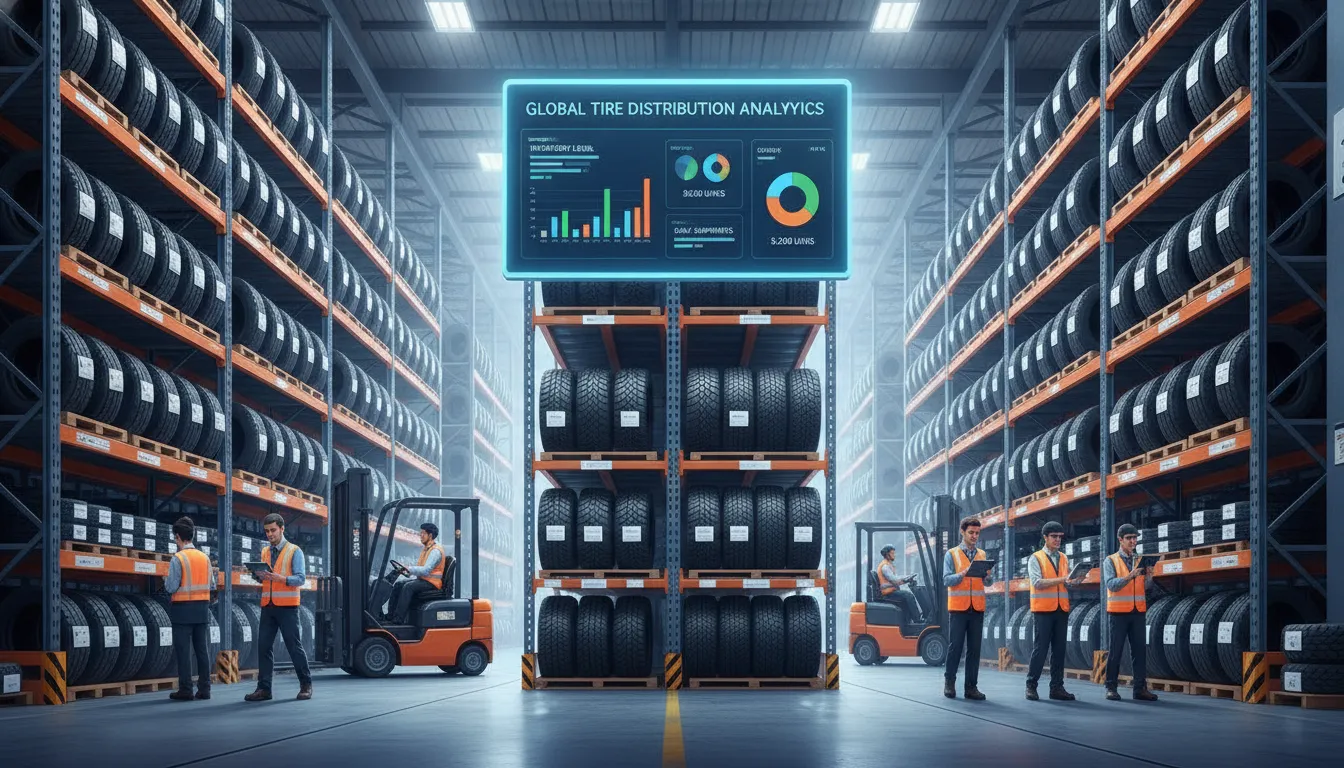
Tire distribution depends on accurate fitment information, dependable inventory decisions, and fast order handling. When those details are managed across spreadsheets, disconnected systems, or a generic ERP. Small gaps can become delayed shipments, excess stock, and avoidable work for warehouse and operations teams. Schedule a consultation with QBC Systems to discuss your distribution operation.
The specialized tire erp benefits that matter most are better control of tire-specific data, inventory, warehouse activity, and customer service. A system built for tire distribution can support details such as fitment data and automated DOT registration that generic ERPs may not handle well. QBC Systems has served distributors since 1978, pairing specialized ERP software with implementation, training, hardware, networking, and technical support.
That distinction starts with understanding why a tire distributor’s daily requirements call for more than a general-purpose business system.
Specialized Tire Erp Benefits: Why Tire Distributors Need a Specialized ERP System
QBC Systems sees the ERP market for distributors as largely replacement-driven: 92% of distributors already use an ERP system. So the question is rarely whether to manage operations digitally. The more useful question is whether the system reflects how tire distribution actually works. A generic ERP may handle accounting, purchasing, and basic inventory, but it can leave the operational details to spreadsheets, workarounds, or manual checks. That gap is where specialized tire ERP benefits become practical rather than theoretical.
For a broader overview of the benefits of specialized tire software, start with the complete guide. The central issue is fit. Tire distributors need an ERP that understands the products, compliance requirements, and sales processes their teams manage every day.
Generic ERP does not understand tire inventory
| Feature Area | Generic ERP | Specialized Tire ERP (TireServ) |
|---|---|---|
| Inventory view | Basic quantity-on-hand tracking | Multi-warehouse visibility with fitment data and seasonal demand patterns |
| Compliance | No built-in DOT registration | Automated DOT registration and rebate tracking |
Tire inventory is more complex than a simple product number and quantity on hand. Distributors may need visibility across multiple warehouses, accurate fitment information, seasonal demand patterns. And the ability to distinguish among products that appear similar but serve different vehicles or applications. A horizontal system can store these details, but storage is not the same as operational support. If employees must interpret fitment data manually or reconcile warehouse information outside the ERP, errors and delays become part of the process.
A specialized platform can organize tire-specific data so sales, purchasing, and warehouse teams are working from the same information. It can also support replenishment decisions and help staff respond to customer questions without searching through disconnected files.
Compliance and promotions require industry-specific workflows
Generic systems also tend to fall short on workflows such as DOT registration, promotions, and rebate tracking. Automated DOT registration can reduce administrative work for tire dealers, while built-in promotion and rebate tracking helps teams apply the right terms and measure their effect. These are not optional add-ons when margins, customer service, and compliance depend on accurate records.
QBC Systems has focused on distribution software since 1978, giving the company 48 years of experience with the business realities behind these requirements. That history is reflected in TireServ ERP, which is designed around tire and automotive supply distribution rather than adapted from a general-purpose system. Businesses comparing options can use this tire ERP selection guide to evaluate fitment, warehouse, compliance, and support requirements before choosing a platform.
How Specialized Tire ERP Improves Inventory and Warehouse Efficiency
QBC Systems gives tire distributors the operational controls needed to keep inventory accurate across locations and move orders through the warehouse with less manual work. TireServ supports multiple warehouses, so managers can see stock by location, coordinate transfers, and make purchasing decisions using a broader view of available inventory. For a practical overview, see this guide to warehouse efficiency.
Replenishment logic combines inventory management best practices with the realities of everyday distribution. That matters when demand changes by season, customer, product line, and warehouse. Instead of relying only on a generic minimum quantity, teams can use the system’s information to identify what needs attention and where stock should be positioned.
Keep inventory decisions connected to the sales operation
TireServ also helps distributors manage promotions and rebate programs, which can affect both purchasing decisions and customer pricing. Automated cost and price updating tools reduce the need to maintain those changes manually across large product catalogs. When costs or selling prices change, the process is easier to control and less dependent on isolated spreadsheets.
Warehouse and sales teams can work from the same operational information. TireServ provides more than 150 standard reports and inquiries for reviewing inventory, orders, purchasing activity, and other day-to-day questions. The system is also built around what QBC Systems calls the “most innovative inquiry methodology in the tire software business.” It gives users practical ways to find answers without waiting for a custom report for every routine question.
Give field sales and customers better access
The real-time mobile app extends access to field sales representatives using tablets or cell phones. Sales staff can work with current information while visiting customers instead of depending on outdated printed lists or delayed office updates. A B2B customer portal supports online ordering 24 hours a day, seven days a week, giving approved customers another way to place orders when it fits their operation.
These capabilities support a more connected workflow: inventory teams maintain visibility, sales staff can respond with better information, and customers have a dependable ordering channel. The result is not a promise of perfect forecasting. It is a more useful operating foundation for reducing avoidable inventory confusion and serving tire distribution customers consistently.
Key Growth Benefits of Tire-Specific ERP Software
Growth in tire distribution depends on making it easier for customers to order, giving employees dependable information, and adding capacity without adding unnecessary complexity. A tire-specific ERP connects those priorities in one operating system, so the business can improve service while building a stronger foundation for expansion.
Make it easier for customers to do business
A B2B customer web portal gives approved customers access to self-service ordering around the clock. Customers can place routine orders when it fits their schedule instead of waiting for a sales representative to be available. For the distributor, that can reduce avoidable order-entry work and give the sales team more time for accounts that need product guidance or relationship management.
Mobile applications extend that access to field sales teams. Representatives can work with current customer and product information while visiting accounts, then follow up with less delay. Combined with a CRM module, the ERP gives sales and operations a shared view of account activity, order needs, and follow-up tasks. That continuity matters when a distributor is growing its customer base or managing a larger territory.
Support access and scalability without unnecessary lock-in
QBC Systems products use a cloud-based MySQL platform that is accessible through a web browser. The browser-based approach supports work from different locations and devices without requiring a business to build its growth plan around one office-based installation. The platform is also designed without proprietary licensing, helping distributors avoid unnecessary vendor lock-in as their needs change.
That architecture is one reason to evaluate TireServ ERP alongside the operational requirements of the business. Distributors can also review related capabilities in ERP for automotive distributors when comparing software across tire and automotive supply operations.
Connect financial control with a full-service technology partner
Integrated accounting modules for the general ledger, accounts payable, and accounts receivable keep financial activity connected to daily distribution work. This reduces the need to reconcile information across disconnected systems and gives managers a clearer basis for operational decisions.
QBC Systems also takes a full-service approach that includes software, hardware, networking, managed IT services, and technical support. For a small or mid-sized distributor, having one experienced technology partner across those areas can simplify responsibility as the operation grows. The result is not simply more software. It is a more connected way to support customers, sales staff, warehouse operations, and financial management.
Financial Management and Operational Visibility With Tire ERP
QBC Systems connects financial management with the day-to-day operational data tire distributors rely on to make decisions. Instead of reconciling separate systems for purchasing, sales, inventory, and accounting. A specialized tire ERP gives managers one working view of what is moving, what is owed, and where margin is being earned.
Keep core financial functions connected
Integrated general ledger, accounts payable, accounts receivable, and banking management modules reduce the gaps that occur when financial information is entered or maintained in disconnected applications. Accounts receivable teams can monitor open balances, payment activity, and customer account status alongside order history. That makes it easier to follow up on overdue accounts, review credit decisions, and understand how receivables affect working capital.
Track costs across warehouses and product lines
Multi-warehouse visibility matters when a distributor carries thousands of SKUs across several locations. Managers need to see more than total inventory. They need to compare costs, movement, and availability by warehouse, product line, customer segment, or sales channel. With that information in one system, a business can investigate differences in carrying costs. Identify slow-moving stock, and make replenishment decisions with a clearer view of the financial impact.
Profitability reporting and margin analysis also help replace assumptions with useful evidence. Teams can examine whether revenue is translating into acceptable margin across tire categories and customer groups, then review the purchasing, freight, discount, or inventory factors behind the result. This supports practical conversations between finance, sales, purchasing, and warehouse management instead of leaving each department to work from a different spreadsheet.
Turn operating data into usable reports
QBC Systems provides more than 150 standard reports and inquiries to help staff investigate business activity without waiting for a custom report every time. The value is not simply the number of reports. It is the ability to move from a high-level financial question to the underlying warehouse, customer, or product detail that explains it. For distributors managing complex inventory across locations, that visibility supports tighter control and more confident decisions.
Implementation, Training, and Support for Tire Distribution ERP
QBC Systems treats an ERP project as an operational change, not simply a software installation. For tire distributors, that means working through the way your team sells, buys, receives, stores, and delivers products before the system is configured.
- Start with consultation and a personalized demonstration. The engagement begins with a conversation about your distribution operation, current processes, and practical priorities. QBC Systems uses personalized demonstrations to show how the software fits your business, rather than asking your team to evaluate a generic product through a self-service process.
- Configure the system around your operation. Implementation includes configuration, data migration, and the setup work needed to move dependable business information into the new environment. The goal is to establish useful workflows for tire inventory, customer accounts, purchasing, sales, and warehouse activity without forcing your operation into an off-the-shelf process.
- Train the people who use and manage the system. Training programs support both end users and administrators. Staff can learn the daily tasks tied to their roles, while administrators build the knowledge needed to manage users, maintain processes, and support adoption internally. This role-based approach makes training relevant to the work happening on the warehouse floor and in the office.
- Provide ongoing technical support. After implementation, QBC Systems remains available through its technical support desk. Distributors have a resource for questions, troubleshooting, and issues that require more than a user manual. That continuing relationship matters when order volume, staffing, or operating procedures change.
- Support the wider technology environment. QBC Systems also provides managed IT services that can include network management, backup, and disaster recovery. Through vendor partnerships involving Cisco, Lenovo, and HP, the company can help with hardware procurement and networking as well. This full-service model brings software, implementation, hardware, networking, and support together under one technology partner.
For a distributor evaluating the specialized tire ERP benefits, this support model is a practical differentiator. You are not left to connect a software subscription to the rest of your operation alone. QBC Systems has served distributors since 1978, bringing long-term distribution experience to the planning, rollout, and ongoing care of the system.
Frequently Asked Questions
Why do tire distributors need a specialized ERP system?
Tire distribution involves fitment information, DOT registration, multiple warehouses, seasonal demand, and product-specific pricing. A specialized ERP brings those requirements into the daily workflow, helping teams manage tire data and orders without forcing staff to adapt generic fields or disconnected processes.
What are the core benefits of using a specialized tire ERP?
The main benefits are clearer inventory visibility, more consistent pricing and replenishment decisions, stronger financial reporting, and less duplicate data entry. A tire-focused system can also connect sales, warehouse, accounting, and customer ordering activity so managers can make decisions from a shared operational picture.
How does specialized tire ERP software improve inventory management?
It gives distributors a practical way to view stock across warehouses, monitor replenishment needs, and account for seasonal demand. With current inventory information and product details in one system, warehouse and purchasing teams can reduce avoidable searches, improve order preparation, and make better use of available capacity.
Can general-purpose ERPs handle tire industry requirements?
A general-purpose ERP may cover accounting and basic order processing. But it may not include tire-specific fitment data, DOT registration workflows, or the inventory processes distributors use every day. A specialized system is designed around those requirements, reducing the need for workarounds, spreadsheets, and separate tools.
What role does tire fitment data play in an ERP?
Fitment data helps staff connect the right tire products to the vehicles and applications they serve. When that information is available within the ERP, sales and customer service teams can answer product questions more consistently. While warehouse and ordering workflows stay connected to the same item records.
Ready to explore a specialized tire ERP?
QBC Systems can help you evaluate how a system built for tire distribution may fit your inventory, warehouse, and day-to-day operational needs. Schedule a free consultation to discuss your goals and see whether TireServ ERP is a practical next step for your business. Contact QBC Systems to schedule your consultation.
