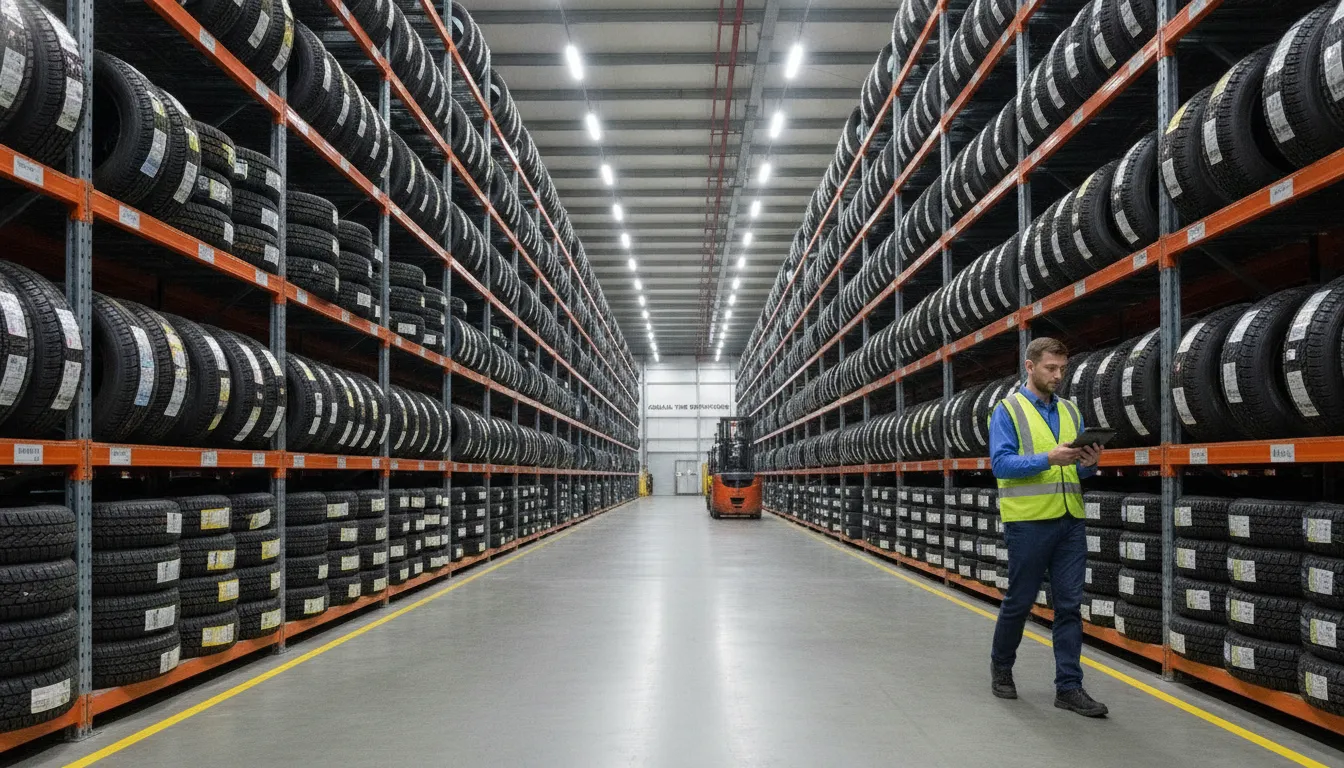
Tire distribution warehouse efficiency is the difference between a profitable operation and one that leaks margin every month. Every misplaced tire, every miscounted SKU, and every slow picking route adds up to real financial losses that warehouse managers at mid-sized tire distributors face daily. QBC Systems has spent more than four decades helping distributors solve these exact problems with TireServ ERP, a purpose-built platform designed for the tire and automotive supply industry. Getting warehouse operations under control starts with understanding where the losses come from and putting the right systems in place to stop them.
Ready to improve your tire distribution warehouse efficiency? Contact QBC Systems for a free consultation and see how TireServ ERP helps you track every tire from receiving to shipping.
What Causes Warehouse Shrinkage in Tire Distribution?
Warehouse shrinkage is a serious problem that directly impacts tire distribution warehouse efficiency. In simple terms, shrinkage is the loss of inventory between the time you buy it and the time you sell it. This loss is often caused by inventory mismanagement, a lack of oversight, and slow tracking methods. For tire distributors, these issues can quickly drain profits and delay customer orders. Addressing these root causes is the first step toward improving your bottom line with the right ERP tools from QBC Systems.
Errors During Inventory Receiving
The receiving dock is the first line of defense against inventory loss. Unfortunately, it is also where many costly mistakes start. When workers do not check incoming shipments carefully, they may record the wrong tire sizes or quantities. A single receiving error can lead to ten or more downstream problems for a business, according to logistics experts.
These mistakes make it look like you have tires you do not actually own, or they hide missing items from the very beginning. Over time, these small errors compound, turning what looked like a minor clerical mistake into a significant profit drain. Distributors who do not have barcode or digital receiving tools are far more vulnerable. Because a tired worker typing a part number late in the day is more likely to transpose a digit or skip a line item entirely. TireServ ERP integrates with barcode scanners to eliminate this problem at the source.
Picking and Handling Mistakes
Tire storage requires specific logistical considerations due to the bulky, round, and heavy nature of the product. Because many tires look alike but have different speed ratings, load indexes, or rubber compounds, workers can easily pick the wrong item. A tire intended for a heavy-duty truck may look nearly identical to one meant for a light commercial vehicle.
Shipping the wrong one creates a costly return and an unhappy customer. Misplaced stock on the racks also leads to picking errors and false shortages. When tires are stacked improperly or moved without care, they can get damaged, which immediately ruins their resale value. Handling damage is particularly frustrating because it is entirely avoidable with proper training and warehouse layout planning.
Weak Inventory Records and Theft
Without real-time tools, a warehouse relies on manual counts that are often inaccurate or days out of date. This gap in visibility makes it easy for both internal and external theft to go unnoticed. Inventory theft is not limited to full pallets being removed from the building. It often takes the form of a few tires at a time, small enough not to trigger suspicion but large enough to eat into quarterly profits. Real-time visibility into inventory levels is vital for catching these discrepancies quickly. Distributors who invest in accurate tracking tools, such as those discussed in our guide on improving warehouse efficiency, can identify problems before they become significant financial losses. Academic research from PubMed Central also confirms that lean warehousing practices that emphasize waste reduction directly help combat these causes of shrinkage. For a complete overview of how ERP technology addresses the full range of distribution challenges, read the Tire Wholesale and Distribution ERP Solutions Guide.
The True Cost of Shrinkage for Tire Distributors
Understanding the financial impact of shrinkage is essential for any tire distributor serious about protecting margins. The cost is not just the wholesale price of the missing tires themselves. It includes a much wider set of expenses that many managers overlook when they calculate their losses. QBC Systems helps distributors see the full picture through TireServ ERP’s cost tracking and reporting modules.
Direct Inventory Losses
The most obvious cost is the value of the tires that have disappeared, been damaged, or been written off after a miscount. For a mid-sized tire distributor operating on thin wholesale margins. Even a 2% to 3% shrinkage rate can represent tens of thousands of dollars in lost product every year. That is money that was spent on inventory that can never be sold. And it must be recovered through higher prices on the remaining stock or accepted as a direct reduction in profit.
Operational and Customer Impact Costs
Shrinkage also creates hidden costs throughout the operation. When the system says a certain tire is in stock but it is not actually on the shelf, the distributor must place an emergency order. Those expedited shipping charges eat into the margin on that sale.
If the tire cannot be sourced in time, the customer receives a partial or late order. That leads to frustration, lost trust, and the very real possibility that the customer takes their business to a competitor for future orders. Over time, a reputation for unreliable fulfillment can damage an entire tire distribution business far more than the cost of the missing inventory itself.
- Lost inventory value (wholesale cost of unaccounted tires)
- Expedited shipping fees for emergency restocks
- Customer dissatisfaction and churn from late or partial orders
- Labor hours spent on manual cycle counts and discrepancy investigations
- Write-downs on damaged tires that could have been avoided
Efficiency Benchmarks Worth Targeting
Academic research on lean warehouse practices highlights just how much room for improvement exists. A study published in PubMed Central found that implementing Lean Six Sigma methods improved process cycle efficiency by up to 70%. The same body of research underscores that lean warehousing is fundamentally about eliminating non-value-added activities. When every step in the warehouse adds value, there are fewer opportunities for errors, misplaced tires, and inventory gaps. Reducing shrinkage is not just about preventing loss. It is about building a warehouse operation that runs cleanly and profitably from receiving to shipping. The wholesale tire inventory management best practices guide covers additional ways to tighten control over stock accuracy.
How TireServ ERP Helps Reduce Shrinkage
Tire distributors face high risks of stock loss from counting errors, misplaced items, and weak tracking. TireServ ERP from QBC Systems provides a specialized suite of inventory control features designed to solve these issues. By replacing slow manual processes with digital workflows, the software builds a highly accurate record of your stock. Distributors who use these integrated tools can reduce warehouse errors and protect their profit margins from unnecessary stock loss.
Real-Time Inventory Tracking and Multi-Warehouse Sync
Manual stock checks are slow and often lead to counting mistakes. TireServ ERP solves this by tracking every tire in real time across all your physical locations. When a tire is received, moved, or sold, the system updates instantly to show the new count. This deep level of visibility helps workers spot stock errors before they grow into larger issues. QBC Systems builds automated tools like this so distributors can maintain a 99% inventory accuracy rate, a benchmark that significantly reduces the margin of error in daily operations.
Smart Purchasing to Stop Over-Ordering
Buying too much stock is a major cause of warehouse clutter and shrinkage. When stacks of tires fill your aisles, items are hard to find and easy to lose. TireServ ERP includes built-in purchasing tools that analyze past sales data to determine your true inventory needs. The system helps you buy only what you can store and sell. Keeping your warehouse organized makes it easier to track every item and prevents the loss and damage that happen when inventory is crowded into chaotic storage areas.
Barcode Scanning and Better Receiving
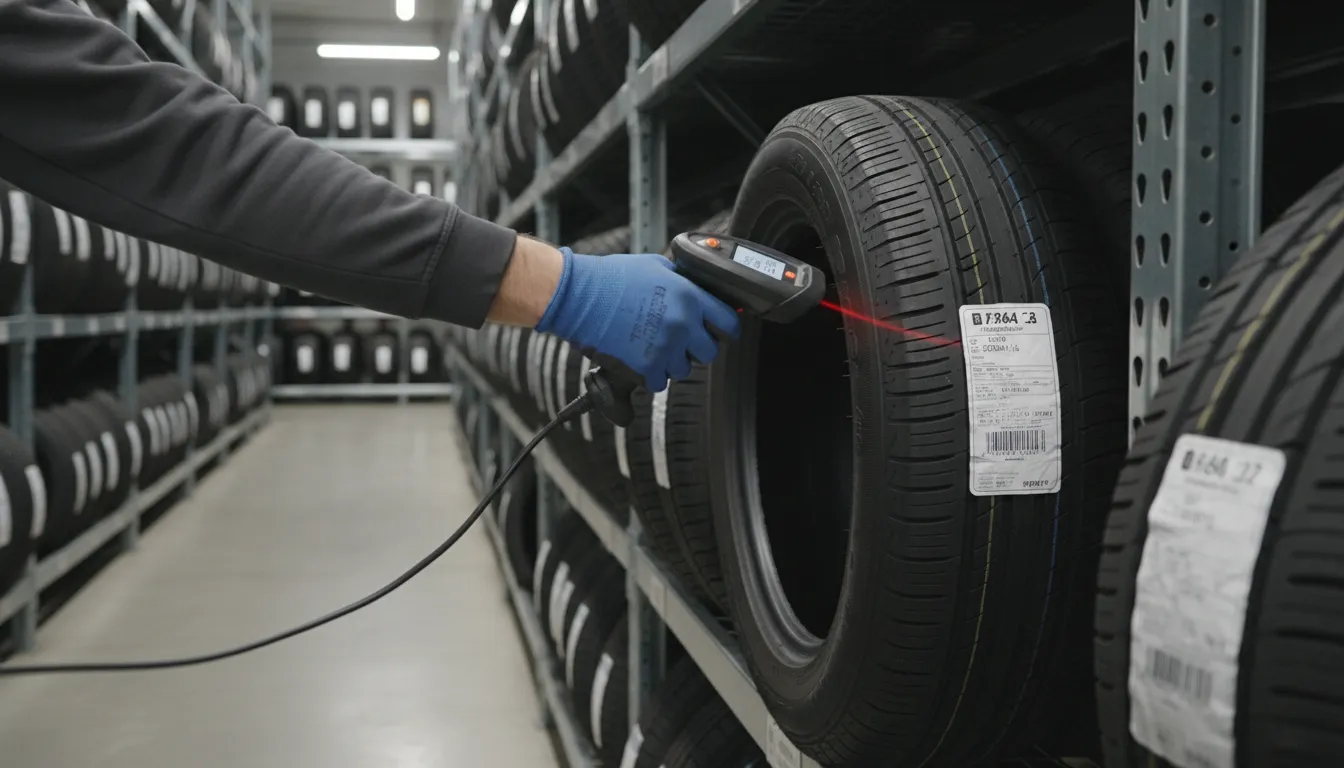
Most warehouse mistakes start at the receiving dock, where workers traditionally enter data by hand. TireServ ERP integrates with barcode scanners to make receiving, picking, and shipping fast and highly accurate. Workers simply scan each tire barcode to update the system in real time. This direct sync removes the human data entry mistakes that are so common at busy receiving docks. With these automated systems, QBC Systems helps distributors achieve 100% accuracy on receiving, inventory, and shipping, securing the warehouse flow from the moment a truck arrives. The tire dealer POS integration guide explores how these scanning tools connect to your point-of-sale system for end-to-end accuracy.
Discrepancy Detection and Inquiry Tools
When stock levels do not match, you must act fast to find the cause. TireServ ERP features smart inquiry tools that let managers run quick checks on specific tire lines. You can trace the exact path of a tire from the moment it arrived to when it left the building. This complete audit trail makes it simple to pinpoint where a mistake happened, whether it was at receiving, in picking, or during shipping. Finding these errors early stops them from cascading into larger, more costly business problems.
Key ERP Features That Drive Warehouse Efficiency for Tire Distributors
Not all ERP systems are built for the unique demands of tire distribution. The features that matter most for improving warehouse efficiency are those that address the specific pain points of handling odd-shaped, high-SKU inventory across multiple locations. QBC Systems has engineered TireServ ERP around these exact requirements over 48 years serving the industry. Here are the features that make the biggest difference.
- Barcode scanning integration: Eliminates manual data entry at receiving, picking, and shipping. Every scan updates the central inventory record instantly.
- Real-time inventory visibility: Stock levels update across all warehouses the moment a transaction occurs. No more relying on yesterday’s report to make today’s decisions.
- Lot and serial number tracking: Essential for tire traceability. If a recall or quality issue arises, you can identify exactly which batch of tires went to which customer.
- Automated reorder points: The system flags when a tire SKU hits its minimum threshold, preventing both stockouts and costly overstock situations.
- Role-based reporting dashboards: Warehouse managers get at-a-glance views of accuracy rates, discrepancy trends, and turnover by SKU category.
- Cycle counting tools: Enables daily or weekly counts of high-value tire SKUs without shutting down the warehouse for a full physical inventory.
| Warehouse Function | Without ERP | With TireServ ERP |
|---|---|---|
| Receiving accuracy | Prone to manual keying errors | Barcode-verified, 99%+ accuracy |
| Picking speed per order | 15-20 minutes per line item | 5-8 minutes with scanner guidance |
| Full inventory count | 2-3 days of warehouse shutdown | Continuous cycle counting, no downtime |
| Shrinkage rate (estimated) | 3-5% annual loss | Under 1% with real-time tracking |
Practical Steps to Improve Tire Distribution Warehouse Efficiency
Improving tire distribution warehouse efficiency does not require a complete overhaul overnight. A step-by-step approach lets you make steady gains while keeping your operation running. These practical steps draw on academic research and real-world experience from successful distributors who use QBC Systems technology.
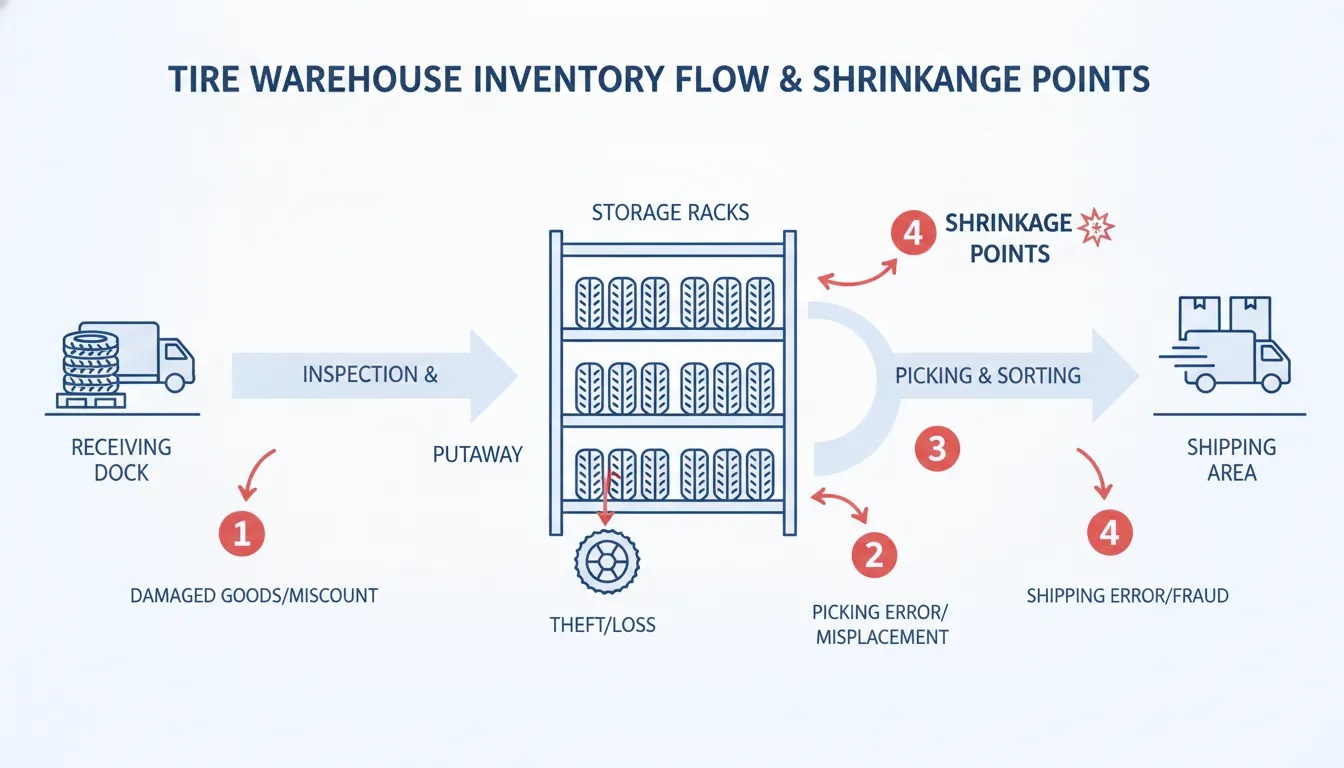
- Conduct a warehouse layout audit. Map the flow of tires from receiving to storage to shipping. Look for bottlenecks where tires sit for long periods or where workers must walk excessive distances. Group fast-moving tire SKUs closest to the shipping area and store odd-sized or seasonal tires in high-bay areas. A logical layout directly improves picking speed and reduces handling damage.
- Implement barcode scanning at every touchpoint. Start with receiving, then extend to put-away, picking, and shipping. Each scan creates a digital timestamp that lets you trace exactly when and where a tire was last seen. This data is invaluable for investigating discrepancies. TireServ ERP makes this seamless with integrated scanner support.
- Establish cycle counting schedules for high-value SKUs. Not all tires carry the same risk. Large-wheel tractor tires, specialty performance tires, and premium-brand inventory deserve more frequent counts. Set up a rotating schedule that covers high-value items weekly and the rest of the warehouse monthly.
- Train staff on proper tire handling and storage procedures. Many handling mistakes stem from workers who do not understand how different tire constructions (radial vs. bias-ply, seasonal compounds) require different storage conditions. A 30-minute training session on proper tire storage reduces handling damage significantly.
- Use real-time data dashboards to spot shrinkage patterns. Do not rely on quarterly reports to find problems. Set up a dashboard that shows receiving accuracy, picking error rates, and inventory adjustments by the week or even by the day. When you see a spike in adjustments in a specific product category, you can investigate immediately. The guide to choosing the best tire dealer software covers what to look for in reporting tools.
- Set up automated reorder points to prevent stockouts without overstocking. Analyze your order history for each tire SKU and set minimum and maximum levels that account for lead times and seasonal demand. The ERP system handles the calculation, and you simply review the recommendations.
These steps align with lean warehousing principles studied in academic research, which show that removing non-value-added activities from warehouse processes can improve efficiency by a substantial margin. Distributors who take a structured approach to efficiency will see the results in both their accuracy metrics and their monthly profit statements. For broader context on operational improvements, read our guide on improving warehouse efficiency across the entire distribution business.
Frequently Asked Questions
How can an ERP system improve tire distribution warehouse efficiency?
An ERP system like TireServ from QBC Systems boosts tire distribution warehouse efficiency by automating stock tracking. This automation removes manual count errors and speeds up order processing. By linking sales directly to warehouse data, teams spend less time searching for tires and more time moving them. The result is a more accurate, faster-paced warehouse that loses fewer items to shrinkage.
What are the common causes of shrinkage in tire distribution warehouses?
Tire shrinkage often stems from poor counting methods, misplaced stock, and theft. Paper-based receiving also leads to key errors that hurt accuracy downstream. Poor tracking systems and a lack of oversight are the primary drivers of warehouse losses. Without live updates, small count mistakes grow into major inventory gaps that cost thousands of dollars every year. QBC Systems addresses each of these causes through TireServ ERP’s integrated inventory management.
How does real-time inventory management prevent warehouse losses?
Live inventory tracking gives managers instant visibility into stock levels to find discrepancies right away. This rapid view lets warehouses stop theft and fix billing errors before they spread. Modern software from QBC Systems can help warehouses achieve a 99% inventory accuracy rate. Real-time updates ensure that physical counts match records, giving you confidence in every order you promise.
Can lean warehouse practices reduce tire distribution shrinkage?
Yes, lean practices cut waste and simplify work to prevent errors that lead to lost stock. A study published in PubMed Central shows that implementing lean processes can raise process cycle efficiency by up to 70%. By removing steps that add no value, workers make fewer handling mistakes, and tires are less likely to go missing.
Ready to Improve Your Tire Distribution Warehouse Efficiency?
Every day of delay in addressing warehouse shrinkage costs your tire distribution business real margin. Continuing with manual tracking or legacy systems only makes it harder to stop losses from inventory errors, picking mistakes, and misplaced stock. Updating your inventory tools today secures your stock and protects your business for years to come. Schedule a demonstration of TireServ with the QBC Systems team to get started today.
Schedule a Demonstration of TireServ from QBC Systems to see how our ERP tools improve your tire distribution warehouse efficiency.
